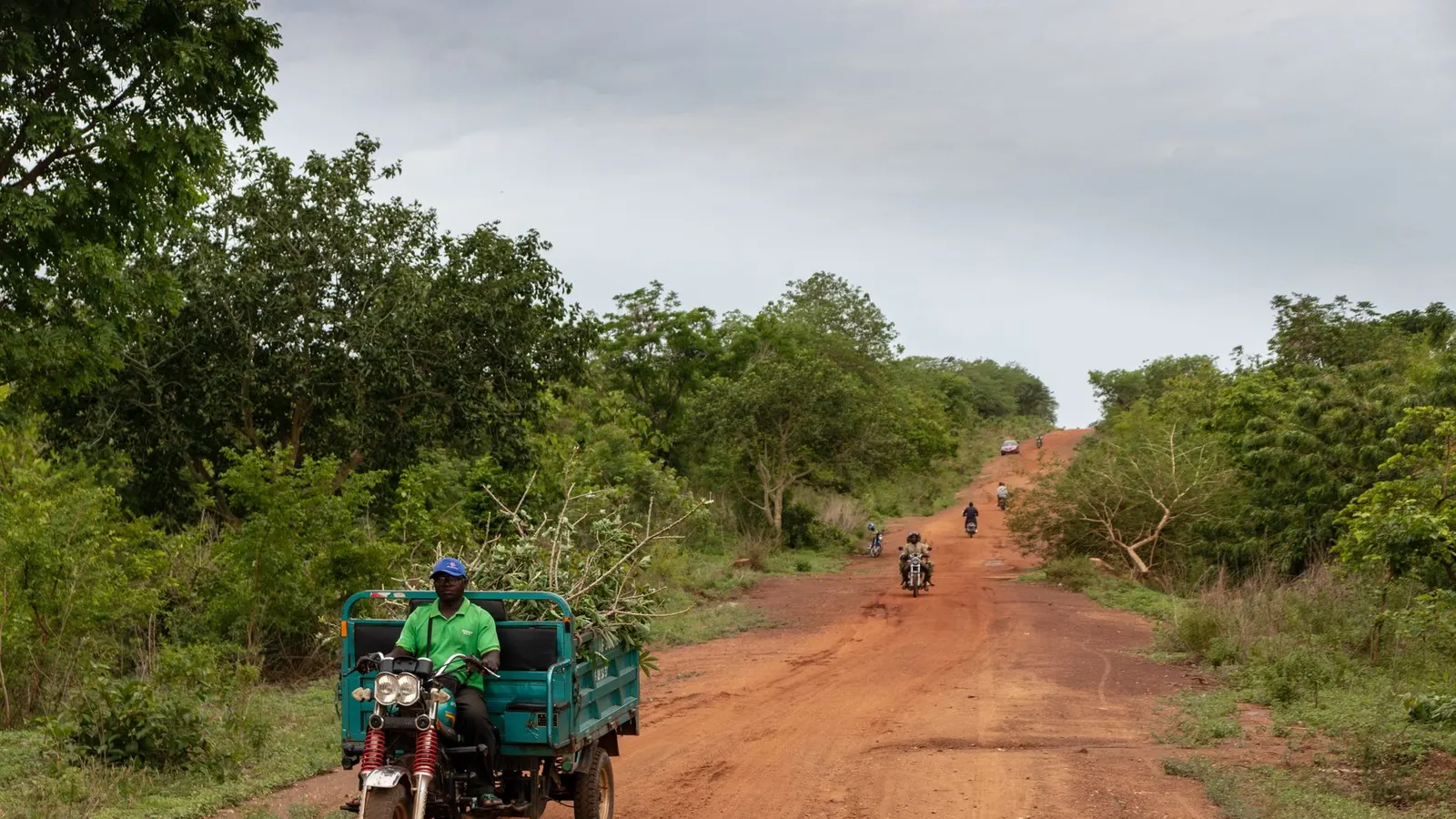
 Anthony Desrochers · Pexels License
Benin
“The birthplace of Vodun, a stilt city on a lagoon and the Dahomey kingdom's capital.”
Benin is where Vodun originated — the religion that crossed the Atlantic and became Vodou in Haiti and Candomblé in Brazil — and it remains an official religion here, with a national festival every 10 January at Ouidah. That town also holds the Route des Esclaves, a four-kilometre road to the Door of No Return on the beach, walked by hundreds of thousands of enslaved people.
North of the coast, Abomey was the capital of the Dahomey kingdom, whose royal palaces are UNESCO-listed and whose bas-reliefs record a military state that included the female regiment Europeans called the Amazons. Ganvié, on Lake Nokoué, is a village of 30,000 people entirely on stilts. Far north, Pendjari holds one of the last viable elephant and lion populations in West Africa — though its northern reaches now carry security advisories.
Highlights
Ganvié
A village of around 30,000 people built entirely on stilts on Lake Nokoué, founded by the Tofinu to escape Dahomey slave raiders who were forbidden by custom from entering water. Reached by pirogue from Abomey-Calavi.
Ouidah
The Route des Esclaves running four kilometres to the Door of No Return on the beach, the Python Temple facing the basilica across the street, and the annual Vodun festival on 10 January.
Abomey royal palaces
The UNESCO-listed complex of the Dahomey kings, with bas-reliefs recording each reign and a museum built into the palace of Ghezo and Glele.
Pendjari National Park
Savanna in the far northwest holding some of West Africa's last elephants, lions and cheetahs, managed by African Parks. Check advisories — the region borders the Sahel security zone.
Entry requirements for Benin
Checking your passport…
We don't hold entry details for this passport group yet.
Before you fly
The detail
- Passport validity
- Most destinations want validity beyond your stay, and some want six months. Check yours against the return date.
- Onward travel
- Airlines may ask for a return or onward ticket at check-in.
- Health
- Yellow fever certificate compulsory for entry. Malaria year-round nationwide. Medical facilities are basic outside Cotonou; evacuation insurance is advisable.
- Money
- CFA franc, pegged to the euro. ATMs in Cotonou, Porto-Novo and Parakou; cards accepted at better hotels only. Carry cash outside the main towns.
When to go
BestNov–Feb. AvoidMay–Jun, September.
Dry and cooler; the Vodun festival is on the 10th.
The band above each month is our editorial verdict - it weighs crowds, prices and access as well as weather. The line is average daily temperature, the bars are monthly rainfall. Select a month for the figures. Climate figures: ERA5 reanalysis via Open-Meteo, 2005–2024 normals.
What it costs
A day in Benin
Comfortable · sample day
≈ $67
Line items are real prices we track. The daily budget is an editorial estimate for this level, not their sum.
Where this sits among 244 countries we have costed
Ouidah accommodation fills around the Vodun festival on 10 January. Otherwise prices are flat year-round.
Updated Aug 2026 · Editorial synthesis — market sampling and African Parks tariffs (2025–2026) · confidence medium
Excludes international flights - they depend on where you fly from.
Regions to know
5Cotonou and the coast
The commercial capital, Dantokpa market — one of West Africa's largest — and the beaches either side.
Ouidah and Ganvié
The slave route and Vodun heartland, and the stilt village on Lake Nokoué just west of Cotonou.
Porto-Novo and the southeast
The official capital with Afro-Brazilian architecture, the ethnographic museum and the Nigerian border beyond.
Abomey and the centre
The Dahomey royal palaces, Bohicon's rail junction and the Collines hills further north.
The north
Parakou, the Atacora range, Somba fortified houses at Natitingou and Pendjari's wildlife — with border advisories in force.
Practical guide
Getting there
Cotonou Cadjehoun is served by Air France, Brussels Airlines, Turkish, Ethiopian, Royal Air Maroc and ASKY. Overland from Togo at Hillacondji and from Nigeria at Sèmè-Kraké; the Nigerian crossing is busy and slow.
Getting around
Bush taxis and minibuses cover the country; Baobab Express and other companies run coaches on the Cotonou–Parakou axis. Zemidjan motorbike taxis are the default in every town. The north is a long day's drive from the coast.
Money & costs
CFA franc, pegged to the euro. ATMs in Cotonou, Porto-Novo and Parakou; cards accepted at better hotels only. Carry cash outside the main towns.
Safety
Southern Benin is calm, with ordinary petty crime in Cotonou. The northern border departments carry advisories for Sahelian spillover. Zemidjan rides are the most common cause of tourist injury — insist on a helmet or use a car.
Health
Yellow fever certificate compulsory for entry. Malaria year-round nationwide. Medical facilities are basic outside Cotonou; evacuation insurance is advisable.
SIM & internet
MTN and Moov (Celtiis); SIM registration requires a passport. 4G in the south and along the main road north; patchy elsewhere.
Driving
Cotonou traffic is dominated by zemidjan motorbikes and is chaotic. The road north to Parakou is decent; beyond it, conditions vary. Do not drive at night.
Rules change - verify with an official source before you rent.
ExplWorld VerifiedNo verified partners here yet - all 6 country seats are open.
Become ExplWorld Verified →Itineraries through this country
Before you go
BeninFrequently asked questions
How do I get a visa?
Entirely online. Benin's e-visa portal issues tourist visas in a few days for most nationalities, at around €50 for a short stay. ECOWAS nationals enter freely. A yellow fever certificate is compulsory and checked at the border. It is one of the simpler entry processes in the region.
Is the north safe?
The far north — the Alibori and Atacora departments bordering Burkina Faso and Niger — has seen incursions by Sahelian armed groups since 2021, and governments advise against travel to the border areas, which affects the northern parts of Pendjari and W parks. The south, including Cotonou, Ouidah, Ganvié and Abomey, is unaffected.
Can I combine it with Togo?
Easily — Cotonou to Lomé is about three hours along the coast with one land border, and the two countries share the Vodun and slave-route heritage. Many visitors do both in ten days, sometimes adding Ghana further west.