 Bojána Noémi Molnár · Pexels License
Brunei
“Oil money, intact rainforest and the largest water village in the world.”
Brunei occupies two enclaves on the north coast of Borneo, has fewer than half a million people, and funds itself on oil and gas. That wealth bought it something unusual: it never needed to log its interior, so roughly seventy per cent of the country is still primary rainforest — a higher proportion than anywhere else on the island.
For visitors it is a two- or three-day country, usually slotted between Sabah and Sarawak. The capital has the water village of Kampong Ayer, thirty thousand people living over the river in stilt houses, and two of the most extravagant mosques in Southeast Asia. Ulu Temburong, reached by longboat, is the reason to stay a third day. Alcohol is not sold, the pace is slow, and nothing is open late.
Highlights
Kampong Ayer
The world's largest water village — thirty thousand residents, schools, mosques and fire stations on stilts over the Brunei River. Take a water taxi across for a couple of euros and walk the boardwalks.
Ulu Temburong National Park
Primary rainforest reached by speedboat through mangrove channels, with a canopy walkway 60 metres up. Access is by organised tour only and needs booking ahead.
The two great mosques
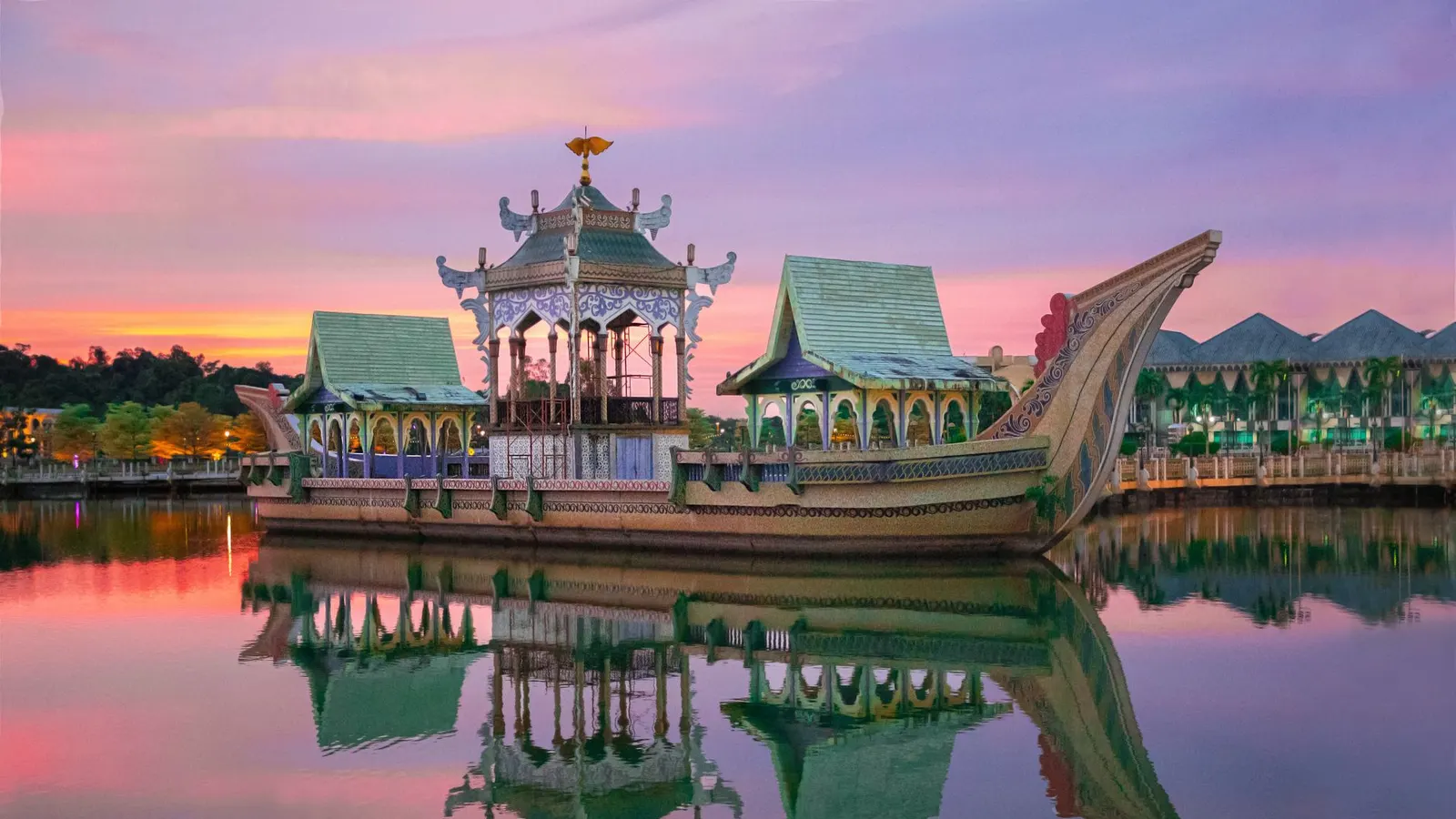
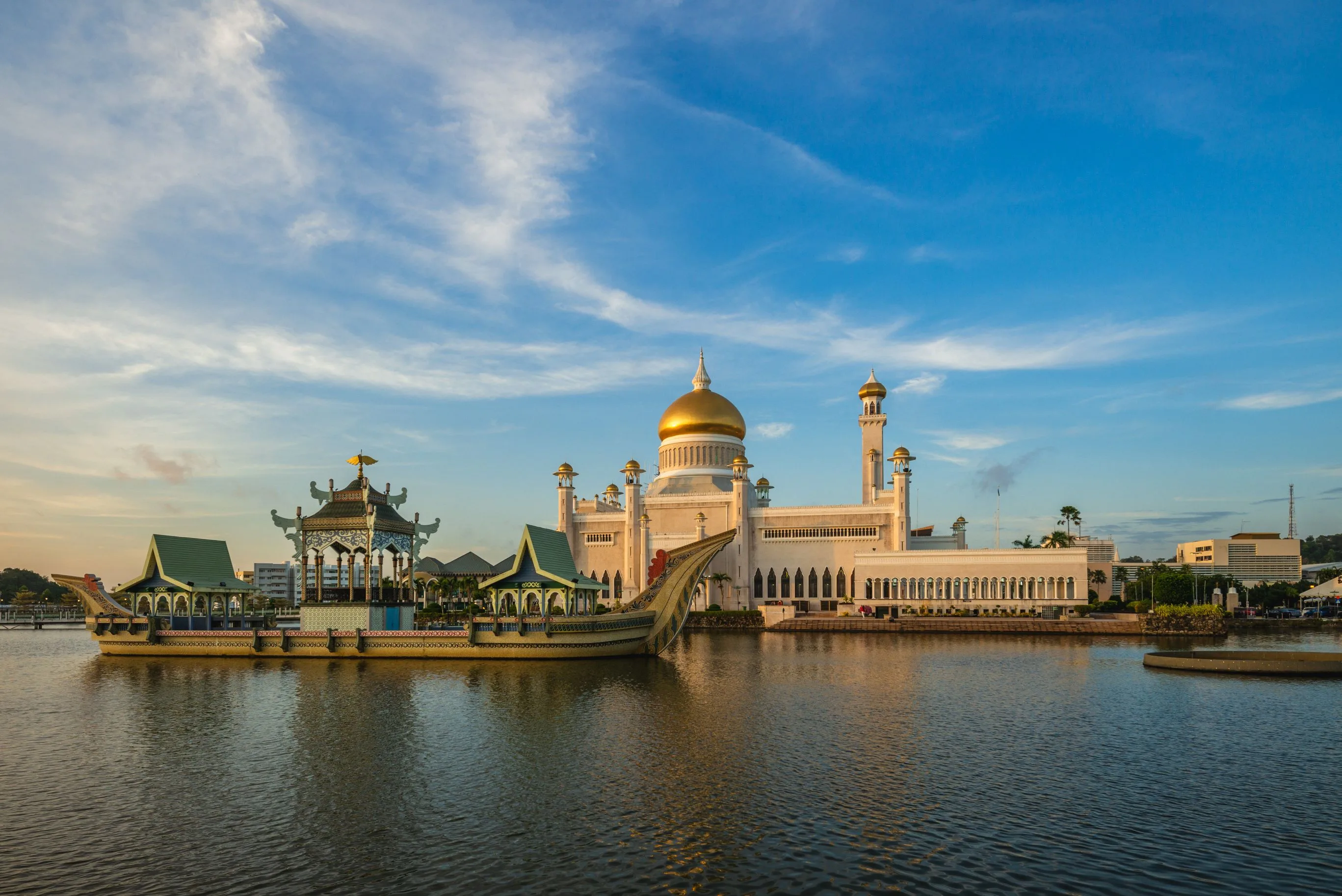
Omar Ali Saifuddien with its ceremonial stone barge in the lagoon, and Jame' Asr Hassanil Bolkiah with its 29 gold domes. Both admit non-Muslim visitors outside prayer times, dressed appropriately.
Proboscis monkeys on the river
An evening boat trip from the capital reliably finds proboscis monkeys and crocodiles within twenty minutes of the centre — no national park fee required.
Entry requirements for Brunei
Checking your passport…
We don't hold entry details for this passport group yet.
Before you fly
The detail
- Passport validity
- Most destinations want validity beyond your stay, and some want six months. Check yours against the return date.
- Onward travel
- Airlines may ask for a return or onward ticket at check-in.
- Health
- No vaccinations required; hepatitis A and typhoid are the standard recommendations. Dengue is present. Tap water is treated and generally considered safe in the capital, though most visitors drink bottled. Healthcare is well funded and of good quality, with the main hospital in the capital; complex cases go to Singapore or Kuala Lumpur.
- Money
- The Brunei dollar is pegged one-to-one with the Singapore dollar and Singapore notes circulate freely and interchangeably. Cards are accepted in hotels, malls and larger restaurants; markets and water taxis are cash. ATMs are common in the capital. Tipping is not practised.
When to go
BestFeb–Apr.
Driest stretch of the year.
The band above each month is our editorial verdict - it weighs crowds, prices and access as well as weather. The line is average daily temperature, the bars are monthly rainfall. Select a month for the figures. Climate figures: ERA5 reanalysis via Open-Meteo, 2005–2024 normals.
What it costs
A day in Brunei
Comfortable · sample day
≈ $76
Line items are real prices we track. The daily budget is an editorial estimate for this level, not their sum.
Where this sits among 244 countries we have costed
Almost no seasonality. Brunei has no high season in the ordinary sense — hotel rates move only around the Sultan's birthday in July and Hari Raya. Ramadan changes the experience more than the price: restaurants close during daylight and the pace slows considerably.
Updated Aug 2026 · Editorial synthesis — Brunei Tourism, operator tour tariffs, hotel rate sampling (2025–2026) · confidence medium
Excludes international flights - they depend on where you fly from.
Regions to know
5Bandar Seri Begawan
The capital: two great mosques, the regalia museum, the night market and the water village across the river.
Kampong Ayer
Thirty thousand people living over the water in stilt settlements linked by boardwalks — a functioning town, not a display.
Temburong
The separated eastern district, reached by boat or the long bridge — rainforest, canopy walkway and river tubing.
Tutong & Belait
The western districts: white-sand beaches, the peat-swamp forest and the oil town of Seria with its Billionth Barrel monument.
Ulu Temburong National Park
Primary rainforest with a 60-metre canopy walkway — the highlight of the country and tour-access only.
Practical guide
Getting there
Bandar Seri Begawan (BWN) is served by Royal Brunei Airlines from London, Dubai, Singapore, Kuala Lumpur, Bangkok and Manila, and by regional carriers. Overland from Sabah (Kota Kinabalu) or Sarawak (Miri) is a well-worn bus route, though it involves several immigration posts because of the enclave geography — allow the whole day.
Getting around
There is no rail network and the bus system is minimal, so taxis, Dart (the local ride-hailing app) or a rental car are the practical options. The capital is compact and walkable in the cooler hours. Water taxis cross to Kampong Ayer constantly for a couple of euros. Ulu Temburong is reachable only on a tour, which handles the boats and permits.
Money & costs
The Brunei dollar is pegged one-to-one with the Singapore dollar and Singapore notes circulate freely and interchangeably. Cards are accepted in hotels, malls and larger restaurants; markets and water taxis are cash. ATMs are common in the capital. Tipping is not practised.
Safety
Crime is very low and the country is safe to walk at night. The considerations are legal and cultural rather than criminal: modest dress, no public drinking, restraint during Ramadan, and awareness that the legal code is conservative. Traffic is orderly. Rainforest excursions carry the usual jungle risks and are run by licensed operators.
Health
No vaccinations required; hepatitis A and typhoid are the standard recommendations. Dengue is present. Tap water is treated and generally considered safe in the capital, though most visitors drink bottled. Healthcare is well funded and of good quality, with the main hospital in the capital; complex cases go to Singapore or Kuala Lumpur.
SIM & internet
DST and imagine sell tourist SIMs; coverage is good in populated areas and absent in the forest interior. Hotel wifi is standard. Some content is filtered. WhatsApp is the common messaging channel.
Driving
Fuel is among the cheapest in the world because it is subsidised — though foreign-plated vehicles pay a higher rate. Roads are excellent and empty, which makes driving here genuinely pleasant.
Rules change - verify with an official source before you rent.
ExplWorld VerifiedNo verified partners here yet - all 6 country seats are open.
Become ExplWorld Verified →Itineraries through this country
From the Journal
Before you go
BruneiFrequently asked questions
Is it really dry?
Yes. The sale of alcohol has been banned since 1991. Non-Muslim visitors over 17 may import a limited personal allowance — two litres of spirits or wine and twelve cans of beer — declared at customs on arrival, and consumed privately. Restaurants do not serve it and there are no bars.
How many days do I need?
Two for the capital and the water village, three if you add Ulu Temburong, which takes a full day. Most visitors treat it as a stop between Sabah and Sarawak, and that is a fair reading — but the rainforest day is the one that justifies the detour.
What should I know about local law?
Brunei implemented a Sharia penal code in stages from 2014, with the most severe provisions announced in 2019 and subject to a standing moratorium on the death penalty. In practice, visitors are expected to dress modestly, avoid public displays of affection, and respect Ramadan fasting hours in public. LGBTQ+ travellers should be aware that same-sex relations are criminalised, and several governments issue specific advisories on this point.