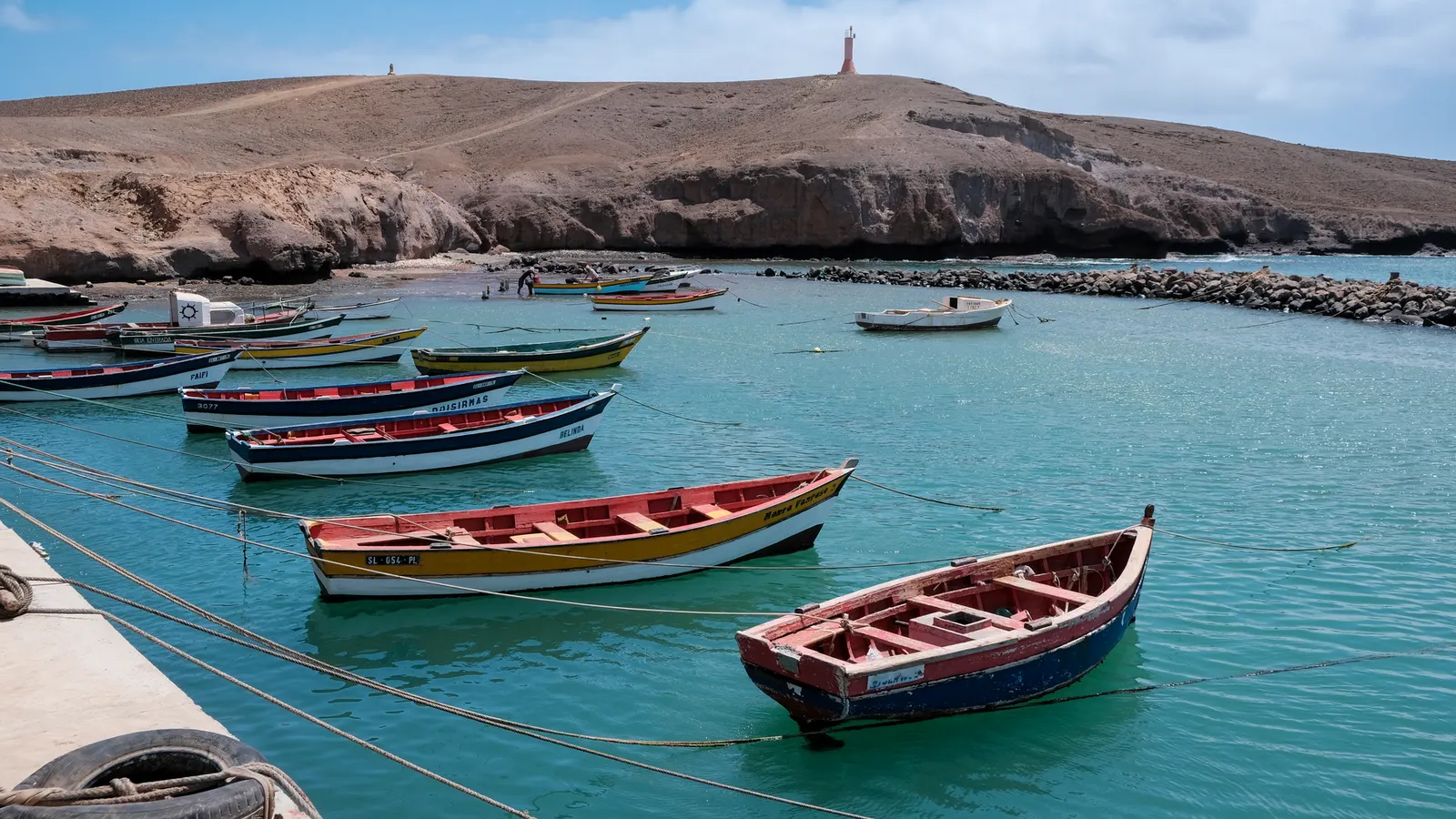
 Rob Mowe · Pexels License
Cabo Verde
“Ten Atlantic islands of morna, volcanic ridges and reliable trade winds.”
Cabo Verde is an archipelago 570 kilometres off Senegal that was uninhabited until the Portuguese arrived in the fifteenth century, which makes its Creole culture entirely its own invention. Morna — the melancholy song form Cesária Évora carried worldwide — comes from São Vicente, and Mindelo still has live music most nights. The islands split between the flat, sandy, wind-blown ones and the sharply mountainous ones, and choosing between them is the whole planning decision.
Sal and Boa Vista carry the package flights and the kitesurfing; Santo Antão has ravine hiking as good as anywhere in the Atlantic; Fogo is a volcano you climb, with vineyards inside the caldera; Santiago holds the old capital Cidade Velha and the country's African core. Inter-island flights and ferries are functional but unreliable enough that you should never plan a same-day connection to an international departure.
Highlights
Santo Antão hiking
Cobbled paths dropping through the Paul and Ribeira Grande valleys from cloud-forest ridges to the sea, past sugarcane terraces and grogue stills. The best walking in West Africa, reached by ferry from São Vicente.
Mindelo
The country's cultural capital on São Vicente — colonial waterfront, a February carnival modelled on Brazil's, and live morna and coladeira in bars most evenings.
Pico do Fogo
A 2,829-metre active volcano you can climb in a hard morning, with a village and vineyards inside the caldera that were partly buried by the 2014 eruption and rebuilt anyway.
Sal and Boa Vista
Flat, dry and sandy, with year-round trade winds that make Sal one of the best kitesurfing destinations anywhere, plus turtle nesting on Boa Vista from June to October.
Entry requirements for Cabo Verde
Checking your passport…
We don't hold entry details for this passport group yet.
Before you fly
The detail
- Passport validity
- Most destinations want validity beyond your stay, and some want six months. Check yours against the return date.
- Onward travel
- Airlines may ask for a return or onward ticket at check-in.
- Health
- No malaria on most islands; a limited seasonal risk has been reported on Santiago. No yellow fever requirement unless arriving from an endemic country. Water is desalinated and generally safe, though most people drink bottled. Medical facilities are basic outside Praia and Mindelo.
- Money
- The escudo is pegged to the euro at a fixed rate, and euros are accepted in tourist areas at a slightly worse rate. ATMs on all inhabited islands; cards work in hotels and larger restaurants, cash for everything else.
When to go
BestNov–May.
Dry, warm, strong wind for kitesurfing.
The band above each month is our editorial verdict - it weighs crowds, prices and access as well as weather. The line is average daily temperature, the bars are monthly rainfall. Select a month for the figures. Climate figures: ERA5 reanalysis via Open-Meteo, 2005–2024 normals.
What it costs
A day in Cabo Verde
Comfortable · sample day
≈ $97
Line items are real prices we track. The daily budget is an editorial estimate for this level, not their sum.
Where this sits among 244 countries we have costed
Sal and Boa Vista resort rates peak from December to February and again in August with the European holiday trade. The hiking islands barely move.
Updated Aug 2026 · Editorial synthesis — operator tariffs and market price sampling (2025–2026) · confidence medium
Excludes international flights - they depend on where you fly from.
Regions to know
5Sal
Flat and sandy with Santa Maria's beach strip, world-class kitesurfing and the salt pans at Pedra de Lume.
Boa Vista
Dunes, long empty beaches, turtle nesting from June to October and a shipwreck on the east coast.
São Vicente and Santo Antão
Mindelo's music and carnival, and the ferry across to the archipelago's best hiking through the Paul valley.
Santiago
The largest island — Praia, the UNESCO-listed old capital at Cidade Velha, the Serra Malagueta mountains and the Tarrafal beach in the north.
Fogo and Brava
The volcano, the caldera vineyards and wine, and tiny Brava beyond it — the least visited inhabited island.
Practical guide
Getting there
Sal and Boa Vista take the charter and low-cost traffic from Europe; Praia and São Vicente have TAP, TACV and regional links. Direct flights from Lisbon, Madrid, Milan, Paris, Amsterdam and Boston.
Getting around
Bestfly links the main islands by air. Ferries connect São Vicente–Santo Antão hourly and other islands less predictably. On land, aluguer shared minibuses are the local transport and are cheap and frequent.
Money & costs
The escudo is pegged to the euro at a fixed rate, and euros are accepted in tourist areas at a slightly worse rate. ATMs on all inhabited islands; cards work in hotels and larger restaurants, cash for everything else.
Safety
Very safe by regional standards. Petty theft in Praia and Mindelo at night is the main risk. The Atlantic here has strong currents — drownings happen on unpatrolled beaches, particularly on Santo Antão and Santiago.
Health
No malaria on most islands; a limited seasonal risk has been reported on Santiago. No yellow fever requirement unless arriving from an endemic country. Water is desalinated and generally safe, though most people drink bottled. Medical facilities are basic outside Praia and Mindelo.
SIM & internet
CVMóvel (Unitel T+) and Unitel; tourist SIMs at the airport. 4G on all main islands; coverage drops in Santo Antão's valleys, which is arguably the point.
Driving
Santo Antão's cobbled mountain road is spectacular and genuinely demanding — most visitors hire an aluguer with a driver rather than drive it. Elsewhere roads are quiet and straightforward.
Rules change - verify with an official source before you rent.
ExplWorld VerifiedNo verified partners here yet - all 6 country seats are open.
Become ExplWorld Verified →Itineraries through this country
Before you go
Cabo VerdeFrequently asked questions
Which island should I pick?
Sal or Boa Vista for beaches, wind sports and direct charter flights. Santo Antão for hiking, via São Vicente. Fogo for the volcano. Santiago for history and the most African feel. Two islands in ten days is comfortable; three is a rush once you allow for ferry and flight slippage.
Do I need a visa or the airport tax thing?
EU, UK, US, Canadian and many other passports do not need a visa for stays up to 30 days. What everyone does need is the TSA — Taxa de Segurança Aeroportuária, an airport security fee of €31 — paid online through the EASE portal before travel, or on arrival at a higher effective cost in queue time. Register at least five days ahead.
How reliable are the inter-island connections?
Not very. Bestfly operates the domestic flights and cancellations happen; ferries between São Vicente and Santo Antão are frequent and dependable, but longer crossings are weather-dependent and sometimes rough. Always leave a full buffer day before an international departure.