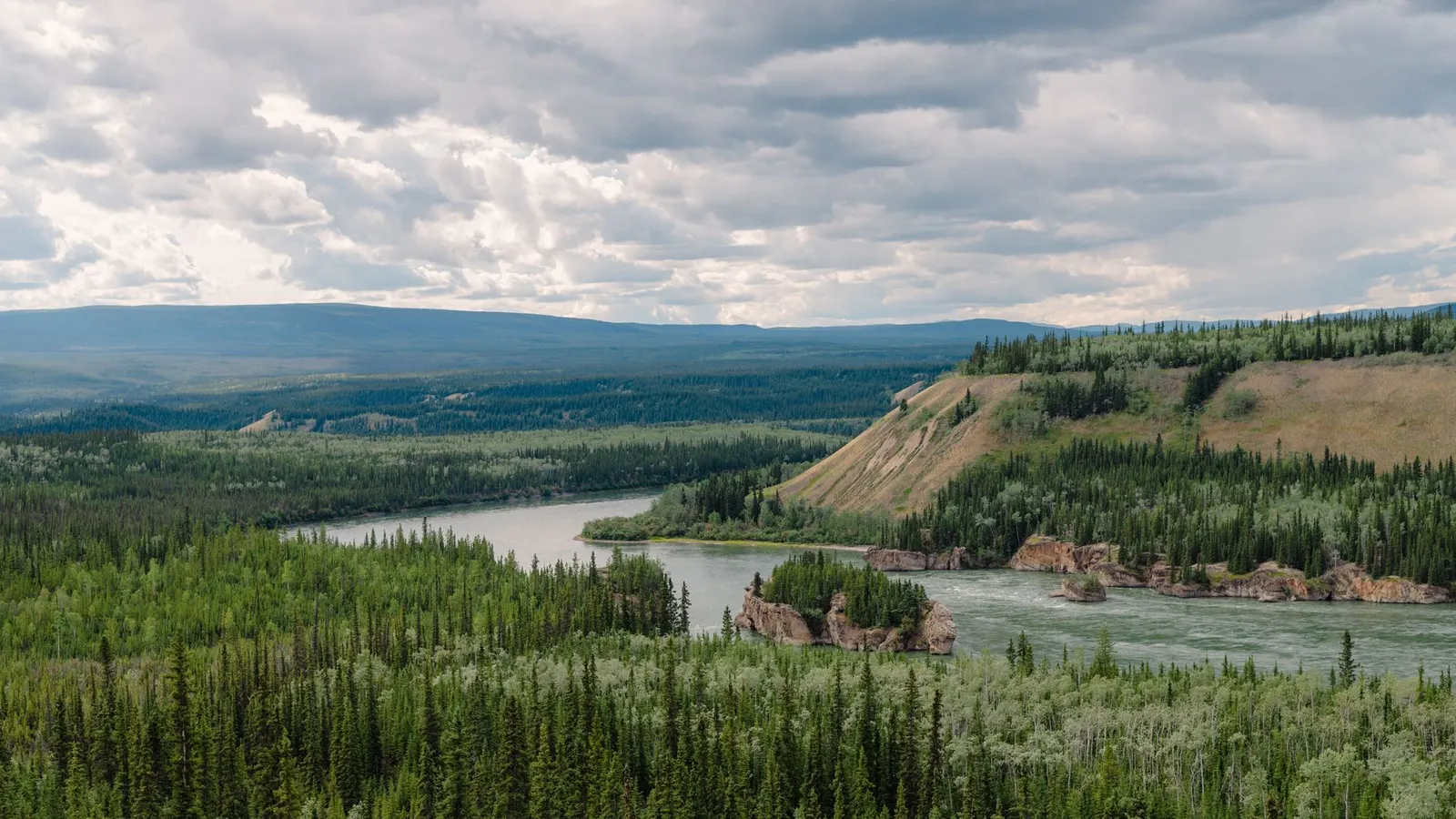
 Quentin Krattiger · Pexels License
“The second-biggest country on earth — turquoise Rockies lakes, whale coasts and cities that simply work.”
Canada’s scale is the first fact to respect: Vancouver to Halifax is further than Lisbon to Moscow, and “seeing Canada” in one trip is a category error. Pick one theatre — the Rockies loop from Calgary, Vancouver and its island, or Toronto–Ottawa–Montréal–Québec City along the St. Lawrence — and do it properly with a car and ten days.
What you get in return is nature with infrastructure: grizzly country crossed by immaculate highways, national parks with working visitor centres, and multicultural cities that rank among the world’s most liveable. It is an expensive, easy, spectacular country — the wilderness is real, but the coffee at the trailhead is excellent.
Highlights
The Icefields Parkway
230 km of glacier-hung highway between Banff and Jasper — Peyto and Louise’s turquoise lakes, the Athabasca Glacier, and a legitimate claim to the world’s most scenic drive. Start at dawn; the tour buses don’t.
Vancouver Island & Tofino
Pacific rainforest meets surf beaches on the island’s wild west coast — storm-watching in winter, whales and hot springs in summer, and Victoria’s gentle harbour at the other end.
Québec City
The only walled city north of Mexico: 400-year-old stone streets, French spoken with an accent Paris lost, and the Château Frontenac looming over the St. Lawrence.
The Cabot Trail
Cape Breton’s 300 km coastal loop — highland cliffs, Acadian and Gaelic villages, and pilot whales off the headlands. October’s colours rival New England’s at half the traffic.
Entry requirements for Canada
Checking your passport…
We don't hold entry details for this passport group yet.
Before you fly
The detail
- Passport validity
- Most destinations want validity beyond your stay, and some want six months. Check yours against the return date.
- Onward travel
- Airlines may ask for a return or onward ticket at check-in.
- Arrival form
- eTA (electronic Travel Authorisation, CAD 7) must be approved before boarding any flight to Canada — apply only at the official canada.ca page. Most approvals arrive within minutes; allow 72 hours in case of manual review. Valid 5 years or to passport expiry. Not needed for land or sea arrivals from the US.
- Health
- No vaccinations required; tap water is excellent nationwide. The healthcare system is first-rate but not free for visitors — an ER visit bills hundreds and a hospitalisation five figures, so comprehensive travel insurance is non-negotiable. Summer brings serious mosquitoes and black flies in the north and interior (June–July worst); UV is strong at altitude and latitude alike.
- Money
- Cards and contactless work literally everywhere, including parking meters and food trucks — many visitors never touch cash. The unavoidable arithmetic: taxes are added at the till (5–15 % by province) and tipping 15–18 % is a de facto obligation in restaurants and bars, so menu prices understate reality by a fifth or more. Budget accordingly.
When to go
BestJun–Sep. AvoidNovember.
Long days, waterfalls at full melt, pre-peak prices.
The band above each month is our editorial verdict - it weighs crowds, prices and access as well as weather. The line is average daily temperature, the bars are monthly rainfall. Select a month for the figures. Climate figures: ERA5 reanalysis via Open-Meteo, 2005–2024 normals.
What it costs
A day in Canada
Comfortable · sample day
≈ $178
Line items are real prices we track. The daily budget is an editorial estimate for this level, not their sum.
Where this sits among 244 countries we have costed
July–August in the mountain parks is the price event: Banff-area doubles routinely triple their shoulder rates and sell out months out, and campervan hire peaks with them. Cities swing far less. Remember the ~20 % invisible surcharge everywhere — sales tax added at the till plus 15–18 % tipping — which the levels above already absorb.
Updated Aug 2026 · Editorial synthesis — Numbeo, Budget Your Trip, Parks Canada tariffs, accommodation-market reporting (2025–2026) · confidence medium
Excludes international flights - they depend on where you fly from.
Regions to know
5The Rockies (Alberta/BC)
Banff, Jasper, Yoho and the Icefields Parkway — the postcard Canada of turquoise lakes and glacier walls. Fly into Calgary, book beds early.
Vancouver & the Pacific coast
Sea-to-sky city living, Whistler up the highway, and Vancouver Island’s surf-and-rainforest west coast at Tofino.
Ontario & the St. Lawrence cities
Toronto’s skyline and food halls, Niagara an easy day trip, Ottawa’s museums — the urban corridor most first trips start with.
Québec
French North America: Montréal’s neighbourhoods and festivals, Québec City’s walled old town, and poutine as a birthright.
Atlantic Canada
Cape Breton’s Cabot Trail, Bay of Fundy’s 16-metre tides, lighthouses and lobster — slower, cheaper, criminally underrated.
Practical guide
Getting there
Direct flights reach Toronto and Montréal from Vienna, Frankfurt, Zurich and most European hubs (8–9 hours), and Vancouver and Calgary from London, Frankfurt and Amsterdam (9–10 hours). From Slovakia count on one stop. Book the eTA before ticketing — it is usually approved in minutes but airlines will not board you without it.
Entry formalities
eTA (electronic Travel Authorisation, CAD 7) must be approved before boarding any flight to Canada — apply only at the official canada.ca page. Most approvals arrive within minutes; allow 72 hours in case of manual review. Valid 5 years or to passport expiry. Not needed for land or sea arrivals from the US.
Getting around
This is a driving country: rental cars or campervans are near-mandatory outside the eastern city corridor, and one-way fees between provinces are steep — plan loops. Internal flights (Air Canada, WestJet, budget carriers) cover the vast hops. The Toronto–Montréal–Québec corridor runs decent VIA Rail service; the trans-continental Canadian is a cruise, not transport. City transit in Vancouver, Toronto and Montréal is excellent.
Money & costs
Cards and contactless work literally everywhere, including parking meters and food trucks — many visitors never touch cash. The unavoidable arithmetic: taxes are added at the till (5–15 % by province) and tipping 15–18 % is a de facto obligation in restaurants and bars, so menu prices understate reality by a fifth or more. Budget accordingly.
Safety
Wildlife protocol is the one real safety subject: store food in bear lockers or your trunk, carry accessible bear spray on trails in the west, keep 100 m from bears and 30 m from elk, and never feed anything. On the road, moose and deer at dusk are a genuine collision hazard from Ontario eastward. Winter travel needs proper tires, an emergency kit and humility about forecasts.
Health
No vaccinations required; tap water is excellent nationwide. The healthcare system is first-rate but not free for visitors — an ER visit bills hundreds and a hospitalisation five figures, so comprehensive travel insurance is non-negotiable. Summer brings serious mosquitoes and black flies in the north and interior (June–July worst); UV is strong at altitude and latitude alike.
SIM & internet
Rogers, Bell and Telus cover the population well; coverage dies quickly on wilderness highways and in the parks — assume nothing between towns on the Icefields Parkway or northern routes. Canadian mobile plans are notoriously pricey: a travel eSIM bought before arrival usually beats a local SIM. Download offline maps for every driving day.
Driving
Motorway limits are 100–110 km/h by province (BC posts up to 120). Right-turn-on-red is legal except on the island of Montréal. Winter tires are law in Québec Dec 1–Mar 15 and on BC mountain highways Oct–Apr. Fuel up before wilderness stretches — gaps of 150+ km are normal.
Rules change - verify with an official source before you rent.
ExplWorld VerifiedNo verified partners here yet - all 6 country seats are open.
Become ExplWorld Verified →Itineraries through this country
Before you go
CanadaFrequently asked questions
Is Canada safe?
About as safe as travel gets — the risks are environmental, not human. Wildlife deserves genuine respect (carry bear spray on Rockies trails and learn to use it), distances between fuel stops are real in the north, and winter driving is a skill, not a vibe. City crime concerns are limited to a few well-known downtown blocks.
When is the best time to visit?
June through September for the classic parks-and-coasts trip — July and August are peak, with warm weather, full services and heavy demand around Banff and Jasper. September is the connoisseur’s month: golden larches, elk rut, thinner crowds. Late September–mid-October paints the east in fall colour. Winter is its own excellent product (skiing, northern lights) but a different trip entirely.
How much does a day in Canada cost?
Plan on €165 per person per day mid-range — Canada is expensive and pretending otherwise ruins trips. That covers your half of a €140–180 double, food with taxes and tips at 15–18 %, park passes and fuel. Hostels-and-groceries travel runs €80–90; anything premium clears €300 fast in Banff or downtown Vancouver in August.