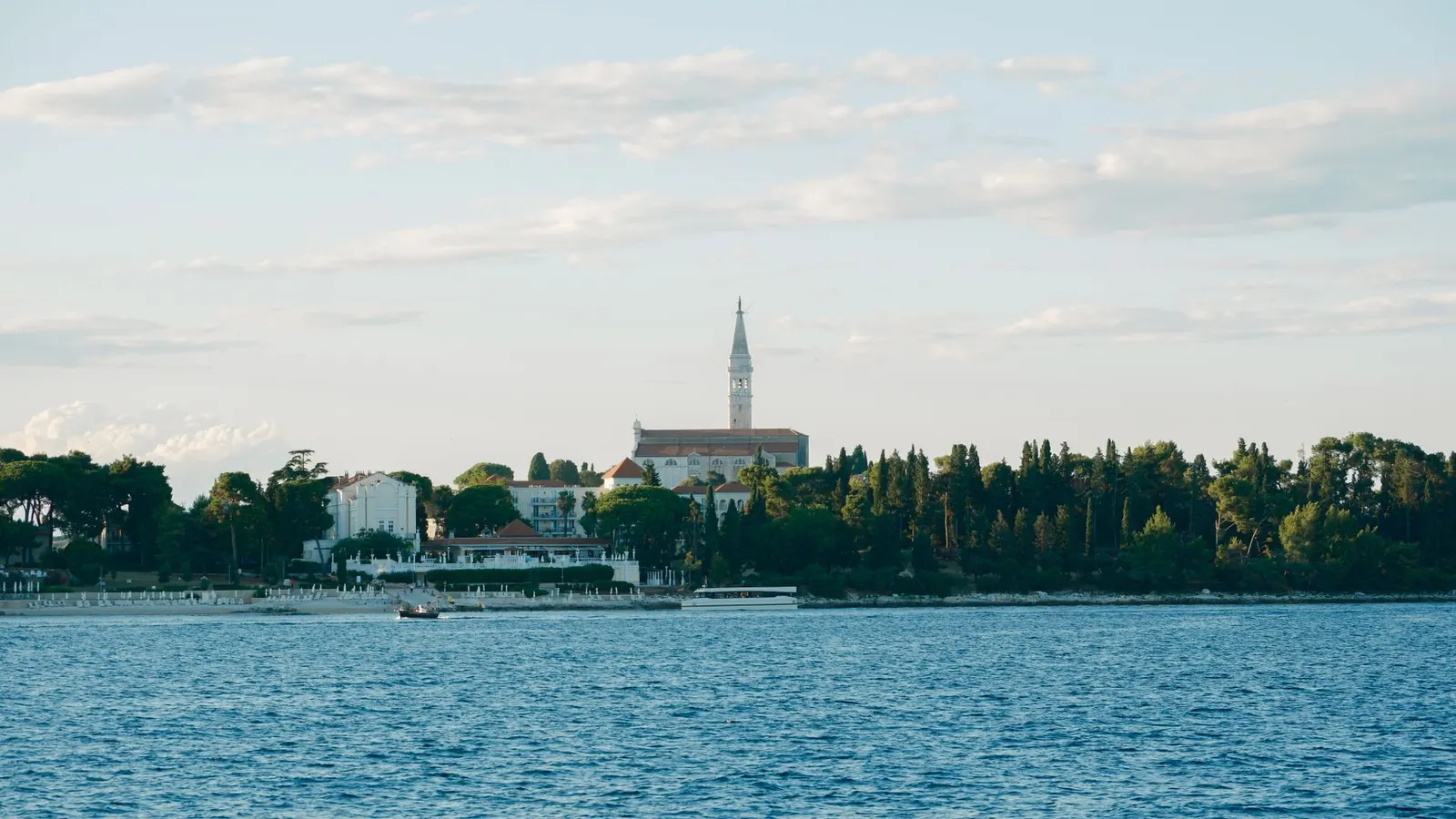
 Ramon Karolan · Pexels License
Croatia
“A thousand islands, eight national parks and a coast that fills every August.”
Croatia's Adriatic coast runs 1,800 kilometres with over a thousand islands off it, and the water is the clearest in the Mediterranean because there is almost no river silt. That coast is the country's economy and, in August, its problem — Dubrovnik has capped cruise arrivals, Hvar polices behaviour, and Split's Roman palace becomes very hard work between ten and six.
Inland is where the value is. Plitvice and Krka's waterfall systems, the Istrian hill towns with truffles and Roman amphitheatres, Zagreb's Austro-Hungarian centre, and the Slavonian plains nobody visits. The country joined Schengen and adopted the euro in January 2023, which removed the border queues and raised prices in the same stroke.
Highlights
Diocletian's Palace, Split
A Roman emperor's retirement palace that a whole town grew inside — still lived in, with bars and apartments in the substructures. Best walked at seven in the morning.
Plitvice Lakes
Sixteen terraced lakes linked by waterfalls on wooden boardwalks. Timed entry, book weeks ahead in summer, and go at opening — by midday the boardwalks are a queue.
The Dalmatian islands
Hvar, Vis, Korčula and the Kornati archipelago. Vis was closed to foreigners until 1989 and is the least developed of the big ones.
Istria
Hill towns like Motovun and Grožnjan, truffle country, Pula's Roman amphitheatre and an olive-oil and wine culture closer to Italy than to Dalmatia.
Entry requirements for Croatia
Checking your passport…
We don't hold entry details for this passport group yet.
Before you fly
The detail
- Passport validity
- Most destinations want validity beyond your stay, and some want six months. Check yours against the return date.
- Onward travel
- Airlines may ask for a return or onward ticket at check-in.
- Health
- No vaccinations required. Healthcare is good; EHIC/GHIC covers EU and UK visitors. Island clinics are basic and serious cases go to Split or Zagreb. Tap water is safe. Heat and sunburn are the usual complaints. Sea urchins on rocky shores make water shoes genuinely useful.
- Money
- Euro since 2023. Cards are widely accepted; small konobas and island shops may prefer cash. ATMs are widespread and the independent ones charge heavily — use bank machines. Tipping is around 10 %. A tourist tax per person per night is added to accommodation.
When to go
BestMay–Jun, September. AvoidJan–Feb, Jul–Aug, November.
The best month — warm, green, and before the crowds.
The band above each month is our editorial verdict - it weighs crowds, prices and access as well as weather. The line is average daily temperature, the bars are monthly rainfall. Select a month for the figures. Climate figures: ERA5 reanalysis via Open-Meteo, 2005–2024 normals.
What it costs
A day in Croatia
Comfortable · sample day
≈ $103
Line items are real prices we track. The daily budget is an editorial estimate for this level, not their sum.
Where this sits among 244 countries we have costed
The coast is one of the sharpest seasonal markets in Europe — the same apartment can be €60 in May and €180 in August, and Dubrovnik goes further. Plitvice has an official peak-season entry price roughly double the winter one. Zagreb and the interior barely move. Many coastal businesses close from November to April.
Updated Aug 2026 · Editorial synthesis — Jadrolinija published fares, national park tariffs, accommodation sampling (2025–2026) · confidence high
Excludes international flights - they depend on where you fly from.
Regions to know
5Zagreb & the interior
The capital, the Plitvice lakes, the Zagorje castles and the Slavonian plains further east.
Istria
Hill towns, truffles, Pula's Roman amphitheatre and the Brijuni islands — the most Italian-feeling part of the country.
Kvarner
Rijeka and Opatija, the islands of Krk, Cres, Rab and Lošinj, and the Velebit mountains behind them.
Dalmatia
Zadar, Šibenik and Krka falls, Split's Roman palace, and the islands of Hvar, Brač, Vis and Korčula.
Dubrovnik & the south
The walled city, the Elafiti islands, Mljet's national park and the Pelješac peninsula's vineyards.
Practical guide
Getting there
Zagreb (ZAG), Split (SPU) and Dubrovnik (DBV) take flights from across Europe, heavily seasonal on the coast. Trains link Zagreb to Ljubljana, Vienna and Budapest. Ferries run from Ancona and Bari in Italy. Buses connect to every neighbouring country and are the practical way in from Bosnia and Montenegro.
Getting around
Buses are the backbone — the rail network is limited and does not reach the coast south of Split. Jadrolinija and Krilo ferries and catamarans serve the islands; car ferries need booking in summer. A car is very useful for Istria, the interior and island-hopping, and a liability inside the walled towns. Coastal driving is slow and scenic.
Money & costs
Euro since 2023. Cards are widely accepted; small konobas and island shops may prefer cash. ATMs are widespread and the independent ones charge heavily — use bank machines. Tipping is around 10 %. A tourist tax per person per night is added to accommodation.
Safety
Very safe with low crime. The practical risks are sun and sea — strong currents around some islands, and jellyfish in warm years. Landmine contamination from the 1990s war persists in a few clearly marked inland areas along the former front lines; stay on marked paths in those regions and do not enter fenced land. Wildfires affect the coast in summer.
Health
No vaccinations required. Healthcare is good; EHIC/GHIC covers EU and UK visitors. Island clinics are basic and serious cases go to Split or Zagreb. Tap water is safe. Heat and sunburn are the usual complaints. Sea urchins on rocky shores make water shoes genuinely useful.
SIM & internet
EU roaming applies. Coverage is comprehensive including on the islands and ferries. Free wifi is standard.
Driving
The Pelješac bridge means driving from Split to Dubrovnik no longer crosses Bosnian territory, which used to mean two extra border checks — a significant improvement now that Bosnia is an external Schengen border. Coastal roads are narrow and busy in summer, and island car ferries need booking.
Rules change - verify with an official source before you rent.
ExplWorld VerifiedNo verified partners here yet - all 6 country seats are open.
Become ExplWorld Verified →Itineraries through this country
From the Journal
Before you go
CroatiaFrequently asked questions
How bad is August?
On the coast, genuinely difficult. Accommodation doubles or triples, Dubrovnik and Split are packed, ferries and car ferries sell out, and the heat regularly passes 35 °C. May, June and September have the same sea and a fraction of the pressure. If you must go in August, base inland or on a less-known island.
Is Dubrovnik worth the price?
The walls and the old town are genuinely extraordinary and it is the most expensive place in the country by a distance. Stay outside the walls, walk the ramparts at opening, and give it a night rather than a day trip. Kotor in Montenegro and Korčula deliver something similar for much less.
What changed with Schengen and the euro?
Both arrived in January 2023. Land borders with Slovenia and Hungary no longer have routine checks, which removed hours of summer queueing; the border with Bosnia and Montenegro is now an external Schengen border with full controls. The kuna is gone. Prices rose noticeably around the changeover and have not come back down.