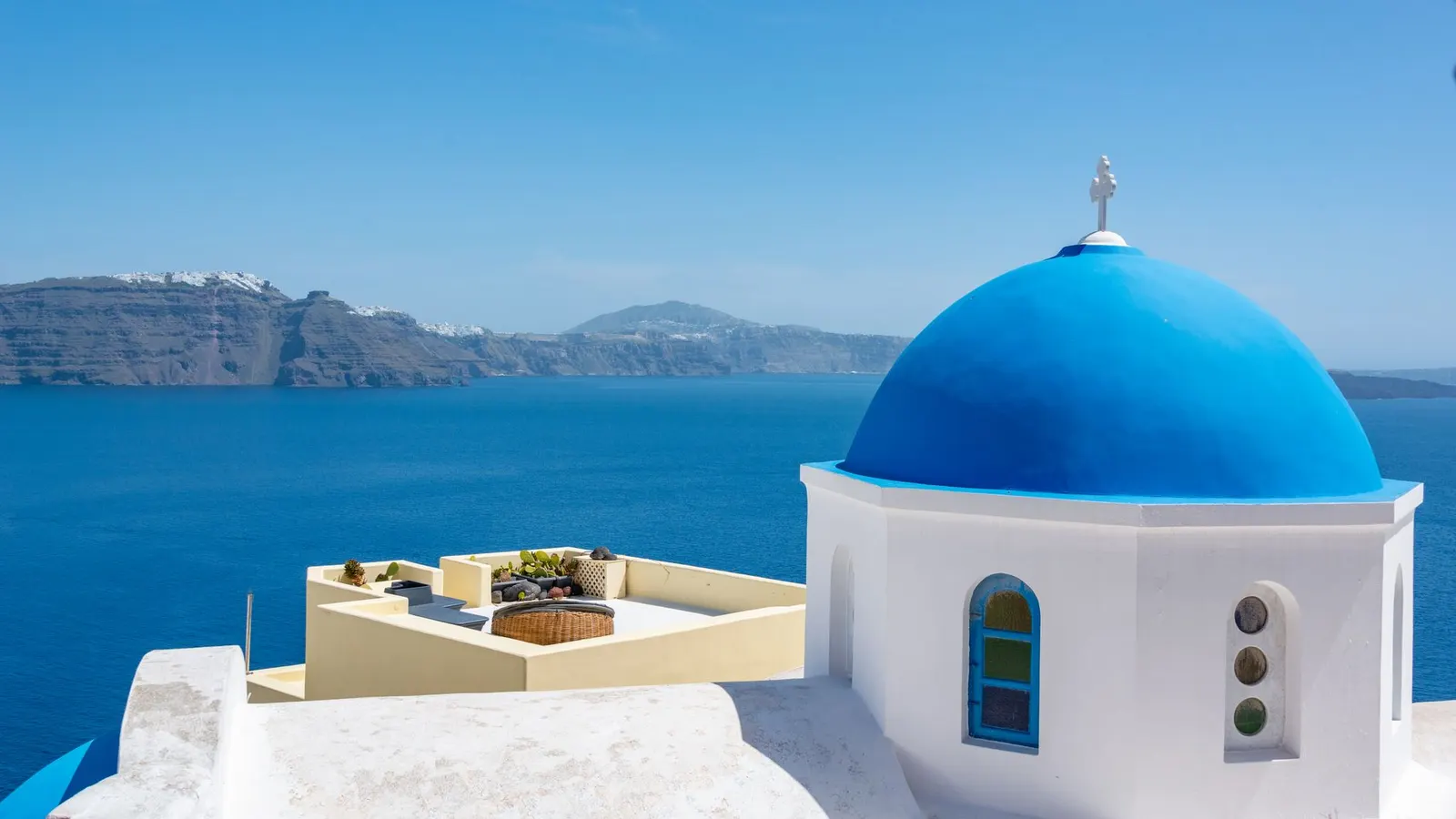
 Diego F. Parra · Pexels License
Greece
“Six thousand islands, two hundred inhabited, and a mainland nobody visits.”
Greece has around six thousand islands and islets, of which roughly two hundred are inhabited, and the ferry network that links them is the country's defining piece of infrastructure. The famous ones — Santorini, Mykonos — are genuinely overwhelmed in July and August, with cruise-ship arrivals now capped on Santorini. The other hundred and ninety are not, and the Dodecanese, Sporades and the smaller Cyclades hold everything people go to the big ones for.
The mainland is the part that gets skipped and shouldn't. Eighty per cent of Greece is mountainous: the Zagori villages and Vikos gorge in Epirus, the monasteries on rock pillars at Meteora, Mount Olympus, and the Peloponnese with Mycenae, Olympia and Nafplio. Add Athens, which has improved enormously as a city to spend time in rather than transit through, and there is a three-week trip here without a beach.
Highlights
The Acropolis and the Athens museums
The Parthenon at opening or in the last hour, the Acropolis Museum below it, and the National Archaeological Museum — which holds more than the Acropolis does and is half empty.
Meteora
Byzantine monasteries on sandstone pillars in Thessaly, six of them still in use. Walk the old paths between them rather than driving the ring road.
The Zagori villages and Vikos gorge
Stone villages, arched packhorse bridges and one of the deepest gorges in the world, in the Pindus mountains of Epirus. The best walking country in Greece and almost unvisited.
The lesser Cyclades and Dodecanese
Amorgos, Folegandros, Sifnos, Symi and Karpathos — the same white villages and clear water as the famous islands, at a third of the price and a tenth of the crowd.
Entry requirements for Greece
Checking your passport…
We don't hold entry details for this passport group yet.
Before you fly
The detail
- Passport validity
- Most destinations want validity beyond your stay, and some want six months. Check yours against the return date.
- Onward travel
- Airlines may ask for a return or onward ticket at check-in.
- Health
- No vaccinations required. Healthcare varies: Athens and larger cities are good, small islands may have a single clinic and evacuation by boat or helicopter. EHIC/GHIC covers EU and UK visitors for state care. Tap water is safe on the mainland and in many places not on the islands — ask locally. Heat illness and sunburn are the most common problems.
- Money
- Euro. Cards are now accepted almost everywhere by law, though small tavernas and island shops still prefer cash. ATMs are widespread; the independent ones on islands charge heavily. Tipping is around 5–10 % by rounding up. Note the bread-and-cover charge that appears on taverna bills as standard.
When to go
BestApr–Jun, Sep–Oct. AvoidJul–Aug.
Warm, green and flowering; Orthodox Easter fills the islands.
The band above each month is our editorial verdict - it weighs crowds, prices and access as well as weather. The line is average daily temperature, the bars are monthly rainfall. Select a month for the figures. Climate figures: ERA5 reanalysis via Open-Meteo, 2005–2024 normals.
What it costs
A day in Greece
Comfortable · sample day
≈ $97
Line items are real prices we track. The daily budget is an editorial estimate for this level, not their sum.
Where this sits among 244 countries we have costed
Island accommodation is the whole story — a room that costs €70 in May costs €180 in August on the popular Cyclades, and Santorini and Mykonos go further than that. Ferries and site entry are fixed. Many island businesses close entirely from November to April, so the cheap months are cheap partly because there is less to buy.
Updated Aug 2026 · Editorial synthesis — Greek ferry operator fares, Ministry of Culture site tariffs, accommodation sampling (2025–2026) · confidence high
Excludes international flights - they depend on where you fly from.
Regions to know
5Athens & Attica
The capital and its museums, Cape Sounion's temple, and the ports of Piraeus and Rafina for the islands.
The Peloponnese
Mycenae, Olympia, Epidaurus and Monemvasia, plus the Mani's tower villages and Nafplio's old town.
Northern Greece
Thessaloniki, Meteora's monasteries, the Zagori villages and the Vikos gorge, and Mount Olympus.
The Cyclades & Dodecanese
Santorini and Mykonos, and the quieter Amorgos, Folegandros, Sifnos, Symi and Karpathos.
Crete & the Ionian
Crete's Minoan palaces, Samaria gorge and mountain villages; Corfu, Kefalonia and Zakynthos to the west.
Practical guide
Getting there
Athens (ATH) and Thessaloniki (SKG) are the main gateways, with dozens of island airports taking seasonal European charters — Crete, Rhodes, Corfu and Santorini among them. Ferries run from Italy to Patras and Igoumenitsa. Land borders with Bulgaria, North Macedonia, Albania and Türkiye are all open.
Getting around
Ferries for the islands, booked ahead in season. The mainland has a limited rail network and good intercity buses (KTEL). Domestic flights save a great deal of time to Crete and the far islands. A car is close to essential on the mainland and useful on larger islands; scooters are the island norm and the usual licence caveats apply.
Money & costs
Euro. Cards are now accepted almost everywhere by law, though small tavernas and island shops still prefer cash. ATMs are widespread; the independent ones on islands charge heavily. Tipping is around 5–10 % by rounding up. Note the bread-and-cover charge that appears on taverna bills as standard.
Safety
Safe, with pickpocketing on the Athens metro and around Monastiraki the main risk. The genuine seasonal hazards are wildfires, which have been severe and fast-moving in recent summers — know your evacuation route if staying in forested or coastal scrub areas — and heat. Sea currents around some islands are stronger than they look. Earthquakes are frequent and mostly minor.
Health
No vaccinations required. Healthcare varies: Athens and larger cities are good, small islands may have a single clinic and evacuation by boat or helicopter. EHIC/GHIC covers EU and UK visitors for state care. Tap water is safe on the mainland and in many places not on the islands — ask locally. Heat illness and sunburn are the most common problems.
SIM & internet
EU roaming applies. Coverage is good across the mainland and most inhabited islands. Free wifi is standard in accommodation and tavernas.
Driving
Island roads are often narrow, unfenced and steep, and the small scooters rented everywhere are underpowered for them. Renting a quad or scooter without the correct licence category is the single most common insurance failure in Greece. Ferry car bookings sell out in August.
Rules change - verify with an official source before you rent.
ExplWorld VerifiedNo verified partners here yet - all 6 country seats are open.
Become ExplWorld Verified →Itineraries through this country
From the Journal
Before you go
GreeceFrequently asked questions
How do the ferries work?
Piraeus and Rafina are the main Athens ports, with routes grouped by island chain — you generally cannot hop easily between chains without returning to Athens. Book high-season crossings ahead, especially for cars, and expect weather cancellations, which are common enough that you should never plan a ferry on the day of an international flight.
Is Santorini worth it?
The caldera is genuinely spectacular and the island in August is genuinely unpleasant — cruise arrivals are now capped precisely because of that. If you go, go in May or October, stay in Oia or Imerovigli overnight, and accept the price. If the caldera view is what you want, Folegandros and Amorgos deliver something close for far less.
When is too hot?
July and August, increasingly. Heatwaves now regularly push Athens and the Peloponnese past 40 °C, and the Acropolis has closed during the hottest afternoon hours in recent summers. Wildfire risk is high in those months. May, June, September and October are better in every respect except sea temperature.