Grenada
“The Spice Isle — nutmeg in the air, chocolate on the farm, sculpture under the sea.”
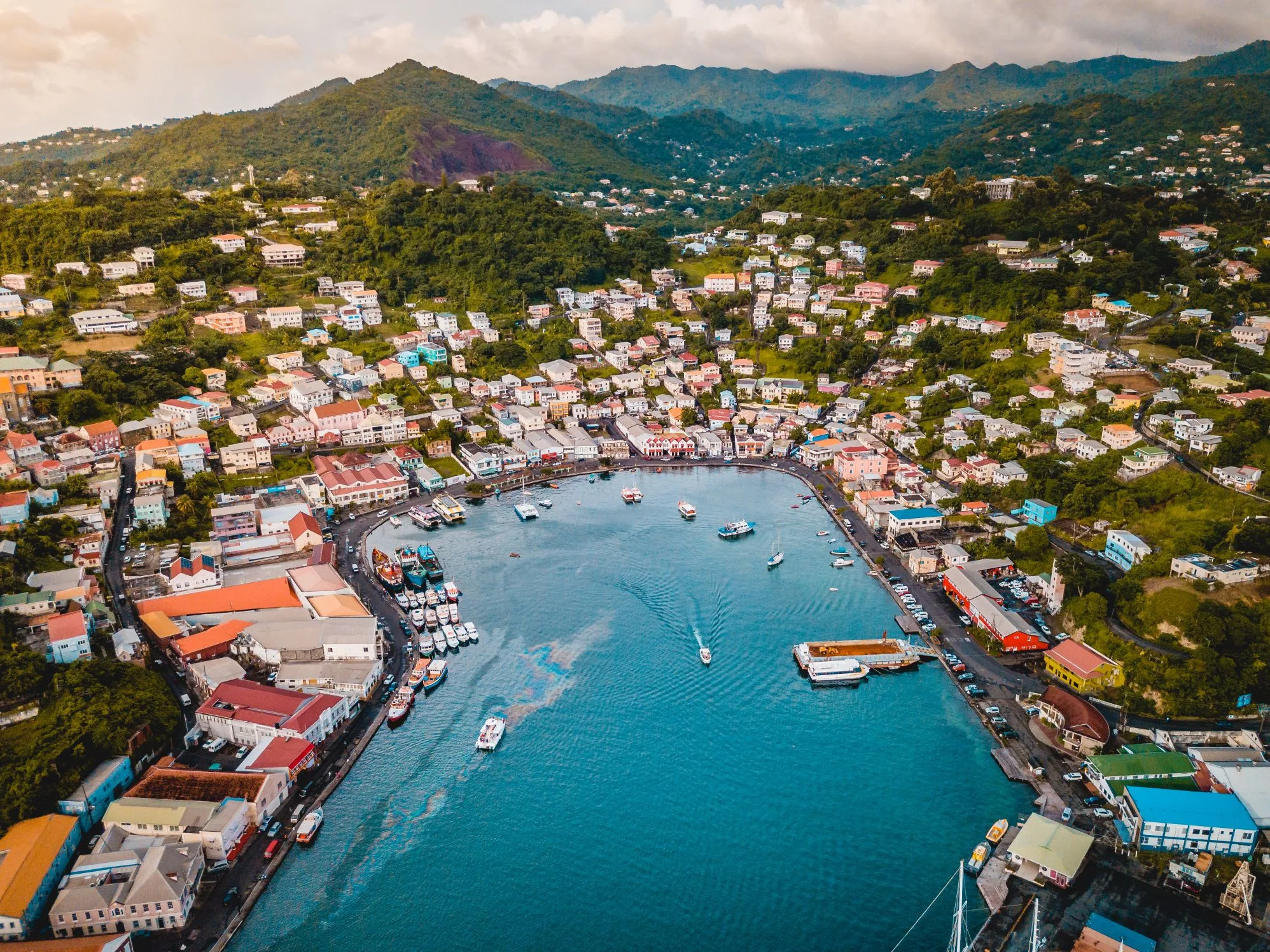
Grenada announces itself to the nose before the eyes: nutmeg, mace, cinnamon and cocoa have driven this island’s economy since the 1840s, and the air around Gouyave’s nutmeg-processing station still proves it. It is the southern Caribbean at its most complete — a horseshoe harbour capital in St George’s that vies for the region’s prettiest, a genuinely great town beach at Grand Anse, and a green volcanic interior of crater lakes and waterfalls twenty minutes inland.
Underwater, Grenada made art history: the Molinere sculpture park — the world’s first — sits in five metres of clear water beside reefs and the “Titanic of the Caribbean”, the wreck of the Bianca C. Add tree-to-bar chocolate estates, Friday fish fries at Gouyave, and sister islands Carriacou and Petite Martinique rebuilding with quiet grit after Hurricane Beryl, and you have a small island with an outsized amount to do.
Highlights
Grand Anse Beach
Three kilometres of soft white sand and calm turquoise fronting St George’s — one of the Caribbean’s great town beaches, with the capital’s Carenage harbour ten minutes away.
Molinere Underwater Sculpture Park
The world’s first underwater sculpture gallery — a ring of concrete figures gathering coral in five metres of water, snorkelable straight off a boat from St George’s.
Spice & chocolate estates
Gouyave’s nutmeg station still hand-sorts the crop; Belmont Estate and the House of Chocolate run tree-to-bar tours through cocoa fermentaries older than the republic.
Grand Etang & the waterfall interior
A crater lake in rainforest at 530 metres, Mona monkeys in the canopy, and the Seven Sisters and Annandale falls pouring off the volcanic spine.
Entry requirements for Grenada
Checking your passport…
We don't hold entry details for this passport group yet.
Before you fly
The detail
- Passport validity
- Most destinations want validity beyond your stay, and some want six months. Check yours against the return date.
- Onward travel
- Airlines may ask for a return or onward ticket at check-in.
- Health
- No mandatory vaccinations. Tap water is generally safe on Grenada proper; bottled is the norm on Carriacou. Dengue appears in wet-season cycles — pack repellent. The general hospital is in St George’s, and the university medical school’s presence keeps standards decent; serious cases are evacuated, so carry proper insurance. Watch for marked manchineel trees on beaches.
- Money
- The Eastern Caribbean dollar (XCD, pegged 2.70 to USD) is the currency; US dollars are accepted in tourist businesses with change in EC. Cards work in hotels, dive shops and supermarkets around Grand Anse and St George’s; carry EC cash for buses, market stalls, fish fries and everything on Carriacou. ATMs cluster in the capital.
When to go
BestDec–Apr. AvoidSeptember.
Dry-season prime — breezy, clear, yachts filling the lagoons.
The band above each month is our editorial verdict - it weighs crowds, prices and access as well as weather. The line is average daily temperature, the bars are monthly rainfall. Select a month for the figures. Climate figures: ERA5 reanalysis via Open-Meteo, 2005–2024 normals.
What it costs
A day in Grenada
Comfortable · sample day
≈ $130
Line items are real prices we track. The daily budget is an editorial estimate for this level, not their sum.
Where this sits among 244 countries we have costed
High season (mid-December–April) lifts room rates 25–45 %, with the Christmas–New Year fortnight the extreme; Spicemas (mid-August) creates a short secondary spike. September–October brings the deepest discounts and some small-hotel closures. Buses, food and estate tours hold flat year-round; Carriacou pricing remains volatile while post-Beryl rebuilding limits supply.
Updated Aug 2026 · Editorial synthesis — Budget Your Trip, Grenada hotel-rate surveys, tour and estate published prices (2025–2026) · confidence medium
Excludes international flights - they depend on where you fly from.
Regions to know
5St George’s & Grand Anse
The horseshoe Carenage, Fort George’s harbour views and the market’s spice pyramids — with Grand Anse’s three kilometres of sand ten minutes south.
Grand Etang interior
Crater lake, Mona monkeys, and the waterfall circuit — Annandale, Seven Sisters, Concord — threading the rainforest spine of the island.
The west coast & Gouyave
Molinere’s underwater sculptures offshore, then the nutmeg-processing station and the Friday-night Fish Fry in Gouyave, the town that never stops smelling of spice.
The north & east
Belmont Estate’s tree-to-bar chocolate, Levera’s turtle-nesting beach, River Antoine’s water-powered rum distillery and Sauteurs’ cliff-top history.
Carriacou & Petite Martinique
Boat-building villages, Paradise Beach and reef-ringed Sandy Island — recovering from Hurricane Beryl (2024) with characteristic grit; visiting helps.
Practical guide
Getting there
Maurice Bishop International (GND) has year-round directs from London (British Airways, Virgin Atlantic) and US hubs, plus dense regional links via Barbados — from Central Europe count on one stop via London, 13–15 hours door to door. The airport sits ten minutes from Grand Anse. Carriacou connects by Osprey ferry (~90 minutes) or a short island-hopper flight.
Getting around
Privately run “reggae buses” swarm the west-coast corridor for pocket change — flag them anywhere, brace for soca volume. A rental car unlocks the interior and the north; roads are paved but steep, narrow and blind-cornered. Taxis use fixed rates — confirm before boarding. Water taxis shuttle Grand Anse–St George’s in ten scenic minutes.
Money & costs
The Eastern Caribbean dollar (XCD, pegged 2.70 to USD) is the currency; US dollars are accepted in tourist businesses with change in EC. Cards work in hotels, dive shops and supermarkets around Grand Anse and St George’s; carry EC cash for buses, market stalls, fish fries and everything on Carriacou. ATMs cluster in the capital.
Safety
Little beyond common sense on land. On the water, choose licensed operators for sculpture-park and island trips, and respect currents on the Atlantic side — swim the leeward beaches. In the rainforest, guided hikes make sense for the longer waterfall chains after rain. Carriacou’s infrastructure is still rebuilding post-Beryl; book beds ahead rather than assuming walk-in supply.
Health
No mandatory vaccinations. Tap water is generally safe on Grenada proper; bottled is the norm on Carriacou. Dengue appears in wet-season cycles — pack repellent. The general hospital is in St George’s, and the university medical school’s presence keeps standards decent; serious cases are evacuated, so carry proper insurance. Watch for marked manchineel trees on beaches.
SIM & internet
Flow and Digicel both run LTE across Grenada and Carriacou; tourist SIMs cost €15–20 and eSIMs activate on arrival. Coverage is solid along the populated west coast and patchy in the Grand Etang interior. Hotel and café wifi around Grand Anse is dependable — the medical-school crowd keeps standards up.
Driving
Limits are lightly posted; assume ~30 km/h through villages and let the terrain set the pace elsewhere. Roads are steep and blind-cornered — sound the horn as locals do, and give buses room.
Rules change - verify with an official source before you rent.
ExplWorld VerifiedNo verified partners here yet - all 6 country seats are open.
Become ExplWorld Verified →Itineraries through this country
From the Journal
Before you go
GrenadaFrequently asked questions
Is Grenada safe?
One of the calmest islands in the region — violent crime against visitors is rare and the culture is conservative and friendly. Petty theft from beaches and unlocked cars is the practical concern. Standard night-time sense in St George’s covers the rest.
When is the best time to visit?
December to April is the dry, breezy prime. Grenada sits at 12°N near the bottom of the hurricane belt and takes hits rarely — but not never, as Beryl (2024, devastating on Carriacou) and Ivan (2004) proved. June–November is wet season; September–October are the dampest, quietest months. Spicemas carnival lights up mid-August.
How much does a day in Grenada cost?
Around €120 / $140 per day mid-range: €65–75 for your half of a double near Grand Anse, €30 food (rotis and fish fries keep lunches cheap), the rest buses, boat trips and estate tours. Careful travellers using reggae buses and local plates can hold €55–65.