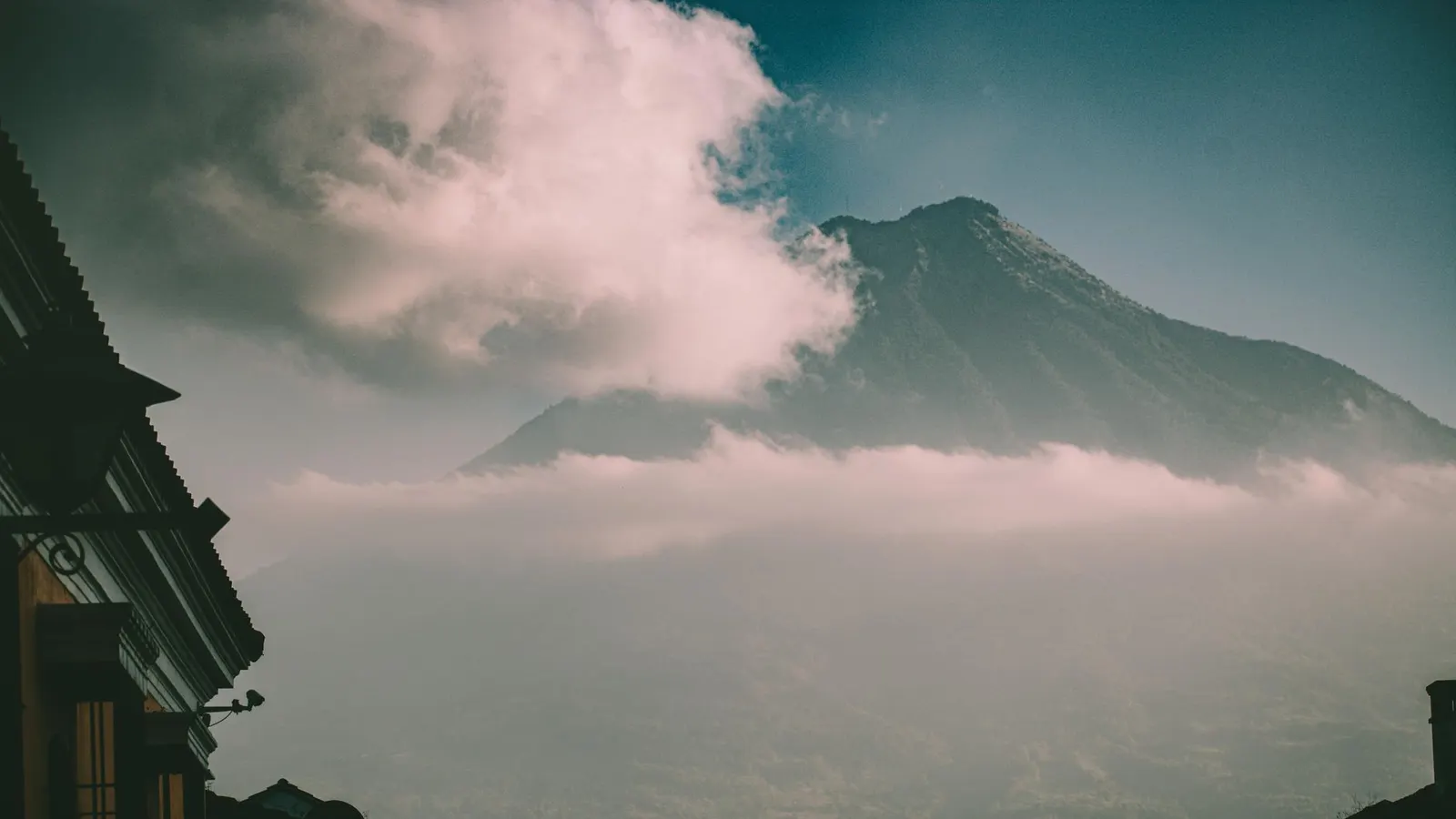
 HAROLD PRODUCTIONS · Pexels License
Guatemala
“The heart of the Maya world — volcano fires over Antigua, a lake ringed by giants, and Tikal above the jungle canopy.”
No country in Central America carries more weight per kilometre: Antigua’s cobbled grid under three volcanoes, Lake Atitlán’s Maya villages reachable only by boat, the highland markets of Chichicastenango, and Tikal’s temples breaking the Petén jungle canopy at dawn. Nearly half the population is indigenous Maya — this is a living culture, not an archaeological backdrop.
The signature experience is standing on Acatenango’s cold summit ridge at night watching Volcán de Fuego throw lava into the dark — arguably the best overnight trek on the continent, for the price of a mid-range dinner in Costa Rica. Guatemala rewards slow travel: the chicken-bus network goes everywhere, Spanish schools in Antigua and Xela are among the cheapest in the hemisphere, and a comfortable budget here is half of what the southern neighbours ask.
Highlights
Acatenango overnight trek
Camp at 3,600 m facing Volcán de Fuego as it erupts through the night — lava fountains against the stars. Cold, hard, and worth every step.
Lake Atitlán
A caldera lake ringed by volcanoes and Maya villages, each with its own character — study Spanish in San Pedro, market-hop from Panajachel, watch sunrise from Indian Nose.
Tikal at dawn
The greatest of all Maya cities: temples above the Petén canopy, howler monkeys as the soundtrack, and far fewer visitors than any comparable site in Mexico.
Antigua Guatemala
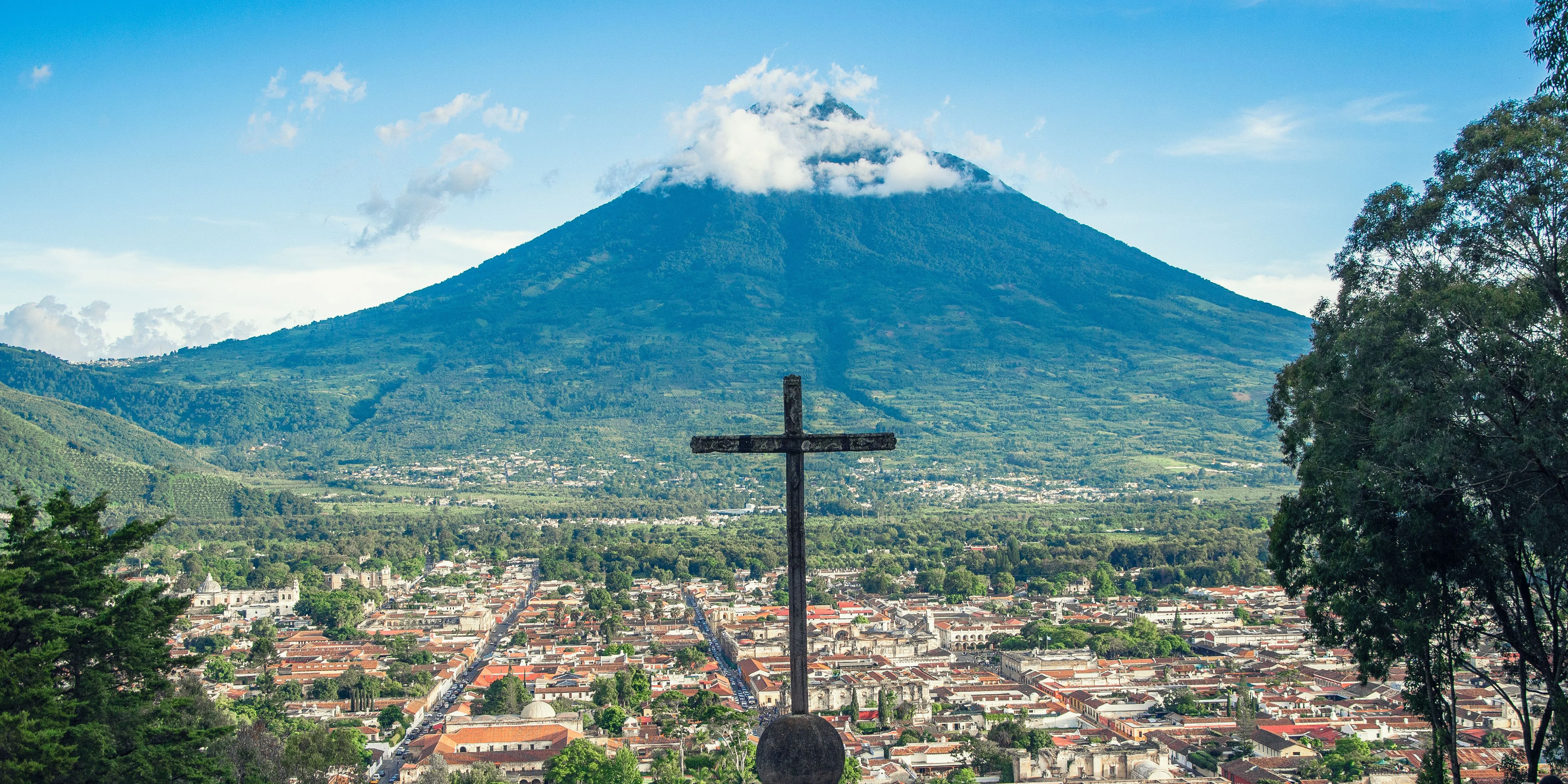
A UNESCO-listed colonial capital of ruined convents and coffee cafés under the perfect cone of Volcán de Agua — the most beautiful town in Central America.
Entry requirements for Guatemala
Checking your passport…
We don't hold entry details for this passport group yet.
Before you fly
The detail
- Passport validity
- Most destinations want validity beyond your stay, and some want six months. Check yours against the return date.
- Onward travel
- Airlines may ask for a return or onward ticket at check-in.
- Health
- No mandatory vaccinations; hepatitis A and typhoid are the standard advice. Altitude is the surprise: Xela sits at 2,330 m, Acatenango’s camp near 3,600 m — acclimatise before the trek, and take the cold seriously (people summit in every layer they own). Water is bottled/filtered only. Dengue exists in the lowlands (Petén, the coast) year-round.
- Money
- The quetzal trades around 8.4 to the euro. Cash rules: markets, comedores, buses, most guesthouses. Cards work in Antigua and mall-Guatemala but attract 5–7 % surcharges elsewhere. ATMs (5B and BAM are the reliable networks) are in every town but fail often — carry a reserve, and stock up before Lanquín/Semuc Champey or El Paredón, which have none.
When to go
BestNov–Apr. AvoidSeptember.
Dry, cool and clear — prime volcano-trekking weather.
The band above each month is our editorial verdict - it weighs crowds, prices and access as well as weather. The line is average daily temperature, the bars are monthly rainfall. Select a month for the figures. Climate figures: ERA5 reanalysis via Open-Meteo, 2005–2024 normals.
What it costs
A day in Guatemala
Comfortable · sample day
≈ $54
Line items are real prices we track. The daily budget is an editorial estimate for this level, not their sum.
Where this sits among 244 countries we have costed
Seasonal price movement is mild: dry-season (Nov–Apr) rooms in Antigua and on Atitlán run 10–25 % above green-season rates, and Semana Santa in Antigua doubles them — book months out. The wet months (Sep–Oct especially) bring genuine bargaining room everywhere. Trek and entry prices are flat year-round.
Updated Aug 2026 · Editorial synthesis — Budget Your Trip, hostel and tour operator price lists, regional backpacker cost guides (2025–2026) · confidence medium
Excludes international flights - they depend on where you fly from.
Regions to know
5Antigua & the volcano corridor
The colonial showpiece under Agua, Acatenango and Fuego — base for the lava-watching trek and the country’s best food scene.
Lake Atitlán
Panajachel, San Pedro, San Marcos and Santiago — a boat-hopping caldera where every village has a different personality.
The western highlands
Quetzaltenango (Xela), the Chichicastenango market and Todos Santos — Maya Guatemala at altitude, with the country’s best trekking and cheapest Spanish schools.
Petén & Tikal
Jungle lowlands around Flores island town: Tikal, Yaxhá at sunset, and the multi-day El Mirador trek for the committed.
Alta Verapaz & the Río Dulce
Semuc Champey’s turquoise limestone pools near Lanquín, and the sweet-water canyon route to the Caribbean at Lívingston.
Practical guide
Getting there
La Aurora (GUA) in Guatemala City has a direct Iberia link from Madrid plus all the US hubs; from Central Europe count on one stop, 14–17 hours. Overland arrivals are routine: comfortable coaches from Mexico (Tapachula, San Cristóbal), tourist shuttles from Belize and Copán, and the scenic border-and-boat route from Palenque via Frontera Corozal. Antigua is a fixed-price 45-minute shuttle from the airport — skip the capital if you can.
Getting around
Tourist shuttles connect every hub (Antigua–Atitlán €13, Antigua–Lanquín €25) and are worth it with luggage; chicken buses cost a tenth of that and go absolutely everywhere, best ridden short-hop with your bag on your lap. Atitlán runs on lanchas — public boats between villages until sunset. For Tikal, fly GUA–Flores (1 h) or take the overnight coach; the drive via Río Dulce breaks the trip nicely.
Money & costs
The quetzal trades around 8.4 to the euro. Cash rules: markets, comedores, buses, most guesthouses. Cards work in Antigua and mall-Guatemala but attract 5–7 % surcharges elsewhere. ATMs (5B and BAM are the reliable networks) are in every town but fail often — carry a reserve, and stock up before Lanquín/Semuc Champey or El Paredón, which have none.
Safety
Sensible-traveller country: the well-worn circuit sees millions of visitors with little trouble. Concrete rules — day buses not night buses on long hauls, registered guides for volcano hikes (Acatenango operators handle this), don’t flash phones in Guatemala City or on chicken buses, and check conditions before remote highland treks. Fuego’s eruptions occasionally close Acatenango: operators cancel when INSIVUMEH says so — believe them.
Health
No mandatory vaccinations; hepatitis A and typhoid are the standard advice. Altitude is the surprise: Xela sits at 2,330 m, Acatenango’s camp near 3,600 m — acclimatise before the trek, and take the cold seriously (people summit in every layer they own). Water is bottled/filtered only. Dengue exists in the lowlands (Petén, the coast) year-round.
SIM & internet
Claro has the strongest coverage, Tigo the better prepaid data deals — €8–10 buys 10+ GB (passport to register). 4G covers the circuit; Semuc Champey, El Mirador and stretches of the highlands are genuinely offline — download maps and tell your guesthouse your plans. Antigua’s cafés double as the region’s digital-nomad living room.
Driving
Defensive driving is mandatory in spirit: chicken buses overtake on blind curves, and highland fog closes in fast. Avoid night driving between cities. Real average speeds run 40–50 km/h on mountain routes regardless of the posted limit.
Rules change - verify with an official source before you rent.
ExplWorld VerifiedNo verified partners here yet - all 6 country seats are open.
Become ExplWorld Verified →Itineraries through this country
Before you go
GuatemalaFrequently asked questions
Is Guatemala safe for travellers?
The tourist circuit — Antigua, Atitlán, Tikal, the shuttles between them — is well trodden and generally trouble-free. Standard rules: use tourist shuttles or first-class buses rather than chicken buses for long hauls with luggage, avoid Guatemala City’s rougher zones (stick to 10 and 13, or skip the capital entirely), hike volcanoes with guides, and keep phones out of sight in markets. Petty theft, not violence, is the realistic risk.
When is the best time to visit Guatemala?
November to April is the dry season — clear volcano summits, dust-free trails and reliable Atitlán boat crossings. May to October brings afternoon rains (mornings usually stay fine) and the greenest landscapes. Semana Santa in Antigua is world-famous and books out months ahead; the wettest months, September and October, are worth avoiding for the big treks.
How much does a day in Guatemala cost?
Around €50 ($54) per day mid-range: €20–25 for your half of a double room, €12–15 for food, the rest for shuttles and entries. Backpackers manage on €28 ($30) with dorms, comedores and chicken buses. The big-ticket items are Tikal (€18 entry) and the Acatenango trek (€65 with gear) — budget them as events, not daily spend.