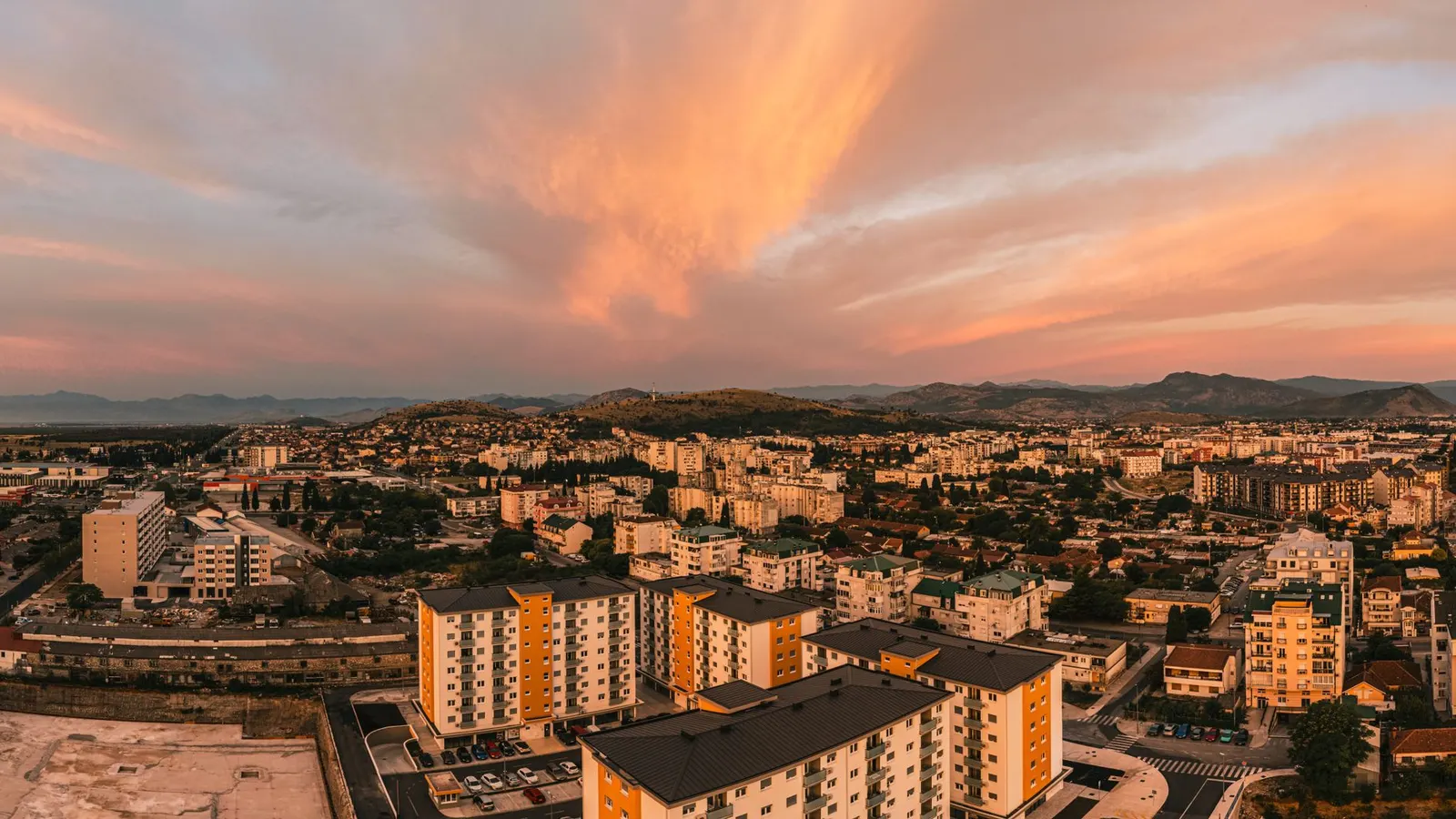
 Alexander Nadrilyanski · Pexels License
Montenegro
“A fjord that is not a fjord, and mountains behind it within an hour.”
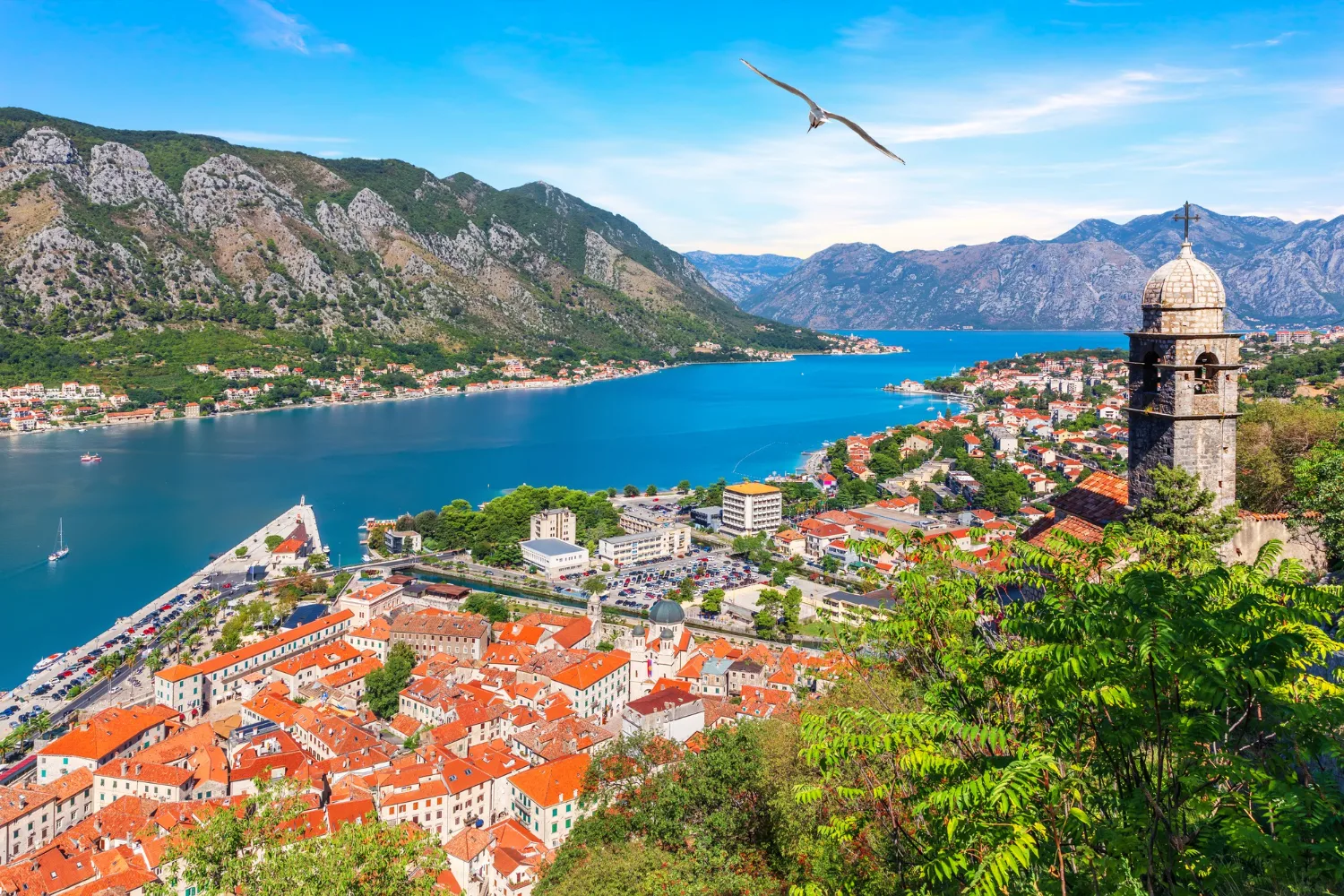
Montenegro is small enough to cross in three hours and holds a coastline, a glacial mountain massif and the deepest river canyon in Europe. The Bay of Kotor is the headline — a submerged river canyon that looks like a fjord, ringed by Venetian towns with Kotor's walls climbing the cliff behind it — and it is genuinely crowded in July and August when the cruise ships call.
The interior is where the country opens up and almost nobody goes. Durmitor national park has eighteen glacial lakes and peaks over 2,500 metres, the Tara canyon is 1,300 metres deep, and the north around Žabljak is a two-hour drive from the coast into somewhere completely different. The country uses the euro without being in the eurozone, which is a historical accident that works fine.
Highlights
The Bay of Kotor
Kotor's walled old town with fortifications climbing 1,300 steps up the cliff, plus Perast and the island church of Our Lady of the Rocks. Walk the walls at dawn before the ships arrive.
Durmitor and the Tara canyon
Glacial lakes, 2,500-metre peaks and the deepest canyon in Europe, rafted from Šćepan Polje. Žabljak is the base and the drive up from the coast is spectacular in itself.
Lovćen and Njegoš's mausoleum
A mountain above Kotor reached by a road of twenty-five hairpins, with the national poet-prince's tomb at the top and a view over the whole bay.
Lake Skadar
The largest lake in the Balkans, shared with Albania — pelicans, monasteries on islets, waterlilies in early summer and a wine region along its northern shore.
Entry requirements for Montenegro
Checking your passport…
We don't hold entry details for this passport group yet.
Before you fly
The detail
- Passport validity
- Most destinations want validity beyond your stay, and some want six months. Check yours against the return date.
- Onward travel
- Airlines may ask for a return or onward ticket at check-in.
- Health
- No vaccinations required. Healthcare is adequate in Podgorica and thinner elsewhere; EHIC does not apply, so insurance is necessary. Tap water is safe in the main towns. Mountain rescue exists but is limited — for Durmitor, insurance covering mountain activity matters.
- Money
- Euro. Cards are accepted on the coast and in Podgorica; mountain guesthouses and small towns often want cash. ATMs are widespread on the coast, sparse in the north. Tipping is around 10 %. A tourist tax per person per night is added to accommodation and registration is done by your host.
When to go
BestMay–Jun, September. AvoidJul–Aug, Nov–Feb.
The best month — warm, green, and before the ships.
The band above each month is our editorial verdict - it weighs crowds, prices and access as well as weather. The line is average daily temperature, the bars are monthly rainfall. Select a month for the figures. Climate figures: ERA5 reanalysis via Open-Meteo, 2005–2024 normals.
What it costs
A day in Montenegro
Comfortable · sample day
≈ $76
Line items are real prices we track. The daily budget is an editorial estimate for this level, not their sum.
Where this sits among 244 countries we have costed
The coast is a sharp seasonal market — accommodation in Kotor and Budva doubles or triples in July and August, and much of it closes from November to April. Durmitor has a shorter summer season plus a small winter ski market. The interior is inexpensive year-round.
Updated Aug 2026 · Editorial synthesis — accommodation and operator sampling, park and site tariffs (2025–2026) · confidence medium
Excludes international flights - they depend on where you fly from.
Regions to know
5The Bay of Kotor
Kotor, Perast and Herceg Novi around the submerged canyon, with Lovćen and its mausoleum above.
The southern coast
Budva's old town and nightlife, Sveti Stefan, and the long beaches and Ada Bojana at Ulcinj.
Durmitor & the north
Žabljak, the Black Lake, 2,500-metre peaks and the Tara canyon with its rafting.
Podgorica & Skadar
The capital, Lake Skadar's pelicans and island monasteries, and the Crmnica wine villages.
The east & Prokletije
Biogradska Gora's primeval forest, Kolašin, and the Accursed Mountains on the Albanian and Kosovar borders.
Practical guide
Getting there
Tivat (TIV) is closest to the bay and Podgorica (TGD) serves the interior, both with growing European service; Dubrovnik airport is 40 minutes from the border and often cheaper. Buses reach every neighbouring country. The Belgrade to Bar railway is one of the great scenic lines in Europe, crossing the Mala Rijeka viaduct.
Getting around
Buses connect the coastal towns and the main interior routes and are cheap and frequent. The Bar to Belgrade railway is scenic and slow. A car is genuinely useful, particularly for Durmitor and the mountain roads, though the Bay of Kotor road is congested in summer and the ferry across the narrows saves a long drive around.
Money & costs
Euro. Cards are accepted on the coast and in Podgorica; mountain guesthouses and small towns often want cash. ATMs are widespread on the coast, sparse in the north. Tipping is around 10 %. A tourist tax per person per night is added to accommodation and registration is done by your host.
Safety
Safe, with petty theft on the coast in summer the main risk. The genuine hazards are mountain roads — narrow, unfenced and with steep drops, particularly the Lovćen and Durmitor approaches — and swimming off unpatrolled beaches. Wildfires affect the coast in dry summers. Some old military areas in the north remain fenced.
Health
No vaccinations required. Healthcare is adequate in Podgorica and thinner elsewhere; EHIC does not apply, so insurance is necessary. Tap water is safe in the main towns. Mountain rescue exists but is limited — for Durmitor, insurance covering mountain activity matters.
SIM & internet
Not in the EU, though the Western Balkans roaming zone and some EU plans cover it — check yours. Local SIMs are cheap. Coverage is good on the coast and in valleys, patchy in the high mountains. Wifi is standard in accommodation.
Driving
The road around the Bay of Kotor is single-lane and jams badly in summer — the Kamenari to Lepetane ferry across the narrows saves an hour and costs a few euros. Mountain roads to Lovćen and Durmitor are narrow with unprotected drops and are not for nervous drivers.
Rules change - verify with an official source before you rent.
ExplWorld VerifiedNo verified partners here yet - all 6 country seats are open.
Become ExplWorld Verified →Itineraries through this country
Before you go
MontenegroFrequently asked questions
How bad are the cruise crowds in Kotor?
Concentrated and predictable. Ships arrive mid-morning and leave late afternoon, and in that window the old town is very full. Stay overnight, do the walls at seven, and use the middle of the day for Lovćen or the bay villages. May, June, September and October are far easier than July and August.
Coast or mountains?
Both — they are ninety minutes apart. A good shape is three days on the bay, two in Durmitor, and a night at Lake Skadar. The mountains are where the country stops feeling like a smaller Croatia and starts feeling like itself.
Does it use the euro?
Yes, unilaterally — Montenegro adopted the Deutsche Mark and then the euro without being in the EU or the eurozone. It is not an EU member, so this is a border crossing and your Schengen allowance is not spent here.