 Pseudopanax at English Wikipedia · Public domain
Niue
“One raised coral island, no beaches to speak of, and the clearest water in the Pacific.”
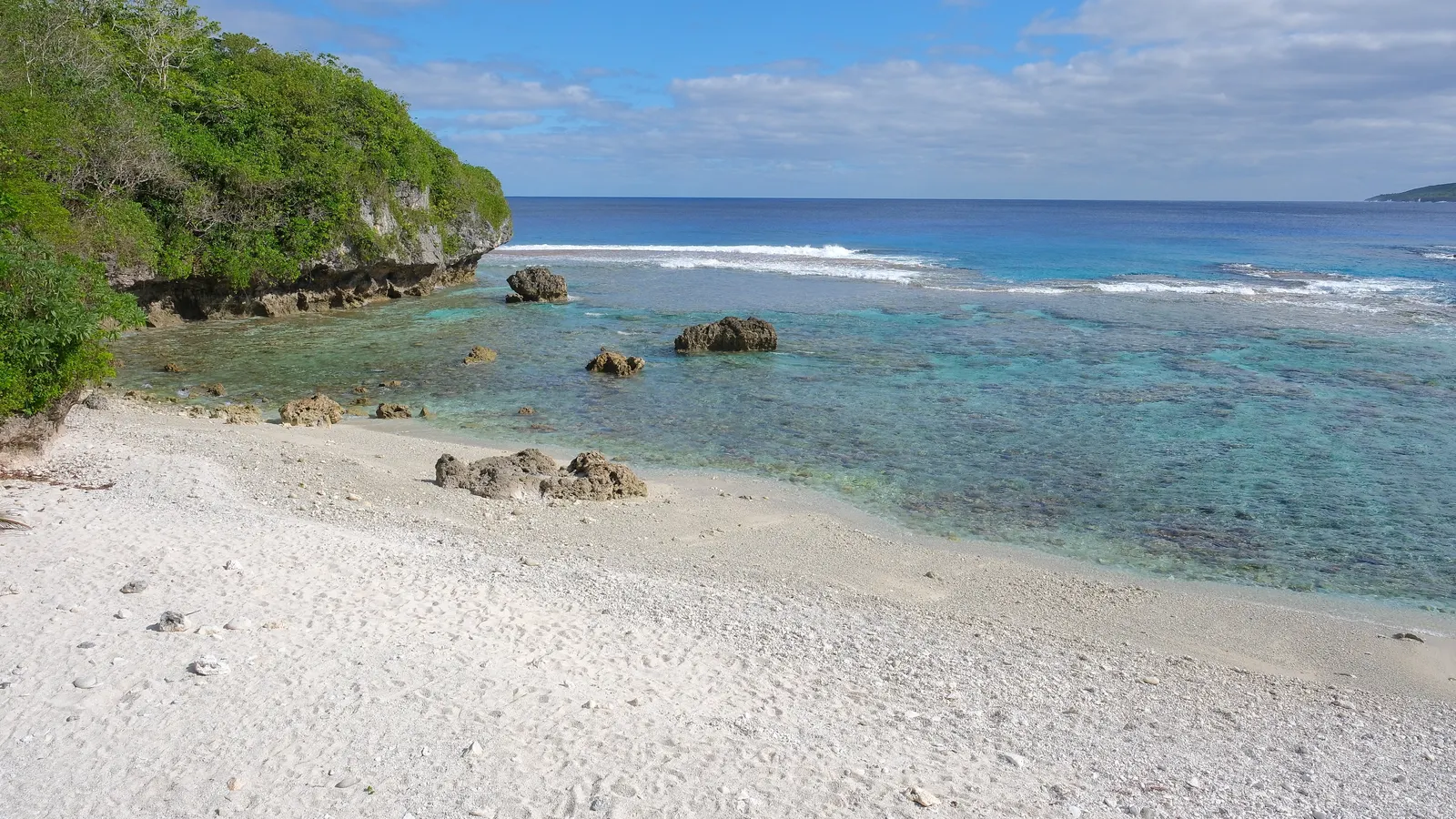
Niue is a single raised coral atoll — one of the largest in the world — sitting 260 metres above the sea it once lay under. There is no lagoon and almost no sand: the coast is a limestone rim cut by chasms, caves and rock pools reached down "sea tracks" through the forest. What that geology produces is water clarity that regularly exceeds 70 metres, because there is no runoff, no river and no sediment.
It is self-governing in free association with New Zealand, whose citizenship Niueans hold, and has about 1,700 residents against perhaps 30,000 Niueans living in New Zealand. One Air New Zealand flight a week from Auckland sets the rhythm of every visit. Humpback whales come inshore between July and October and Niue is one of very few places where swimming with them is permitted, under licence. It is also a whale sanctuary and, since 2020, has protected 40% of its waters.
Highlights
Swimming with humpbacks
From roughly July to October humpbacks come close inshore, and Niue is one of a handful of places where licensed operators may take swimmers into the water with them. Numbers are capped and the rules are enforced.
The sea tracks
Marked paths through the forest to chasms, caves and rock pools around the coast — Togo, Talava's arches, Matapa's bathing chasm and Limu's pools. There are dozens, and they are the island's main activity.
The water clarity
No rivers, no runoff and no sediment mean visibility that regularly passes 70 metres — among the clearest anywhere. Diving and snorkelling here feel closer to flying, with sea snakes, caves and dramatic drop-offs.
Huvalu Forest
A conservation area of primary rainforest in the island's interior, with limestone sinkholes, coconut crabs and the largest surviving block of native forest in Niue.
Entry requirements for Niue
Checking your passport…
We don't hold entry details for this passport group yet.
Before you fly
The detail
- Passport validity
- Most destinations want validity beyond your stay, and some want six months. Check yours against the return date.
- Onward travel
- Airlines may ask for a return or onward ticket at check-in.
- Health
- No malaria. A small hospital in Alofi handles basic care; anything serious means waiting for a medical evacuation to New Zealand, which is not immediate. Insurance covering evacuation is essential given the weekly flight.
- Money
- New Zealand dollar. Cards are accepted at most businesses but the connection can fail, so carry cash. There is one bank.
When to go
BestMay–Oct. AvoidDec–Mar.
Dry season opens — calm, clear and quiet.
The band above each month is our editorial verdict - it weighs crowds, prices and access as well as weather. The line is average daily temperature, the bars are monthly rainfall. Select a month for the figures. Climate figures: ERA5 reanalysis via Open-Meteo, 2005–2024 normals.
What it costs
A day in Niue
Comfortable · sample day
≈ $167
Line items are real prices we track. The daily budget is an editorial estimate for this level, not their sum.
Where this sits among 244 countries we have costed
July to September is whale season and effectively the only high season; accommodation and whale operators book out months ahead. The rest of the year is very quiet.
Updated Aug 2026 · Editorial synthesis — Niue Tourism listings and operator sampling (2025–2026) · confidence high
Excludes international flights - they depend on where you fly from.
Regions to know
5Alofi
The capital on the west coast, the market, the wharf where boats are craned into the sea, and the Matavai coast.
The north
Matapa Chasm, Talava arches, Hikutavake and the Limu pools — the best of the sea tracks.
The east
Togo Chasm's palm-floored sinkhole, Vaikona and the rough windward coast.
The south
Avatele and Hio's small beaches, Anapala chasm and the quiet southern villages.
Huvalu Forest
The interior conservation area — primary rainforest, sinkholes, coconut crabs and no roads.
Practical guide
Getting there
Air New Zealand flies weekly from Auckland, about three and a half hours. There is no other scheduled service and no ferry. Occasional charters run in the high season.
Getting around
A hire car is essential — the island road is 64 kilometres and the sea tracks are spread all around it. Bicycles work for the fit. There is no public transport.
Money & costs
New Zealand dollar. Cards are accepted at most businesses but the connection can fail, so carry cash. There is one bank.
Safety
Extremely safe. The hazards are the sea tracks — slippery limestone, sharp coral, and chasms where an incoming swell can be dangerous — and remoteness. Check tide and swell before entering any coastal pool, and tell someone where you are going.
Health
No malaria. A small hospital in Alofi handles basic care; anything serious means waiting for a medical evacuation to New Zealand, which is not immediate. Insurance covering evacuation is essential given the weekly flight.
SIM & internet
Telecom Niue; the whole island has free public Wi-Fi in many areas, which is unusual. Mobile coverage across the island. Bandwidth is limited but functional.
Driving
Left-hand traffic on a 64-kilometre ring road with almost no traffic. Buying the local licence at the Alofi police station costs a few dollars and everyone does it. Watch for coconut crabs and uga on the road at night.
Rules change - verify with an official source before you rent.
ExplWorld VerifiedNo verified partners here yet - all 6 country seats are open.
Become ExplWorld Verified →Before you go
NiueFrequently asked questions
How does the once-weekly flight work?
Air New Zealand flies Auckland–Niue once a week, occasionally twice in high season. That means your trip is seven days or fourteen — there is no in-between. Accommodation is limited and books out around the whale season, so plan several months ahead.
Are there beaches?
Barely. This is a raised coral island with a cliff coastline; the swimming is in chasms, pools and reef gaps reached down sea tracks, not on sand. Hio and Avatele have small sandy stretches. If you want a beach holiday, this is the wrong island; if you want water, caves and whales, it is the right one.
What are the local rules I should know?
Sunday is observed and most activity stops. Some sea tracks and reef areas fall under tapu restrictions at certain times and will be signed — respect them. Swimming with whales is only permitted with a licensed operator, and approaching them yourself, including from a kayak, is prohibited.