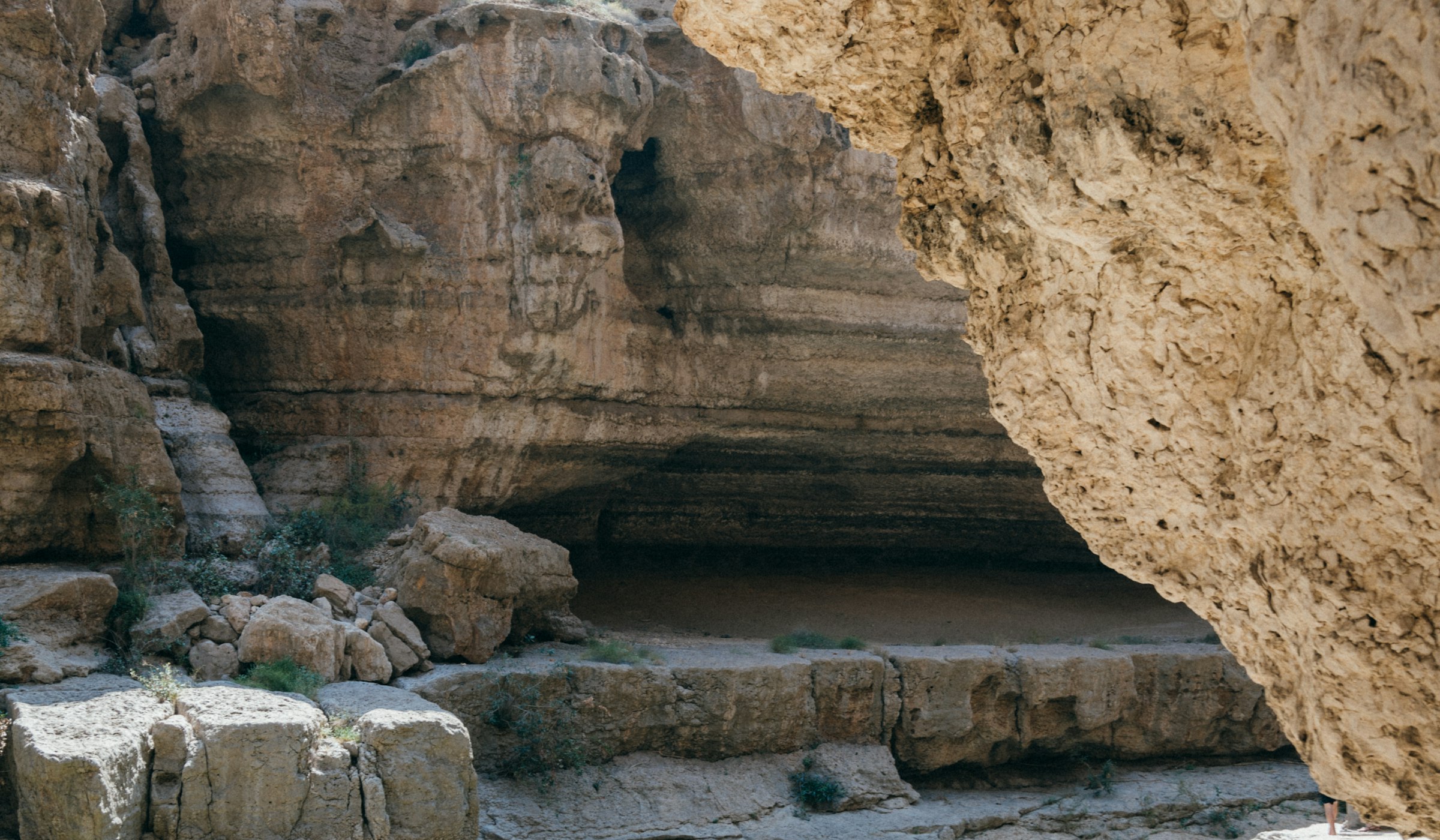
“Wadis, forts and a coastline of 3,165 kilometres, with almost no high-rise.”
Oman deliberately did not build the Gulf skyline. Muscat has a height limit and a whitewashed low-rise character, the interior is forts and date oases, and the Hajar mountains rise to 3,000 metres with canyons cut into them. The country opened to tourism late and slowly, which is why it feels less packaged than its neighbours.
The variety is the surprise: wadis with year-round pools you swim in, the Wahiba Sands, a fjord-like coast at Musandam, green turtles nesting at Ras al Jinz, and Dhofar in the far south, which catches the Indian Ocean monsoon and turns green in August while the rest of the peninsula bakes. Self-driving is easy and safe, and the country rewards it more than any other in the Gulf.
Highlights
The Hajar mountains
Jebel Shams above a 1,000-metre canyon with a balcony walk along its rim, Jebel Akhdar's terraced rose gardens, and mountain villages reached by switchback roads.
Wadi Shab and Wadi Bani Khalid
Canyon pools of clear green water — Wadi Shab needs a short boat, a walk and a swim through a slot to reach a cave waterfall, which is the best hour in the country.
Musandam
A mountainous peninsula separated from the rest of Oman by the UAE, with fjord-like inlets, dhow cruises and dolphins. Reached by flight or by driving through Emirati territory.
Salalah and the khareef
The far south catches the Indian Ocean monsoon from June to September and turns green — waterfalls, mist and grass in a country that has none of it otherwise. Gulf visitors come precisely then.
Entry requirements for Oman
Checking your passport…
We don't hold entry details for this passport group yet.
Before you fly
The detail
- Passport validity
- Most destinations want validity beyond your stay, and some want six months. Check yours against the return date.
- Onward travel
- Airlines may ask for a return or onward ticket at check-in.
- Health
- No vaccinations required; hepatitis A and typhoid are standard advice. Healthcare in Muscat is good; remote areas are far from it. Tap water is desalinated and generally safe in Muscat, though most drink bottled. Heat and dehydration are the main risks. Insurance with evacuation cover matters given the distances.
- Money
- Rial, one of the highest-valued currencies in the world — one rial is about €2.30, so prices look small and are not. Cards are widely accepted; souqs and small towns are cash. ATMs are common. Tipping is not obligatory and is appreciated. Fuel is very cheap by European standards.
When to go
BestOct–Mar. AvoidMay–Aug.
Warm days and cool nights — the best month in the north.
The band above each month is our editorial verdict - it weighs crowds, prices and access as well as weather. The line is average daily temperature, the bars are monthly rainfall. Select a month for the figures. Climate figures: ERA5 reanalysis via Open-Meteo, 2005–2024 normals.
What it costs
A day in Oman
Comfortable · sample day
≈ $119
Line items are real prices we track. The daily budget is an editorial estimate for this level, not their sum.
Where this sits among 244 countries we have costed
The north peaks from October to April and discounts heavily in the summer heat; Salalah inverts it entirely and is at its most expensive during the khareef in July and August, when Gulf visitors fill it. Vehicle hire rises in the winter season and should be booked ahead. Fuel is cheap enough that distance costs little.
Updated Aug 2026 · Editorial synthesis — Oman Ministry of Heritage and Tourism, rental and accommodation sampling, fuel prices (2025–2026) · confidence high
Excludes international flights - they depend on where you fly from.
Regions to know
5Muscat & the coast
The low-rise capital, the Grand Mosque, Mutrah souq, and the wadis and turtle beaches east along the coast.
The Hajar mountains
Jebel Shams and its canyon, Jebel Akhdar's terraces and roses, and the forts at Nizwa, Bahla and Jabrin.
The Sharqiyah & the sands
The Wahiba Sands, Sur's dhow yards, Wadi Bani Khalid and the green turtle reserve at Ras al Jinz.
Dhofar & Salalah
The monsoon-green south — frankincense country, blowholes, and beaches a thousand kilometres from Muscat.
Musandam
The separated northern peninsula with fjord-like inlets, dhow cruises and mountain villages, reached through the UAE.
Practical guide
Getting there
Muscat (MCT) has good European and Asian connections including Oman Air's network; Salalah (SLL) takes regional flights and seasonal charters. The land borders with the UAE are open and used — Dubai is five hours by road. Musandam is reached through UAE territory or by air from Muscat.
Getting around
Rent a car — public transport is limited to intercity buses between the main towns and there is no useful local network. Roads are excellent. Distances are long: Muscat to Salalah is 1,000 kilometres and best flown. A 4WD is required for the sands and some mountain villages. Taxis are unmetered and negotiated; Otaxi is the local app.
Money & costs
Rial, one of the highest-valued currencies in the world — one rial is about €2.30, so prices look small and are not. Cards are widely accepted; souqs and small towns are cash. ATMs are common. Tipping is not obligatory and is appreciated. Fuel is very cheap by European standards.
Safety
Among the safest countries anywhere, with very low crime and a genuine culture of hospitality. The hazards are environmental: flash floods in wadis, which kill people every year and are why you never camp in a wadi bed or drive through flowing water; heat; and remote breakdowns. Tell someone your route in the mountains. Drone use is restricted and requires a permit.
Health
No vaccinations required; hepatitis A and typhoid are standard advice. Healthcare in Muscat is good; remote areas are far from it. Tap water is desalinated and generally safe in Muscat, though most drink bottled. Heat and dehydration are the main risks. Insurance with evacuation cover matters given the distances.
SIM & internet
Local SIMs from Omantel and Ooredoo are cheap and sold at the airport with passport registration. Coverage is good along the roads and in towns, absent in deep desert and some mountain areas. Wifi is standard in hotels. Some VoIP services have been restricted.
Driving
Driving here is genuinely pleasant, which is rare in the region. The rules that matter: never drive into flowing water at a wadi crossing, dirty cars can be fined, and speed cameras are numerous and unforgiving. A 4WD is legally required on some marked mountain tracks and rental insurance is void without one.
Rules change - verify with an official source before you rent.
ExplWorld VerifiedNo verified partners here yet - all 6 country seats are open.
Become ExplWorld Verified →Itineraries through this country
Before you go
OmanFrequently asked questions
Should I self-drive?
Yes — this is the easiest country in the region to drive. Roads are excellent, signage is bilingual, fuel is cheap and traffic is orderly. A 2WD covers most of it; a 4WD is needed for the mountain tracks to Jebel Shams villages, the Wahiba Sands and some wadi approaches, and the rental company will tell you which roads require one.
What should I know about dress and conduct?
Oman is conservative and courteous. Shoulders and knees covered for everyone away from hotel pools and private beaches; women should carry a scarf for mosques, and the Grand Mosque in Muscat requires full covering including hair. Public displays of affection are not done. Alcohol is served in hotels only. The tone is gentle rather than policed — visitors who dress reasonably have no difficulty.
When does the south differ from the north?
Completely, from June to September. The khareef monsoon makes Salalah cool, misty and green while Muscat is at 45 °C, and it is the Gulf's summer escape. The rest of the year the pattern is normal: October to April is the season everywhere, and Salalah is hot and dry outside the monsoon.