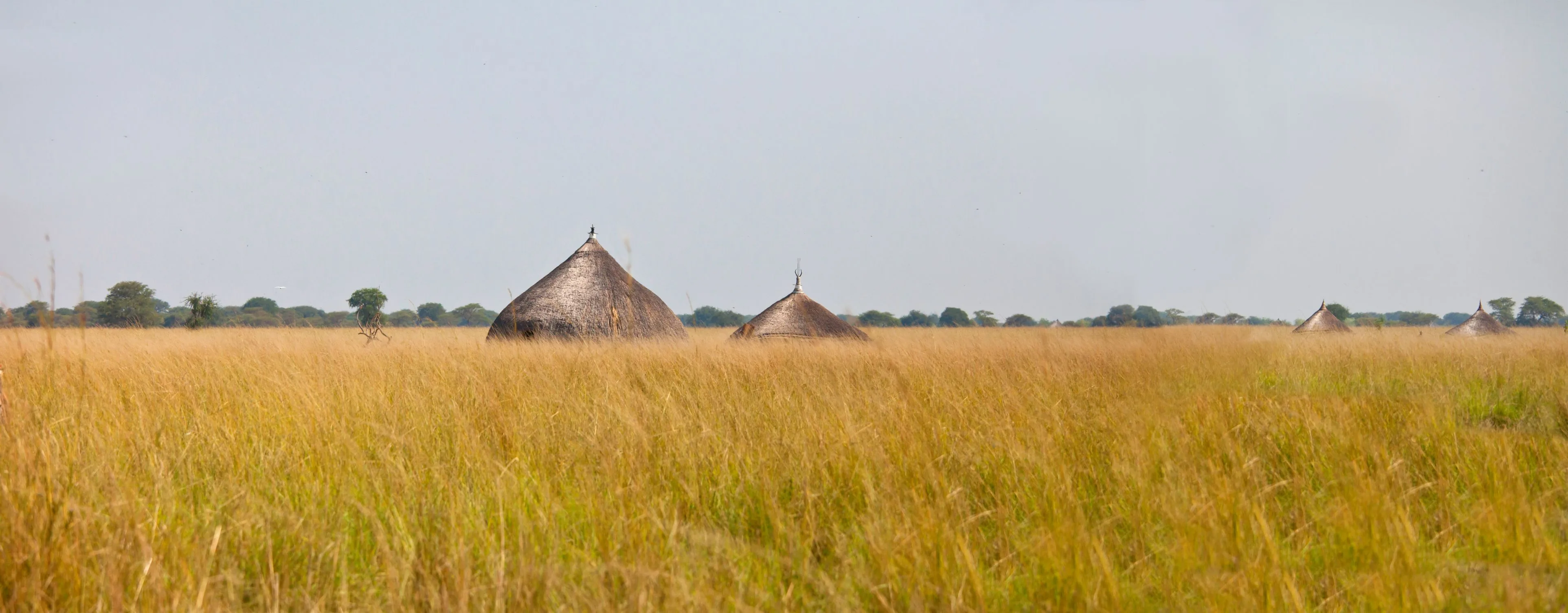
South Sudan
Advisory - travel not recommended · checked 5 Aug 2026
Foreign ministries advise against all or all-but-essential travel to South Sudan. The 2018 peace agreement remains fragile, intercommunal violence and cattle raiding continue in several states, and armed banditry affects intercity roads. Photography without a permit has led to detention. Standard scores are suspended while this alert is active.
Official advisory →“The world's newest country, the Sudd wetland and the largest land mammal migration on earth.”
In 2023 an aerial survey confirmed what had been suspected: the antelope migration across Boma and Badingilo national parks involves around six million animals — white-eared kob, tiang, Mongalla gazelle — making it the largest land mammal migration on earth, considerably bigger than the Serengeti's wildebeest. That it survived two civil wars is remarkable. That almost nobody has seen it is a function of everything else about the country.
South Sudan became independent in 2011, fell into civil war in 2013, and has lived under a fragile and repeatedly extended peace agreement since 2018. Intercommunal violence continues in several states, the economy depends on oil piped through Sudan — itself now at war — and most governments advise against all travel. Juba functions, some tour operators run trips to Mundari cattle camps, and the practical difficulty is extreme.
Highlights
The Boma-Badingilo migration
Around six million antelope moving between the Boma and Badingilo landscapes — the largest land mammal migration on earth, confirmed by aerial survey in 2023 and effectively unvisited.
Mundari cattle camps
Ankole-Watusi cattle with enormous horns, ash-covered herders and smoke fires against flies, on the Nile north of Juba. The most photographed thing in the country and a living pastoral system, not a display.
The Sudd
One of the largest wetlands in the world, where the White Nile spreads across a swamp the size of a small country — shoebills, Nile lechwe and communities living on floating islands.
Juba and the Nile
The riverside capital, the mausoleum of John Garang, the market and the White Nile flowing north out of the city.
Entry requirements for South Sudan
Advisory - travel not recommended · checked 5 Aug 2026
Foreign ministries advise against all or all-but-essential travel to South Sudan. The 2018 peace agreement remains fragile, intercommunal violence and cattle raiding continue in several states, and armed banditry affects intercity roads. Photography without a permit has led to detention. Standard scores are suspended while this alert is active.
Official advisory →Checking your passport…
We don't hold entry details for this passport group yet.
Before you fly
The detail
- Passport validity
- Most destinations want validity beyond your stay, and some want six months. Check yours against the return date.
- Onward travel
- Airlines may ask for a return or onward ticket at check-in.
- Health
- Yellow fever certificate compulsory for entry. Malaria year-round nationwide. Cholera and hepatitis E outbreaks recur. Medical facilities are extremely limited; evacuation insurance covering an against-all-travel country is essential and specialist.
- Money
- Cash US dollars are the practical currency; the South Sudanese pound has suffered severe inflation. Card acceptance is negligible and ATMs are unreliable. Bring dollars for the whole trip.
When to go
AvoidApr–Oct.
Dry and hot; migration movement in the east.
The band above each month is our editorial verdict - it weighs crowds, prices and access as well as weather. The line is average daily temperature, the bars are monthly rainfall. Select a month for the figures. Climate figures: ERA5 reanalysis via Open-Meteo, 2005–2024 normals.
What it costs
A day in South Sudan
Comfortable · sample day
≈ $173
Line items are real prices we track. The daily budget is an editorial estimate for this level, not their sum.
Where this sits among 244 countries we have costed
Juba accommodation is priced for the aid sector and does not vary seasonally. Everything is imported, which is why costs are so high in a country this poor.
Updated Aug 2026 · Editorial synthesis — operator quotes and reported prices (2025–2026) · confidence low
Excludes international flights - they depend on where you fly from.
Regions to know
5Juba and Central Equatoria
The capital on the White Nile, the Mundari cattle camps to the north and the road south to Uganda.
Boma and Badingilo
The migration landscape in the east — six million antelope and effectively no visitor infrastructure.
The Sudd
The vast central wetland, Bor and the floating communities of the Nile floodplain.
Bahr el Ghazal
The northwest, Wau and the cattle country towards the Sudanese border.
Western Equatoria
The green southwest, Yambio and the Southern National Park on the Congolese and CAR borders.
Practical guide
Getting there
Juba International is served by Ethiopian, Kenya Airways, Uganda Airlines, EgyptAir and regional carriers. Overland from Uganda at Nimule is the main land route and carries its own advisories.
Getting around
Road travel outside Juba is slow, seasonal and carries security risk; many routes are impassable in the April–November rains. Light aircraft charters are how the parks are reached. UN humanitarian flights are not available to visitors.
Money & costs
Cash US dollars are the practical currency; the South Sudanese pound has suffered severe inflation. Card acceptance is negligible and ATMs are unreliable. Bring dollars for the whole trip.
Safety
Intercommunal violence, cattle raiding, armed banditry on intercity roads and a fragile peace agreement. Photography without a permit has led to arrest. Consular capacity is minimal. Most governments advise against all travel.
Health
Yellow fever certificate compulsory for entry. Malaria year-round nationwide. Cholera and hepatitis E outbreaks recur. Medical facilities are extremely limited; evacuation insurance covering an against-all-travel country is essential and specialist.
SIM & internet
MTN and Zain; SIM registration requires a passport. Coverage in Juba and the state capitals; nothing across most of the country. Operators carry satellite communications.
Driving
Self-driving is not realistic. Roads outside Juba are unpaved, seasonal and carry banditry risk. Movement is arranged through operators with travel permits and, on some routes, escorts.
Rules change - verify with an official source before you rent.
ExplWorld VerifiedNo verified partners here yet - all 6 country seats are open.
Become ExplWorld Verified →Itineraries through this country
Before you go
South SudanFrequently asked questions
Is any tourism happening?
A small amount. A handful of specialist operators run trips to Juba and the Mundari camps, and occasionally further. Every government advises against all travel or all but essential travel, insurance is difficult, and movement requires permits and local fixers. The migration parks are essentially unreachable without an expedition-scale operation.
What permits do I need?
A visa arranged in advance, registration with the authorities on arrival, a photography permit — which is enforced, and photographing without one has led to detention — and travel permits for movement outside Juba. Operators handle all of this and it is not something to attempt alone.
Why is the migration only now being reported?
Because nobody could survey it. The 2023 aerial count by African Parks and the government was the first comprehensive assessment since before the wars, and the numbers surprised the people who commissioned it. Conservation planning for the landscape is only now beginning.