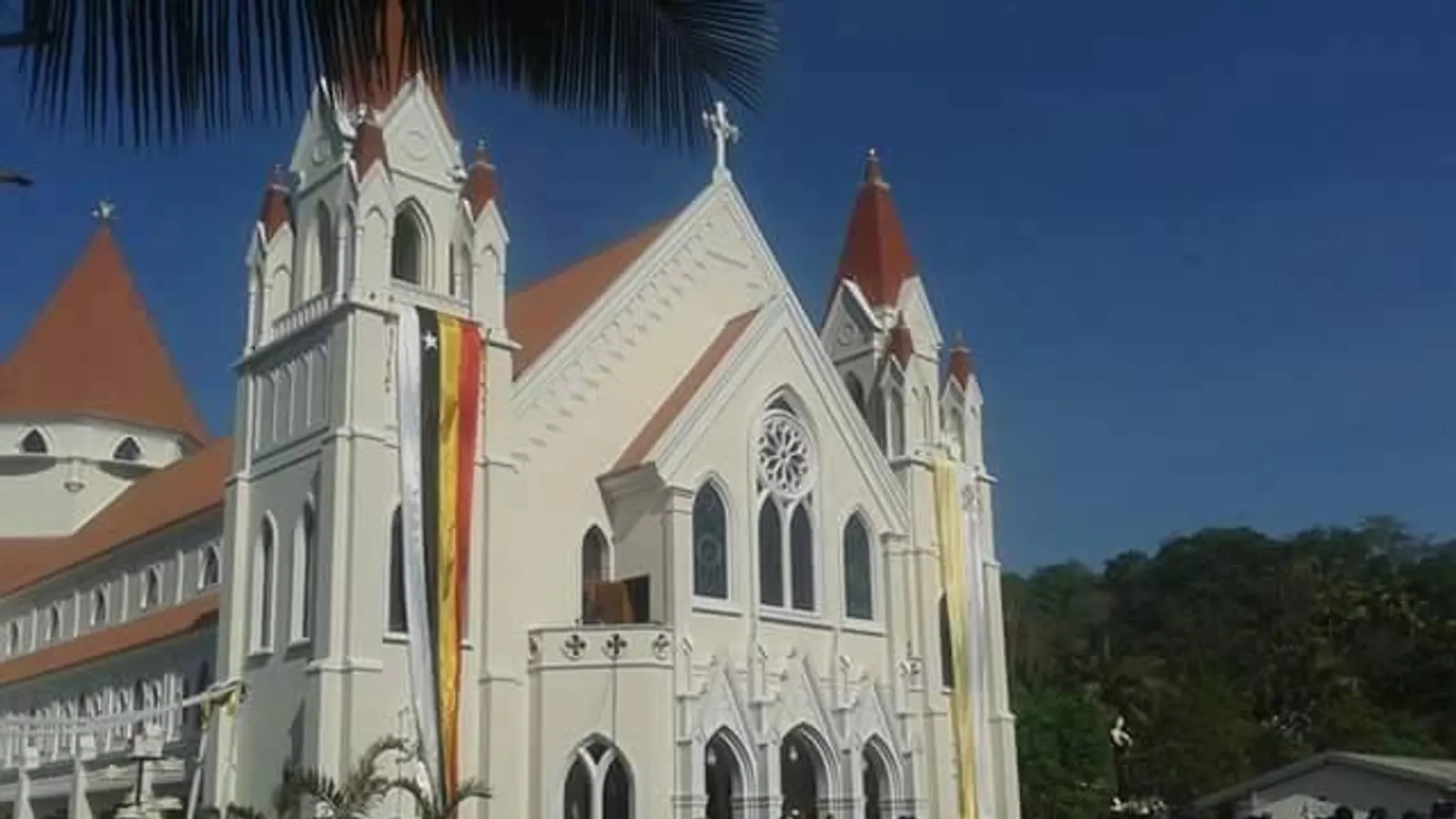
 Jose Fernando Real · CC BY-SA 4.0
Timor-Leste
“Asia's youngest country, with reef drop-offs a hundred metres from the road.”
Timor-Leste became fully independent in 2002 after four centuries of Portuguese rule and twenty-four years of Indonesian occupation, and it remains one of the least-visited countries in Asia — a few thousand leisure visitors a year. The infrastructure is thin, the roads are slow, and almost nothing is set up for tourism. That is precisely the appeal for the small number of people who come.
The draw is the water. The strait between the mainland and Atauro Island holds the highest reef-fish diversity ever recorded in a survey, and the drop-offs start metres from shore — you can shore-dive a wall from a roadside pullout east of Dili. Inland, the Portuguese hill station of Maubisse and the sacred peak of Ramelau give a different country entirely, and the recent history is present everywhere, told plainly at the Chega! and resistance museums.
Highlights
Atauro Island
A 25-kilometre island an hour and a half by ferry from Dili, with the highest recorded reef-fish diversity of any survey site on earth and community-run eco-lodges on the beach.
Shore diving the north coast
Wall dives and coral gardens accessible from the roadside between Dili and Com — no boat, no dive centre transfer, just a pullout and a short swim.
Mount Ramelau
At 2,986 metres the country's highest point, climbed before dawn from Hatobuilico to a summit Madonna statue with the sunrise over both coasts.
Jaco Island
An uninhabited sacred island at the far eastern tip, reached by fisherman's boat across a shallow channel. No overnight stays are permitted; the beach is empty and the water is clear.
Entry requirements for Timor-Leste
Checking your passport…
We don't hold entry details for this passport group yet.
Before you fly
The detail
- Passport validity
- Most destinations want validity beyond your stay, and some want six months. Check yours against the return date.
- Onward travel
- Airlines may ask for a return or onward ticket at check-in.
- Arrival form
- Visa application on arrival or an e-visa approval; carry a printed copy plus proof of onward travel.
- Health
- Hepatitis A, typhoid and tetanus are standard; rabies and Japanese encephalitis worth considering. Malaria risk exists, particularly in rural areas and the wet season, and dengue occurs. Tap water is not drinkable. The national hospital in Dili handles basics; complex care means Darwin, which is a 90-minute flight. Carry a well-stocked medical kit if travelling to the districts.
- Money
- US dollars, cash-dominant. ATMs in Dili accept foreign cards but charge fees and empty out around public holidays; a couple of district capitals have them, the rest of the country has none. Cards are accepted at a handful of Dili hotels and restaurants and nowhere else. Bring more cash than you think you need, in good condition.
When to go
BestMay–Oct. AvoidDec–Mar.
Dry season begins; diving visibility improves sharply.
The band above each month is our editorial verdict - it weighs crowds, prices and access as well as weather. The line is average daily temperature, the bars are monthly rainfall. Select a month for the figures. Climate figures: ERA5 reanalysis via Open-Meteo, 2005–2024 normals.
What it costs
A day in Timor-Leste
Comfortable · sample day
≈ $65
Line items are real prices we track. The daily budget is an editorial estimate for this level, not their sum.
Where this sits among 244 countries we have costed
Very little seasonal variation in price — the visitor economy is too small to have a high season in the pricing sense. What changes is access: wet-season road damage effectively closes parts of the country, and dive operators reduce schedules when visibility drops. Accommodation in Dili fills around independence celebrations and government events rather than holidays.
Updated Aug 2026 · Editorial synthesis — dive operator tariffs, Atauro community lodge rates, rental sampling (2025–2026) · confidence low
Excludes international flights - they depend on where you fly from.
Regions to know
5Dili & the north coast
The capital with its resistance museums and Cristo Rei headland, plus roadside shore diving east along the coast.
Atauro Island
Community eco-lodges, the richest reef-fish diversity ever surveyed, and whale watching in the strait.
The central highlands
Maubisse's Portuguese hill station, coffee plantations, and Mount Ramelau climbed for sunrise.
The east
Baucau's old Portuguese town, Com and Tutuala, and the sacred uninhabited island of Jaco at the tip.
Oecusse & the south
The separated western enclave where the Portuguese first landed, plus the wetter, wilder south coast.
Practical guide
Getting there
Dili (DIL) is served by Darwin, Bali and Singapore only — that is the whole international network, so nearly everyone connects through one of those three. Flights are relatively expensive for the distance because of the thin market. There is a land border with Indonesian West Timor at Batugade, used by overland travellers coming from Kupang.
Entry formalities
Visa application on arrival or an e-visa approval; carry a printed copy plus proof of onward travel.
Getting around
Microlets run within Dili for a few cents; between districts it is shared minivans, mikrolet trucks or your own vehicle. A 4×4 is genuinely necessary for the south coast and the mountain roads, especially in the wet season, and rental with a driver is common and not expensive. The Atauro ferry runs several times a week plus faster private boats. Distances are short on the map and long in hours — Dili to Baucau is 120 km and takes three hours or more.
Money & costs
US dollars, cash-dominant. ATMs in Dili accept foreign cards but charge fees and empty out around public holidays; a couple of district capitals have them, the rest of the country has none. Cards are accepted at a handful of Dili hotels and restaurants and nowhere else. Bring more cash than you think you need, in good condition.
Safety
Petty theft in Dili, occasional public disturbances linked to martial-arts groups, and road accidents are the realistic risks. Saltwater crocodiles are present along the coast and are a genuine hazard — they are also culturally revered, and local advice about where not to swim should be taken seriously. Medical facilities are very limited; anything serious means evacuation to Darwin or Bali. Insurance with evacuation cover is essential rather than advisable.
Health
Hepatitis A, typhoid and tetanus are standard; rabies and Japanese encephalitis worth considering. Malaria risk exists, particularly in rural areas and the wet season, and dengue occurs. Tap water is not drinkable. The national hospital in Dili handles basics; complex care means Darwin, which is a 90-minute flight. Carry a well-stocked medical kit if travelling to the districts.
SIM & internet
Telkomcel and Telemor sell cheap SIMs; coverage follows the roads and towns and disappears in the mountains and on parts of the south coast. Data is slow by regional standards. Wifi exists in Dili hotels and is unreliable elsewhere. Power cuts are common outside the capital.
Driving
A 4×4 is not a luxury outside the north-coast road. Mountain and south-coast routes wash out in the wet season, landslides are common, and there is no roadside assistance — travel with water, fuel and daylight to spare.
Rules change - verify with an official source before you rent.
ExplWorld VerifiedNo verified partners here yet - all 6 country seats are open.
Become ExplWorld Verified →Itineraries through this country
From the Journal
Before you go
Timor-LesteFrequently asked questions
How hard is it to travel here?
Harder than anywhere else in Southeast Asia. There is no tourist infrastructure to speak of, roads to the eastern and southern districts are slow and often damaged, public transport is crowded microlets and mikrolet trucks, and English is limited outside Dili. Most independent visitors rent a 4×4 or hire a driver. Come with time and low expectations of schedules.
Is it safe?
Yes, for the most part. The instability of 2006 is long past and crime against foreigners is uncommon, though petty theft occurs in Dili and there are occasional incidents involving martial-arts groups. The practical risks are road conditions, limited medical care and remoteness. Check current advisories, but the country is not the security story it once was.
What currency do I need?
US dollars — Timor-Leste adopted them at independence and uses locally minted centavo coins for small change. Bring clean notes in a range of denominations. ATMs exist in Dili and a few district capitals and run out; outside the capital, assume cash only.