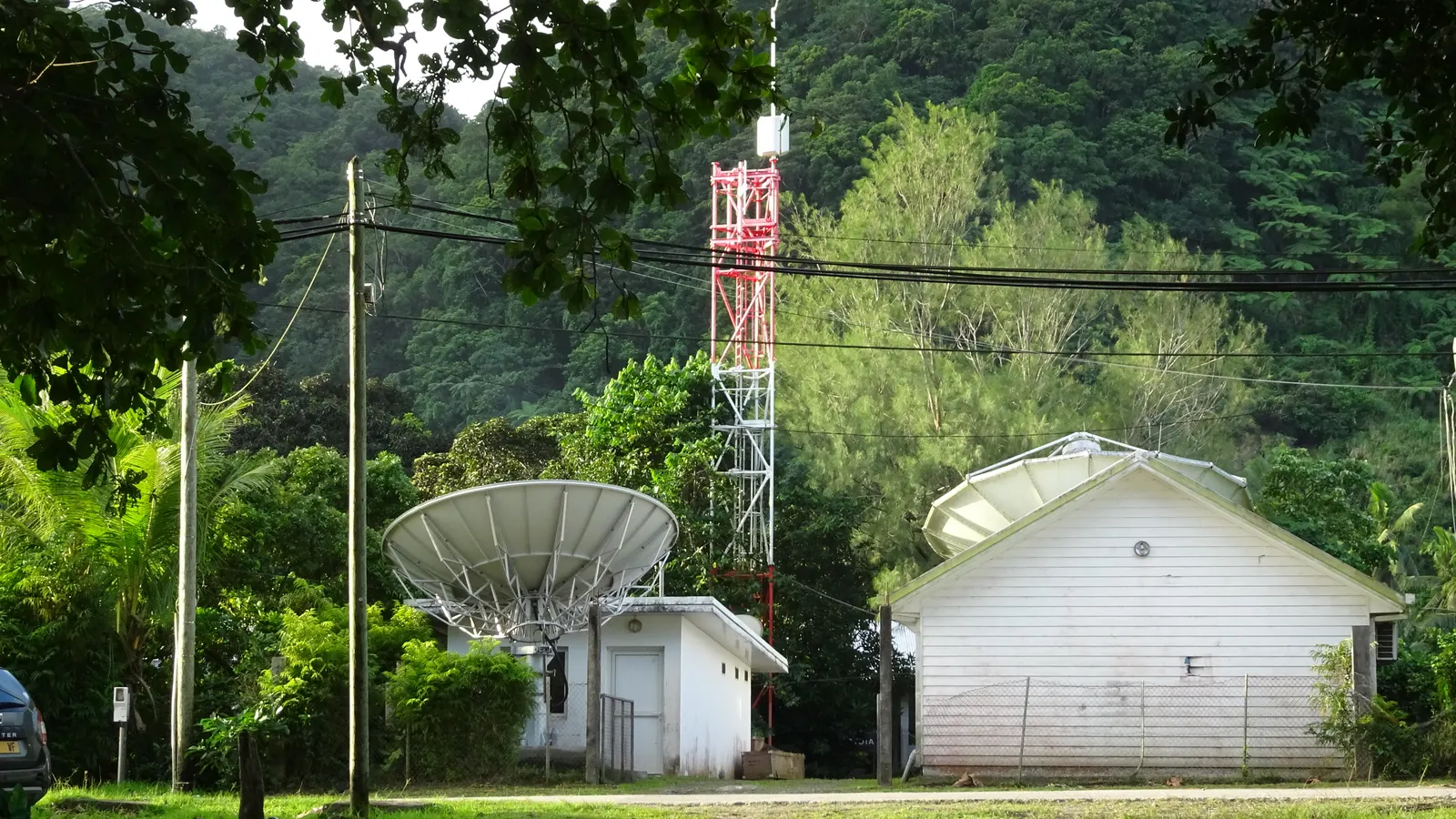
 Brigitte & Heinz · CC BY-SA 2.0
Wallis and Futuna
“Three Polynesian kingdoms inside a French collectivity, and almost no visitors.”
Wallis and Futuna is a French overseas collectivity in which three traditional Polynesian kingdoms — Uvea on Wallis, Sigave and Alo on Futuna — continue to exist alongside the French administration, with customary kings whose authority is recognised in the territory's statute. It is one of very few places anywhere where a European republic and a hereditary Polynesian monarchy share formal governance.
Wallis is a low island inside a wide lagoon with volcanic crater lakes inland, including the striking Lalolalo with vertical walls dropping to green water. Talietumu is a restored fortified site from the Tongan period, one of the best archaeological sites in western Polynesia. Futuna, 230 kilometres southwest, is steeper, greener and has no lagoon at all. Between them live about 11,000 people, and the territory receives perhaps a few hundred leisure visitors a year.
Highlights
Lac Lalolalo
A near-perfectly circular crater lake on Wallis with vertical walls dropping about 30 metres to dark green water, ringed by forest and white-tailed tropicbirds. American forces dumped equipment into it after 1945.
Talietumu
A restored fortified settlement from the period of Tongan influence, with coral-block walls and platforms — among the most significant archaeological sites in western Polynesia and almost never visited.
The customary kingdoms
The Lavelua of Uvea and the kings of Sigave and Alo hold recognised authority in the territory's constitution, and customary protocol governs land, ceremony and much of daily life alongside French administration.
Futuna
A steep volcanic island with no lagoon, ridges rising to 500 metres, the basilica at Poi where Saint Peter Chanel was killed in 1841, and a way of life even less touched than Wallis.
Entry requirements for Wallis and Futuna
Checking your passport…
We don't hold entry details for this passport group yet.
Before you fly
The detail
- Passport validity
- Most destinations want validity beyond your stay, and some want six months. Check yours against the return date.
- Onward travel
- Airlines may ask for a return or onward ticket at check-in.
- Health
- A hospital in Mata-Utu and a small facility on Futuna handle routine care under the French system. Anything serious means evacuation to New Caledonia. No malaria; dengue outbreaks occur.
- Money
- CFP franc, pegged to the euro. Cash dominates; there are banks in Mata-Utu but card acceptance is limited. Bring euros to change or draw locally.
When to go
BestMay–Oct. AvoidDec–Mar.
Dry season opens — the best conditions.
The band above each month is our editorial verdict - it weighs crowds, prices and access as well as weather. The line is average daily temperature, the bars are monthly rainfall. Select a month for the figures. Climate figures: ERA5 reanalysis via Open-Meteo, 2005–2024 normals.
What it costs
A day in Wallis and Futuna
Comfortable · sample day
≈ $151
Line items are real prices we track. The daily budget is an editorial estimate for this level, not their sum.
Where this sits among 244 countries we have costed
There is effectively no tourist season; demand comes from officials, family visits and the occasional traveller. Prices do not move.
Updated Aug 2026 · Editorial synthesis — reported prices and accommodation sampling (2025–2026) · confidence low
Excludes international flights - they depend on where you fly from.
Regions to know
5Mata-Utu
The territorial capital on Wallis — the cathedral, the royal palace of the Lavelua and the administration.
Wallis interior
The crater lakes, Lalolalo above all, and the forested centre of the island.
The Wallis lagoon
The reef, the motu including Faioa and Nukuhione, and the passes out to the open sea.
Sigave
The western kingdom of Futuna, with the airstrip, Leava village and the steep ridges behind.
Alo and Alofi
The eastern kingdom of Futuna, the Poi basilica and the uninhabited island of Alofi across the strait.
Practical guide
Getting there
Aircalin flies Wallis from Nouméa and Nadi a couple of times a week. A small aircraft links Wallis and Futuna in about an hour. Schedules change and cancellations are common.
Getting around
A hire car is the practical option on Wallis, where a road circles the island; supply is very limited so arrange it with your accommodation. Futuna has one coastal road and few vehicles.
Money & costs
CFP franc, pegged to the euro. Cash dominates; there are banks in Mata-Utu but card acceptance is limited. Bring euros to change or draw locally.
Safety
Very safe. Ordinary crime is minimal. The hazards are the reef passes on Wallis, the steep terrain and heavy surf on Futuna, and the remoteness — evacuation means Nouméa.
Health
A hospital in Mata-Utu and a small facility on Futuna handle routine care under the French system. Anything serious means evacuation to New Caledonia. No malaria; dengue outbreaks occur.
SIM & internet
SPT provides mobile and internet; EU roaming does not apply. Coverage on both islands in the settled areas. Bandwidth is limited.
Driving
French road rules with very low limits and almost no traffic. Wallis's ring road is sealed; Futuna's coastal road is narrow and partly unsealed. Pigs and dogs on the road are the main hazard.
Rules change - verify with an official source before you rent.
ExplWorld VerifiedNo verified partners here yet - all 6 country seats are open.
Become ExplWorld Verified →Before you go
Wallis and FutunaFrequently asked questions
How do I get there?
Aircalin flies to Wallis from Nouméa and Nadi a couple of times a week, and a small aircraft connects Wallis and Futuna. Schedules are thin and cancellations reshape trips. There is no other route, and no cruise traffic to speak of.
What is the accommodation situation?
A handful of small hotels and guesthouses on Wallis and fewer on Futuna. Book before you fly; a single official delegation can fill what exists. There is no tourism infrastructure in the usual sense — no tour desks, no rental fleet, few restaurants.
What customary rules apply?
Land is customarily held and access to sites, beaches and reefs is granted rather than assumed. Dress modestly, particularly on Sunday, which is strictly observed. A gift and a greeting to the village authority is normal before visiting a site. Your host will explain the specifics, and asking is expected.