Delhi to Udaipur on the Indian railway — forts, stepwells and the Thar desert, moving the way 23 million people a day move, in sleeper class rather than on a tour bus.
Delhi
Old Delhi by rickshaw and on foot — Jama Masjid, Chandni Chowk, Karim's. Then Humayun's Tomb in the late light, which is the building the Taj Mahal is descended from.
Delhi, second day
Qutub Minar and Mehrauli, then sort train tickets in person at the tourist bureau in New Delhi station if IRCTC has defeated you, which it defeats most people once.
To Jaipur
Morning train, about five hours. Arrive, walk the pink city, and do nothing ambitious — the first day in Rajasthan is an adjustment.
Amber and the observatory
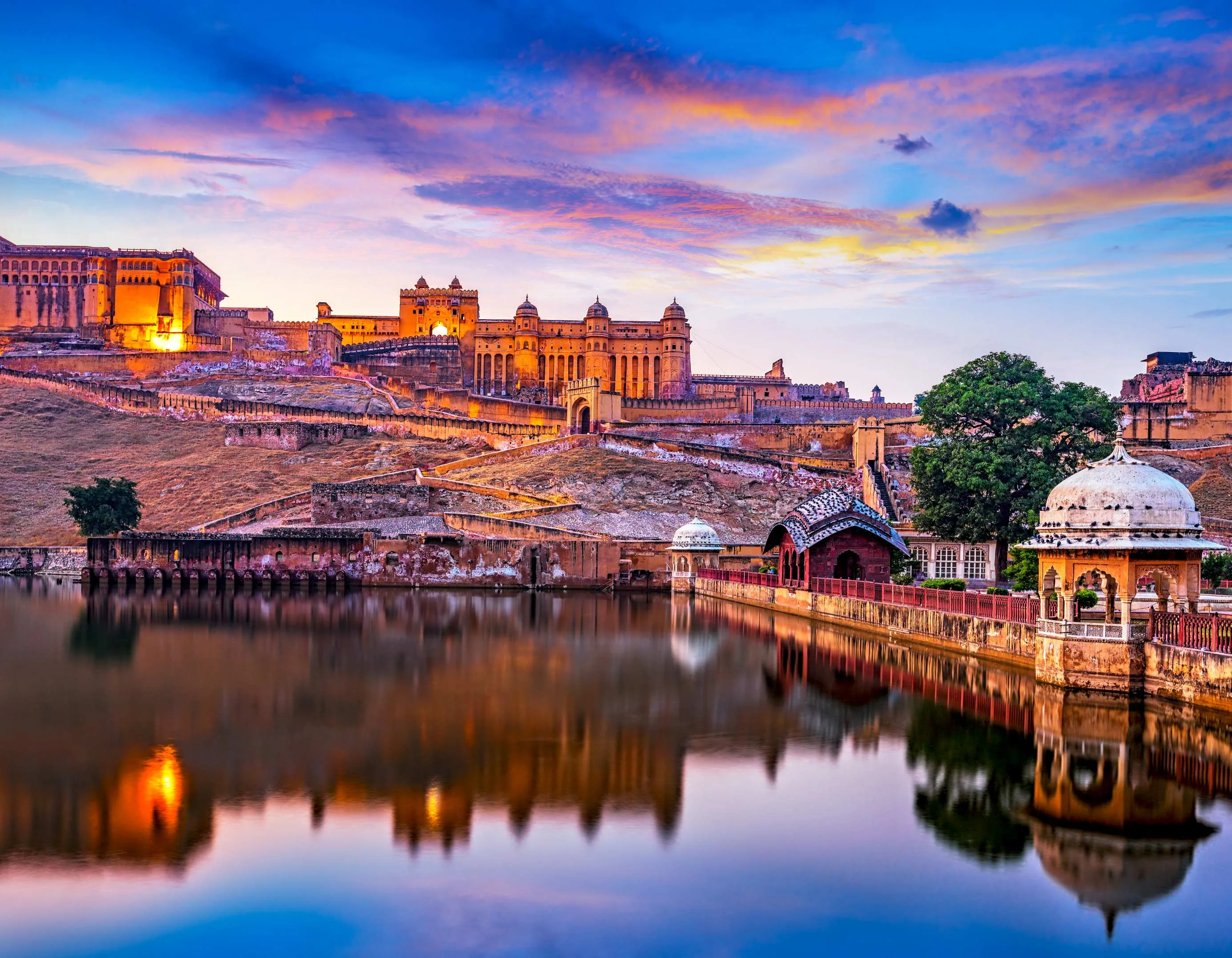
Amber Fort early, walking up rather than taking an elephant. Then Jantar Mantar, an eighteenth-century observatory of stone instruments that still tell the time to two seconds.
Stepwells and Pushkar
Stop at Chand Baori at Abhaneri on the way — 3,500 steps down thirteen storeys — then on to Pushkar, a temple town round a lake where alcohol and meat are not sold.
To Jodhpur
The blue city under Mehrangarh, which is the most impressive fort in the state and has the best museum in it.
Mehrangarh
A full morning. The handprints by the gate are sati marks — widows who burned on their husband's pyre — and the audio guide does not soften what that was.
Bishnoi villages
A half-day out with a local guide. In 1730, 363 Bishnoi were killed defending khejri trees from the maharaja's axemen; the community still protects wildlife on principle, and blackbuck graze beside the fields because of it.
Night train to Jaisalmer
Sleeper class west into the desert. Berths are made up already; bring a sheet, a lock and a chain for the bag under the bunk.
Jaisalmer fort
One of very few forts in the world still inhabited. Sewage from modern plumbing is undermining the foundations, which is why the responsible advice is to visit inside and sleep outside.
Thar desert
Camel or jeep out to the dunes for one night. Book with an operator that camps away from Sam, where the coach parties go and the generators run.
To Udaipur
A long transfer south-east, by train or overnight bus. Arrive at the lakes.
Udaipur
City Palace in the morning, then Bagore Ki Haveli for the evening dance, and a rooftop that is not on the water — the ones with the view charge for it.
Ranakpur and Kumbhalgarh
A day trip: a Jain temple of 1,444 carved marble pillars, no two alike, and a fort wall 36 kilometres long that is second only to the Great Wall.
Out
Fly from Udaipur, or take the overnight train back to Delhi. Leave a full day of slack before an international flight; Indian trains are frequently late and occasionally very late.
Good to know
October to March is the season; April to June in Rajasthan regularly exceeds 45°C and is not a holiday. Book trains on IRCTC as far ahead as the 60-day window allows — 3AC is air-conditioned and comfortable, SL is fan-cooled, cheap and how most of the country travels. Tatkal quota opens one day before departure and disappears in seconds. A locked bag chained to the berth is normal practice, not paranoia. Drink bottled or filtered water, eat where there is a queue, and give your stomach the first three days to adjust.
Shorter or longer?
Five or six days east: the Taj at dawn, then the ghats at Varanasi, which is a different order of experience entirely.
Delhi–Jaipur–Jodhpur–Udaipur in nine days, dropping Jaisalmer and the desert. Less travelling, no night trains.