h368k742 / stock.adobe.com
One Bed Per Night
Europe spent twenty years closing its night trains and a decade reopening some of them. Both decisions were rational on the numbers of their time, which is why the network that came back is the shape it is.
Europe spent twenty years shutting down its night trains and roughly a decade reopening some of them. The withdrawal was rational on the numbers of the time; so, arguably, is the return. Understanding both explains why the current network is the shape it is — patchy, uneven, and better in some corridors than the sleeper era ever was.
Why they closed
Three pressures at once. Low-cost aviation undercut the fare on almost every city pair a sleeper served, and did so by a margin that no operational efficiency could close. High-speed rail turned overnight journeys into daytime ones on the busiest corridors, which removed the best-loaded routes from the sleeper network and left it with the marginal ones — a classic case of a network losing its profitable services to a better alternative and being judged on what remained.
And the rolling stock itself is expensive to run. A sleeping car carries a fraction of the passengers of a seated coach for the same path and the same crew, requires cleaning, bedding and catering staff, and earns revenue on one journey per night rather than several. The asset works eight hours in twenty-four and is idle or being serviced for the rest.
Add the unbundling of infrastructure from operations, which made cross-border running an exercise in negotiating with several infrastructure managers, paying several sets of track-access charges and complying with several signalling and staffing regimes, and the economics stopped working almost everywhere at once. The withdrawals of the 2000s and 2010s were not a failure of imagination; they were a correct reading of a spreadsheet.
A sleeper sells one bed per night. A budget jet sells the same seat four times before dinner. That was the whole argument, and it was correct.
Why some came back
The demand side changed. Aviation’s environmental cost became a live consideration for a segment of travellers large enough to fill a train, and several governments made rail policy accordingly — tax changes on aviation, direct subsidies for cross-border rail, cooperation agreements between state operators, and in one case a restriction on domestic short-haul flights where a fast rail alternative of under roughly two and a half hours exists.
A handful of operators bet on the segment when others were withdrawing. The Austrian state railway is the most visible, having acquired stock and routes that others were abandoning and built a network out of them; a small number of private and cooperative operators have since entered with a different model. The bet was that the market had not disappeared, only the willingness to serve it.
New rolling stock is the constraint on how far this goes. The vehicles that closed the network were mostly forty years old and are now genuinely life-expired; replacing them is a capital decision with a decade’s payback, and the orders placed now determine the network of the 2030s. That is why expansion has been consistently slower than the announcements suggest, and why several announced routes have been delayed or quietly dropped.
What it is like to use
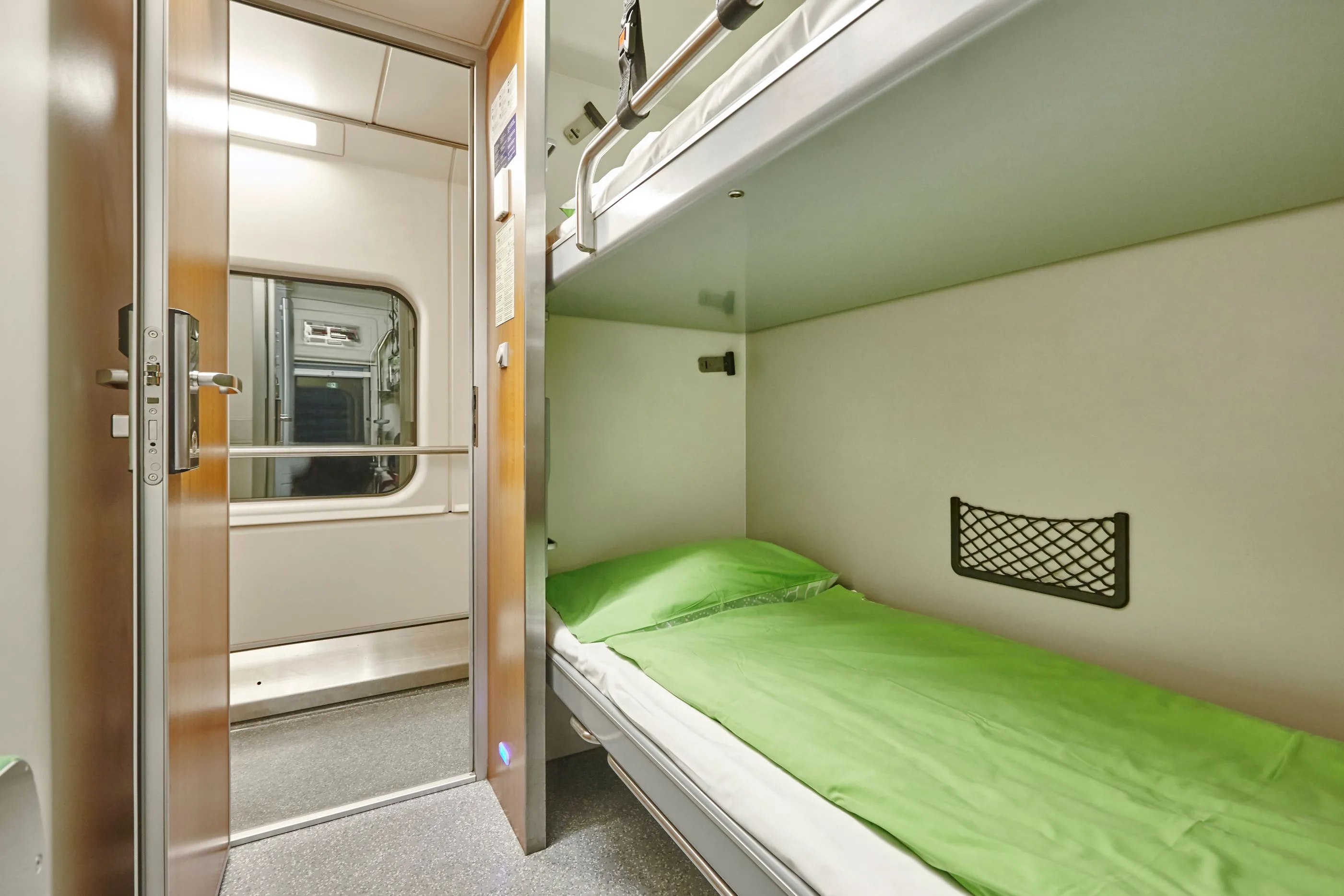
Better than its reputation and worse than the marketing. The couchette is cheap, communal and perfectly fine; the private sleeper compartment is genuinely comfortable and is priced against a hotel room plus a flight rather than against a seat, which is the comparison that makes it look reasonable. Newer stock has addressed the two historic complaints — no privacy and no plumbing — with single cabins and en-suite compartments at the top of the range.
Border stops in the night are quieter than they were, and on internal Schengen routes are often invisible — though several countries have reintroduced internal checks in recent years, and a passport knock in the small hours is again possible on some corridors. Punctuality is the weak point: a night train is the lowest-priority path on every network it crosses, engineering work happens overnight by design, and a delay accumulated at two in the morning is not recovered before breakfast.
Using it well
Book early. The pricing is yield-managed and the cheap berths on the popular routes go months out; a sleeper booked a week ahead is expensive in a way that discredits the whole proposition unfairly. Check whether your service carries a car or bicycles if that matters, since provision varies by route and by season and cannot be added later.
Book a whole compartment if you are two people, since the supplement is frequently small and the difference is large. Bring earplugs and something to eat, because the catering is variable and occasionally absent. And treat the arrival time as approximate: the train that arrives an hour late has still delivered you to a city centre having slept, which was the entire proposition and is one no aircraft can match.
Sources
- ÖBB Nightjet and the operating national railways
Routes, sleeper categories, car and bicycle carriage and booking horizons are the operators’ own pages; Nightjet runs the largest network.