 Joyston Judah · Pexels License
Armenia
“The first Christian nation, with the monasteries to prove it.”
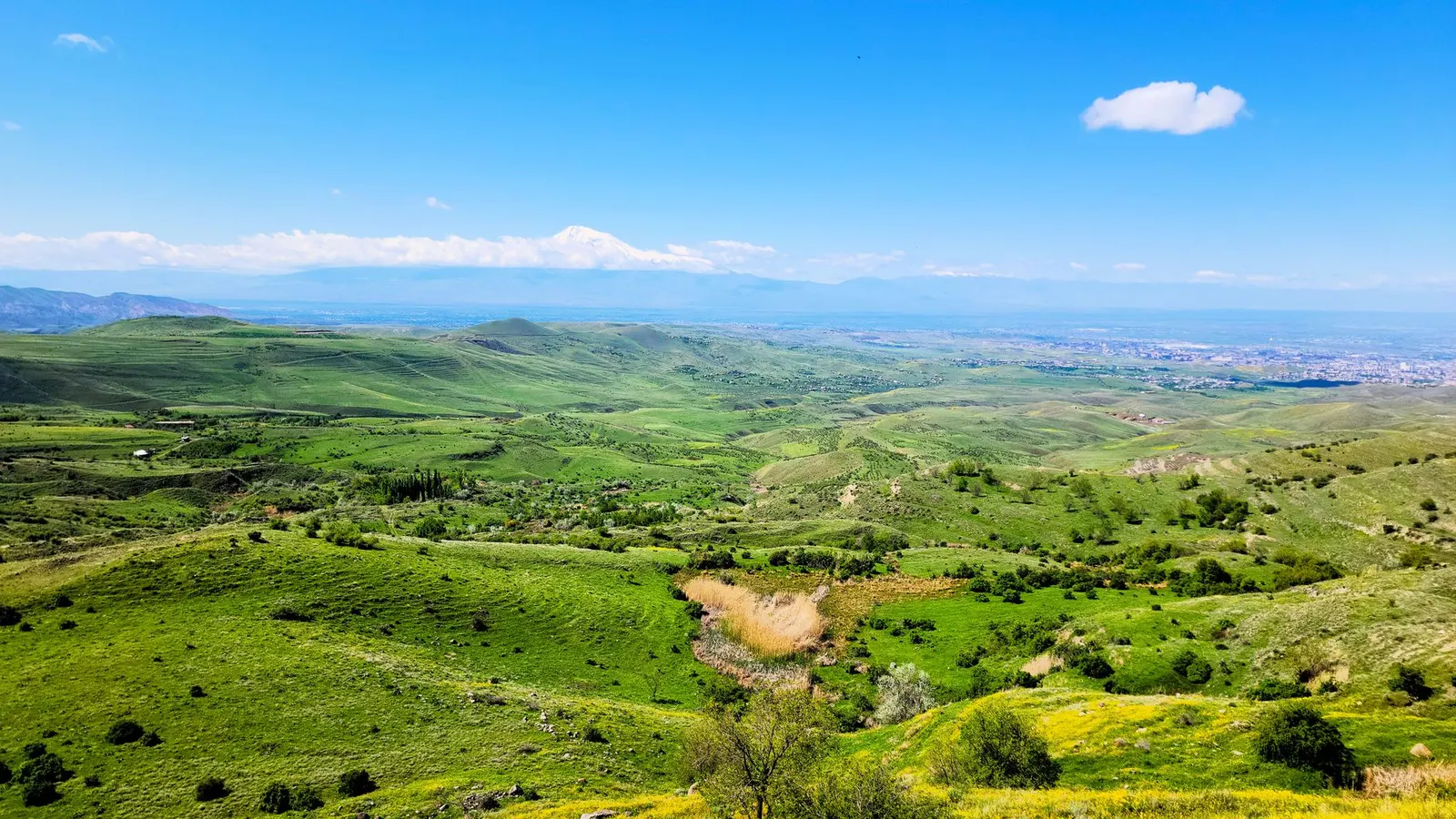
Armenia adopted Christianity as a state religion in 301, before anyone else, and the physical evidence is scattered across the country — monasteries in gorges, on cliff edges, half-carved into rock. Geghard, Tatev, Noravank and Haghpat are the ones that stop people, and none of them are more than a few hours from Yerevan, which makes this an unusually concentrated country for its size.
It is landlocked, mountainous and squeezed by closed borders: the frontiers with Turkey and Azerbaijan are shut, so everything moves through Georgia or Iran. The 2020 and 2023 conflicts over Nagorno-Karabakh ended with the region's Armenian population displaced, and that history is present in every conversation. Yerevan itself is a warm, café-filled, pink-stone capital with Mount Ararat on the skyline — in Turkey, and visible from everywhere.
Highlights
Tatev monastery and the Wings of Tatev
A ninth-century monastery on a gorge edge in the south, reached by the world's longest reversible cable car — 5.7 kilometres over the Vorotan canyon.
Geghard and Garni
A monastery partly hewn from solid rock, UNESCO-listed, half an hour from a first-century Hellenistic temple above a basalt gorge. The standard day trip from Yerevan, and it earns it.
Lake Sevan
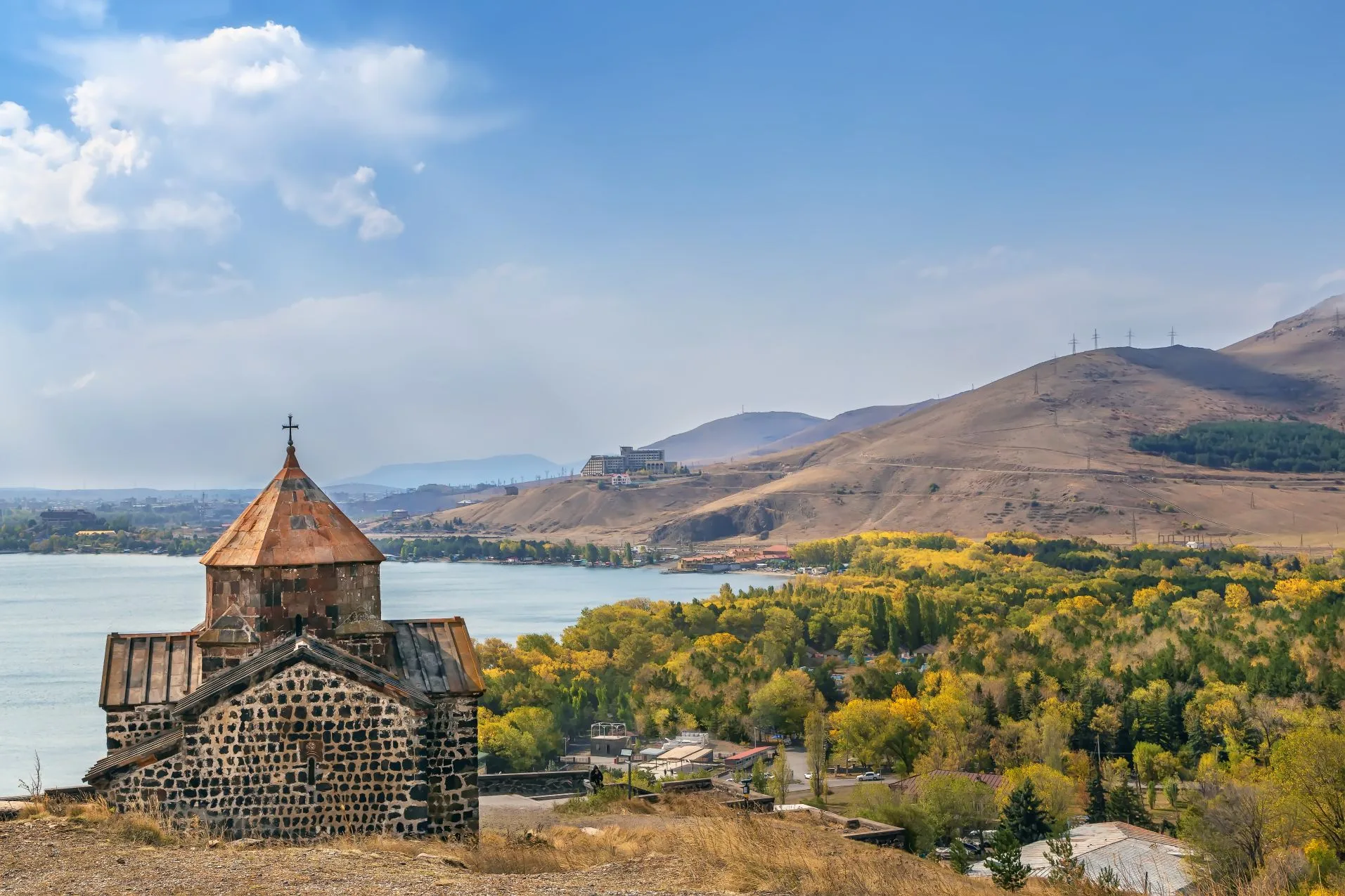
One of the largest high-altitude lakes in the world at 1,900 metres, with the Sevanavank monastery on a peninsula above it and crayfish sold on the shore.
Yerevan
The Cascade's sculpture-lined staircase, the Matenadaran manuscript museum, the Republic Square fountains and a café culture that runs late into the night.
Entry requirements for Armenia
Checking your passport…
We don't hold entry details for this passport group yet.
Before you fly
The detail
- Passport validity
- Most destinations want validity beyond your stay, and some want six months. Check yours against the return date.
- Onward travel
- Airlines may ask for a return or onward ticket at check-in.
- Health
- No vaccinations required; hepatitis A and typhoid standard, rabies worth considering, tick-borne encephalitis for forest travel. Tap water in Yerevan is excellent and drinking from the city's pulpulak fountains is normal. Medical care is decent in Yerevan and limited elsewhere; insurance with evacuation cover is sensible for the mountains.
- Money
- Cards work in Yerevan hotels, restaurants and supermarkets; rural areas, marshrutkas and small shops are cash. ATMs are common in towns and accept foreign cards. The dram is stable. Tipping around 10 % is normal in the capital and less expected elsewhere.
When to go
BestMay–Jun, Sep–Oct. AvoidDec–Feb.
Warm, green and clear — an excellent month.
The band above each month is our editorial verdict - it weighs crowds, prices and access as well as weather. The line is average daily temperature, the bars are monthly rainfall. Select a month for the figures. Climate figures: ERA5 reanalysis via Open-Meteo, 2005–2024 normals.
What it costs
A day in Armenia
Comfortable · sample day
≈ $49
Line items are real prices we track. The daily budget is an editorial estimate for this level, not their sum.
Where this sits among 244 countries we have costed
Yerevan rates rise modestly in summer and around the Vardavar water festival in July; Lake Sevan and Dilijan spike in July and August with domestic and diaspora holidaymakers. Winter is cheap and quiet outside the ski resorts. Monastery entry is generally free — the cable car at Tatev is the one significant fixed attraction cost.
Updated Aug 2026 · Editorial synthesis — Armenian tourism operator rates, Wings of Tatev tariff, guesthouse sampling (2025–2026) · confidence medium
Excludes international flights - they depend on where you fly from.
Regions to know
5Yerevan & Ararat
The pink-stone capital, the Cascade and Matenadaran, with Khor Virap under Ararat and Echmiadzin's cathedral nearby.
Kotayk & Geghard
The rock-hewn monastery at Geghard, the Garni temple above its gorge, and the ski town of Tsaghkadzor.
Lake Sevan & Dilijan
The high lake with its peninsula monastery, and Dilijan's forested valleys — sometimes called Armenia's Switzerland.
Syunik & the south
Tatev and its cable car, the Vayots Dzor wine caves at Areni and the Zorats Karer standing stones.
Lori & the north
The Debed canyon's UNESCO monasteries at Haghpat and Sanahin, and Gyumri's black tuff old town.
Practical guide
Getting there
Yerevan Zvartnots (EVN) takes direct flights from Paris, Rome, Vienna, Athens, Moscow, Dubai and increasingly from low-cost carriers, plus Wizz Air routes that have made it much cheaper to reach. Overland from Georgia by marshrutka or shared taxi from Tbilisi takes about six hours; the Iranian border in the south is open and used.
Getting around
Marshrutkas connect towns cheaply but run to sparse schedules and stop early. Shared taxis fill the gaps. Renting a car is genuinely the best option here — roads are reasonable, distances are short, and the monasteries are scattered in places public transport does not reach. GG and Yandex Go are the ride-hailing apps in Yerevan. There is a limited rail network, including a scenic overnight train to Tbilisi in summer.
Money & costs
Cards work in Yerevan hotels, restaurants and supermarkets; rural areas, marshrutkas and small shops are cash. ATMs are common in towns and accept foreign cards. The dram is stable. Tipping around 10 % is normal in the capital and less expected elsewhere.
Safety
Very low crime and comfortable for solo travellers. The considerations are the eastern border areas with Azerbaijan, which carry advisories; driving standards, which are assertive; and mountain weather. Political demonstrations in Yerevan are frequent and usually peaceful. Do not photograph military installations, of which there are many near the borders.
Health
No vaccinations required; hepatitis A and typhoid standard, rabies worth considering, tick-borne encephalitis for forest travel. Tap water in Yerevan is excellent and drinking from the city's pulpulak fountains is normal. Medical care is decent in Yerevan and limited elsewhere; insurance with evacuation cover is sensible for the mountains.
SIM & internet
Team, Ucom and Viva SIMs are cheap with generous data. 4G coverage is good across the populated areas and patchy in the high mountains. Wifi is universal in cafés and guesthouses. Telegram and WhatsApp are both widely used.
Driving
Renting a car transforms this trip — the monasteries are exactly the sort of scattered destinations that marshrutkas serve badly. Mountain roads in the south are winding and can be icy well into spring; the Vorotan and Selim passes are the ones to check.
Rules change - verify with an official source before you rent.
ExplWorld VerifiedNo verified partners here yet - all 6 country seats are open.
Become ExplWorld Verified →Itineraries through this country
Before you go
ArmeniaFrequently asked questions
How do I get in, with the borders closed?
The borders with Turkey and Azerbaijan have been closed for decades. Practical routes are flying into Yerevan, or overland from Georgia — the Bagratashen crossing from Tbilisi, with marshrutkas and shared taxis running the route in about six hours. There is also a land border with Iran in the far south.
Is it safe given the recent conflicts?
Yerevan and the main tourist regions are calm and safe for visitors. The eastern border areas with Azerbaijan carry advisories and should be avoided; the roads near the frontier in Syunik and Tavush can be affected. Nagorno-Karabakh is no longer accessible from Armenia and its Armenian population left in 2023. Check current advice for the border provinces before travelling near them.
How long do I need?
A week covers Yerevan, the monasteries within day-trip range, Lake Sevan and Dilijan. Ten days to two weeks lets you drive south to Tatev and the Vayots Dzor wine region, or north to Gyumri and the Debed canyon monasteries. The country is small — nothing is more than five hours from the capital.