Three ancient countries in three weeks. Monastery ruins, cave cities, and food culture that predates European civilisation.
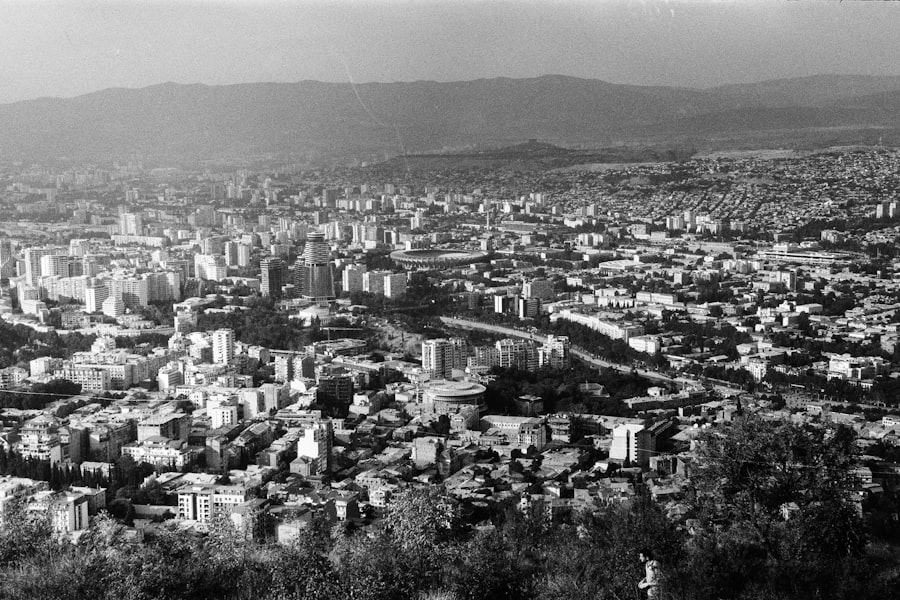
Tbilisi
The old town runs up a hillside between a fortress and a river, and almost nothing in it is at right angles. Start with the sulphur bathhouses in Abanotubani — the reason the city is here at all, and still working — then walk up to Narikala for the layout. Georgian wine lists start at the cheap end and are worth reading properly.
Tbilisi, second look
The Georgian National Museum holds the Treasury — pre-Christian goldwork from the Colchis kingdom — and, in the same building, a plainly told exhibition on the Soviet occupation. Then the dry bridge flea market, the Chronicle of Georgia on its hill above the reservoir, and supra food at a table meant for eight.
Kakheti and the qvevri
Georgia has been making wine in buried clay qvevri for roughly eight thousand years, and the method is on the UNESCO intangible heritage list. Sighnaghi sits on a wall above the Alazani valley with the Caucasus behind it; Alaverdi cathedral is eleventh century and enormous. Taste amber wine at a family marani rather than a tasting room.
The Georgian Military Road
North on the road the Russians cut through the range in the nineteenth century. Ananuri fortress sits over the Zhinvali reservoir; the Jvari pass tops out at 2,379 m (7,805 ft) past a Soviet friendship monument nobody has decided what to do with. Stepantsminda is the end of the road before the Russian border.
Gergeti Trinity
The fourteenth-century church stands alone at 2,170 m (7,120 ft) with Kazbek behind it at 5,054 m (16,581 ft), and it is the image the whole country is sold on. Walk up in about two hours rather than taking the 4×4 — the view arrives gradually that way. Afternoon in the Truso or Juta valley if the weather holds.
Mtskheta, Uplistsikhe, Gori
Back down the military road with three stops. Mtskheta was the capital before Tbilisi and Svetitskhoveli cathedral is the country's spiritual centre. Uplistsikhe is a cave town carved into a rock spur, occupied from the first millennium BC. Gori has the Stalin museum, which is a period piece about a period piece.
Into Armenia: Haghpat and Dilijan
The Sadakhlo–Bagratashen crossing is straightforward and busy. Immediately south, Haghpat and Sanahin are tenth-century monasteries within sight of each other, both UNESCO-listed, both built where a monastery makes no logistical sense at all. Sleep in Dilijan, in forest that looks nothing like the rest of the country.
Lake Sevan to Yerevan
Sevan is one of the largest high-altitude lakes anywhere, at 1,900 m (6,230 ft), and Soviet irrigation dropped its level by about twenty metres before anyone stopped it. Sevanavank sits on what used to be an island and is now a peninsula because of that. On to Yerevan in the afternoon.
Yerevan
The Cascade steps climb from the centre with contemporary sculpture on every landing and Ararat filling the horizon behind you — a mountain that is the national symbol and is in Turkey. The Matenadaran holds the manuscript collection; Tsitsernakaberd, the genocide memorial and museum, needs an unhurried couple of hours.
Garni and Geghard
Garni is a first-century Hellenistic temple, the only one left standing in the former Soviet Union, above a gorge of hexagonal basalt columns the guides call the Symphony of Stones. Geghard, twenty minutes on, is partly carved directly into the cliff — go when a choir is singing in the rock-cut chamber, which happens often.
Khor Virap and Noravank
Khor Virap stands directly on the closed Turkish border with Ararat immediately behind it, which makes it the most photographed monastery in Armenia and also the most political. Noravank sits at the end of a red-rock canyon; Areni, on the way, is where a 6,100-year-old winery was excavated in a cave in 2007.
Tatev
The Wings of Tatev is the longest reversible cable car in the world at 5.7 km (3.5 mi), and it crosses the Vorotan gorge in twelve minutes to a ninth-century monastery on a promontory. Old Khndzoresk, a cave settlement inhabited into the 1950s, is reached by a swing bridge across the valley below.
North again, and east into Azerbaijan
The Armenia–Azerbaijan border is closed, so the loop returns through Georgia — a long day back up to Tbilisi and on toward Lagodekhi or Balakan. Break it in Tbilisi if the timing is tight; there is no direct way across and pretending otherwise wastes a day.
Sheki
Sheki sits in the foothills with the Greater Caucasus above it. The Khan's Palace has stained-glass shebeke windows assembled from thousands of pieces of wood and glass without a single nail, and craftsmen still make them two doors away. Sleep in the eighteenth-century caravanserai; eat piti, which arrives in the pot it was cooked in.
Baku
Icherisheher, the walled city, is UNESCO-listed and holds the Maiden Tower and the Shirvanshahs' palace inside about a square kilometre. Outside it, oil money built the Flame Towers and Zaha Hadid's Heydar Aliyev Centre. The boulevard along the Caspian is where the whole city walks after dark.
Gobustan and the fires
Gobustan holds more than six thousand petroglyphs cut over 40,000 years, and a field of mud volcanoes beyond it that belch cold grey mud on their own schedule. On the Absheron peninsula, Yanar Dag is a hillside of natural gas that has been alight for decades, and Ateshgah is the fire temple that made the region sacred long before it made it rich.
Good to know
The Armenia–Azerbaijan land border is closed and there is no crossing between the two countries. Every itinerary that visits both must pass through Georgia in between, and this one does it in a single long day. Plan for it rather than discovering it.
Azerbaijan's land borders have opened and closed to foreign nationals more than once since 2020. Confirm the current position before committing to the overland leg from Georgia, and keep a Tbilisi–Baku flight as the fallback.
Azerbaijan requires an ASAN e-visa in advance; Georgia and Armenia are visa-free for most European and North American passports. An Armenian stamp does not bar entry to Azerbaijan, but evidence of travel to Nagorno-Karabakh does, and that region is not open to visitors.
Marshrutkas — shared minibuses — cover almost every leg here for a few euros and leave when full rather than on a timetable. Hiring a driver for the Kakheti, Kazbegi and Garni days costs little between two or three people and saves several hours each time.
Shorter or longer?
Georgia alone: Tbilisi, Kakheti, the Georgian Military Road and Kazbegi, plus Mtskheta and Uplistsikhe on the way back.
Drop Azerbaijan. Georgia and Armenia connect directly by road, which removes the long backtrack and leaves time for Svaneti in the Georgian high Caucasus.
Add Svaneti and its tower villages in Georgia, and the Vardzia cave monastery in the south, before crossing into Armenia.