 Satheesh Cholakkal · Pexels License
Bahrain
“A small island with 5,000 years of trade behind it and a Grand Prix on it.”
Bahrain was Dilmun — a Bronze Age trading power that shipped copper and pearls between Mesopotamia and the Indus, and left behind tens of thousands of burial mounds, some of which still stand in fields between housing estates. The Qal'at al-Bahrain fort sits on a tell containing 4,000 years of continuous occupation, and the National Museum is one of the better small museums in the region.
It is also the easiest and most relaxed of the Gulf states. Alcohol is sold openly, the dress code is looser, and the causeway from Saudi Arabia fills the island at weekends with visitors doing exactly what that implies. Manama is compact, the Formula 1 circuit hosts the season opener, and the whole country is 780 square kilometres, so a long weekend covers it.
Highlights
Qal'at al-Bahrain
A Portuguese fort on a tell holding 4,000 years of occupation from Dilmun onward, UNESCO-listed, with a good site museum and a sea view at sunset.
The Dilmun burial mounds
Tens of thousands of Bronze Age tumuli, UNESCO-listed since 2019 — one of the largest ancient cemeteries anywhere, sitting incongruously among modern development.
The pearling path in Muharraq
A 3.5-kilometre route through merchant houses, oyster beds and the seashore, tracing the pearl economy that sustained the island until the 1930s.
The Bahrain International Circuit
The Formula 1 season opener each spring, plus a drag strip and track days. Karting and circuit experiences run year-round, mostly after dark in summer.
Entry requirements for Bahrain
Checking your passport…
We don't hold entry details for this passport group yet.
Before you fly
The detail
- Passport validity
- Most destinations want validity beyond your stay, and some want six months. Check yours against the return date.
- Onward travel
- Airlines may ask for a return or onward ticket at check-in.
- Health
- No vaccinations required. Healthcare is good and private care is used by most expatriates; insurance is necessary. Tap water is desalinated and generally safe; most drink bottled. Heat and humidity from May to September are the main concern.
- Money
- Dinar, pegged to the US dollar and worth around €2.40, so prices look small and are not. Cards are widely accepted. Tipping around 10 % is normal. Alcohol is available in licensed venues and shops but taxed.
When to go
BestNov–Mar. AvoidMay–Sep.
The best month — mild at 20 °C and dry.
The band above each month is our editorial verdict - it weighs crowds, prices and access as well as weather. The line is average daily temperature, the bars are monthly rainfall. Select a month for the figures. Climate figures: ERA5 reanalysis via Open-Meteo, 2005–2024 normals.
What it costs
A day in Bahrain
Comfortable · sample day
≈ $119
Line items are real prices we track. The daily budget is an editorial estimate for this level, not their sum.
Where this sits among 244 countries we have costed
Hotel rates spike hard for the Formula 1 weekend in spring and are lifted at weekends year-round by Saudi visitors crossing the causeway — a Thursday night in Manama costs noticeably more than a Monday. Summer is cheap. Museums and sites are inexpensive or free throughout.
Updated Aug 2026 · Editorial synthesis — Bahrain Authority for Culture and Antiquities tariffs, hotel rate sampling (2025–2026) · confidence medium
Excludes international flights - they depend on where you fly from.
Regions to know
5Manama
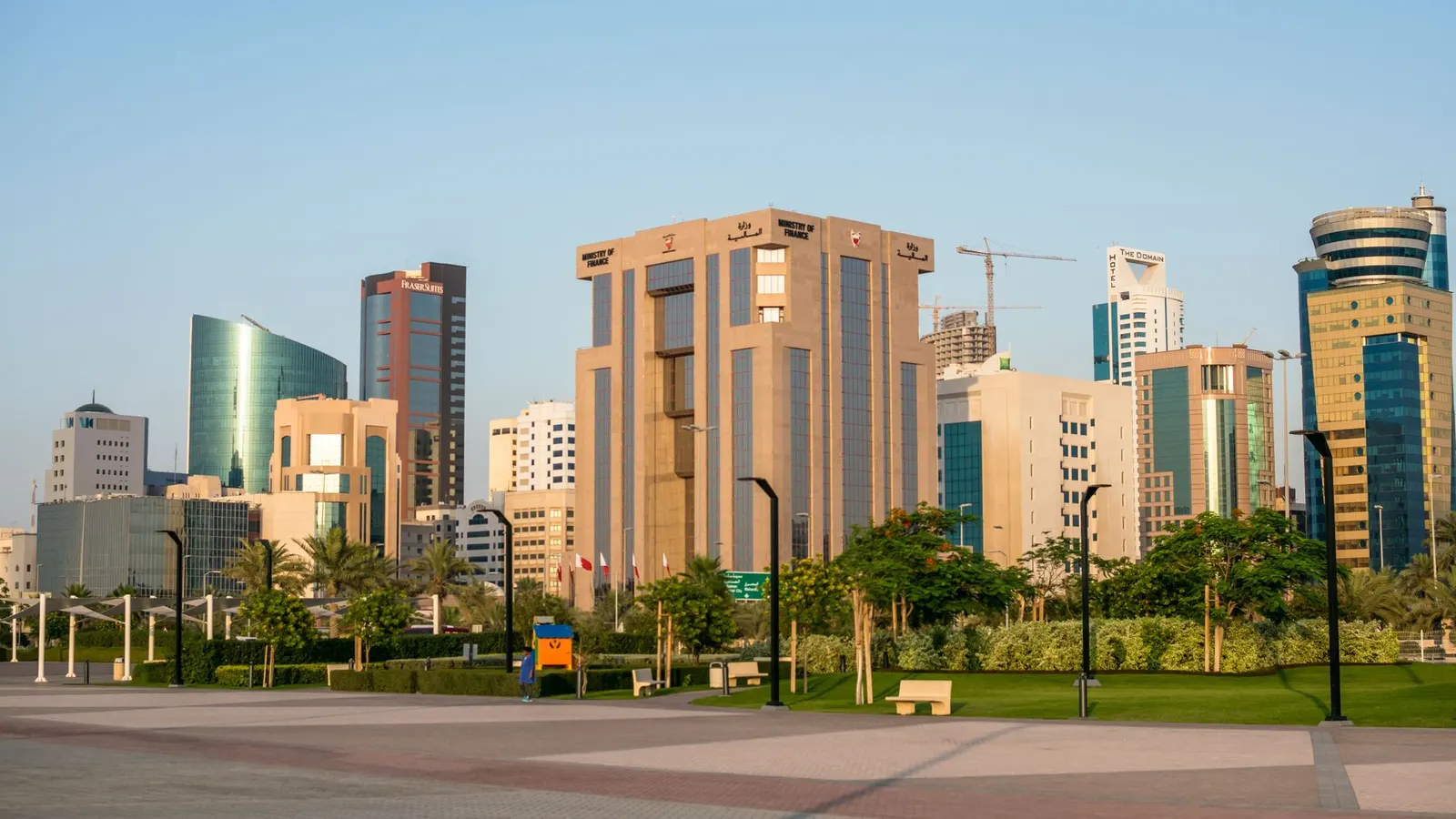
The capital — the National Museum, Bab al-Bahrain souq, the World Trade Center towers and the licensed nightlife.
Muharraq
The old capital across the causeway, with the pearling path, merchant houses and traditional coffee shops.
The northwest
Qal'at al-Bahrain fort on its tell, the Barbar temple and the A'ali burial mounds.
The south
The Formula 1 circuit, the Tree of Life standing alone in the desert, and the oil museum at the first Gulf well.
The offshore islands
Hawar's bird reserve and dugongs, and the reefs and dive sites off the northern coast.
Practical guide
Getting there
Bahrain International (BAH) is a Gulf Air hub with good regional and reasonable European service. The 25-kilometre King Fahd Causeway connects to Saudi Arabia by road and is heavily used at weekends, with long queues on Thursday evenings and Saturday nights.
Getting around
A rental car or taxis — public transport exists but is limited. The island is small enough that a taxi anywhere costs a few dinars, and Uber and Careem operate. Driving is straightforward and roads are good. Everything of interest is within a forty-minute drive of Manama.
Money & costs
Dinar, pegged to the US dollar and worth around €2.40, so prices look small and are not. Cards are widely accepted. Tipping around 10 % is normal. Alcohol is available in licensed venues and shops but taxed.
Safety
Low crime and safe for visitors. Avoid political demonstrations, which occur in some villages and are policed firmly. Driving is the main physical risk. Summer heat and humidity are severe. Photography of government, military and some industrial sites is restricted.
Health
No vaccinations required. Healthcare is good and private care is used by most expatriates; insurance is necessary. Tap water is desalinated and generally safe; most drink bottled. Heat and humidity from May to September are the main concern.
SIM & internet
Local SIMs are cheap and coverage is complete across the small island. Free wifi is widespread. Some VoIP services have been restricted in the past; most now work.
Driving
Alcohol is legally sold and driving after any of it is a criminal matter with immediate detention — the combination catches out visitors who assume the two rules go together. The causeway queues to Saudi Arabia can run for hours at weekends.
Rules change - verify with an official source before you rent.
ExplWorld VerifiedNo verified partners here yet - all 6 country seats are open.
Become ExplWorld Verified →Itineraries through this country
Before you go
BahrainFrequently asked questions
Is a weekend enough?
Yes for the main sites — the fort, the museum, the burial mounds, the Muharraq pearling path and the Tree of Life fill two full days comfortably. Three if you want the diving or the circuit. It is small enough that nothing is more than forty minutes away.
How does it compare with the other Gulf states?
More relaxed and more historically layered. Alcohol is available in licensed venues and shops, dress codes are looser, and there is a genuine pre-oil history on display rather than a reconstructed one. It is also cheaper than the UAE or Qatar. The trade-off is scale — there is far less of it.
What about the political situation?
Bahrain saw significant unrest in 2011 and periodic protests since, concentrated in specific villages rather than in central Manama or the tourist areas. Foreign ministries advise avoiding demonstrations. Political expression, including online, is restricted and prosecutions have occurred. Visitors are not affected in normal circumstances.