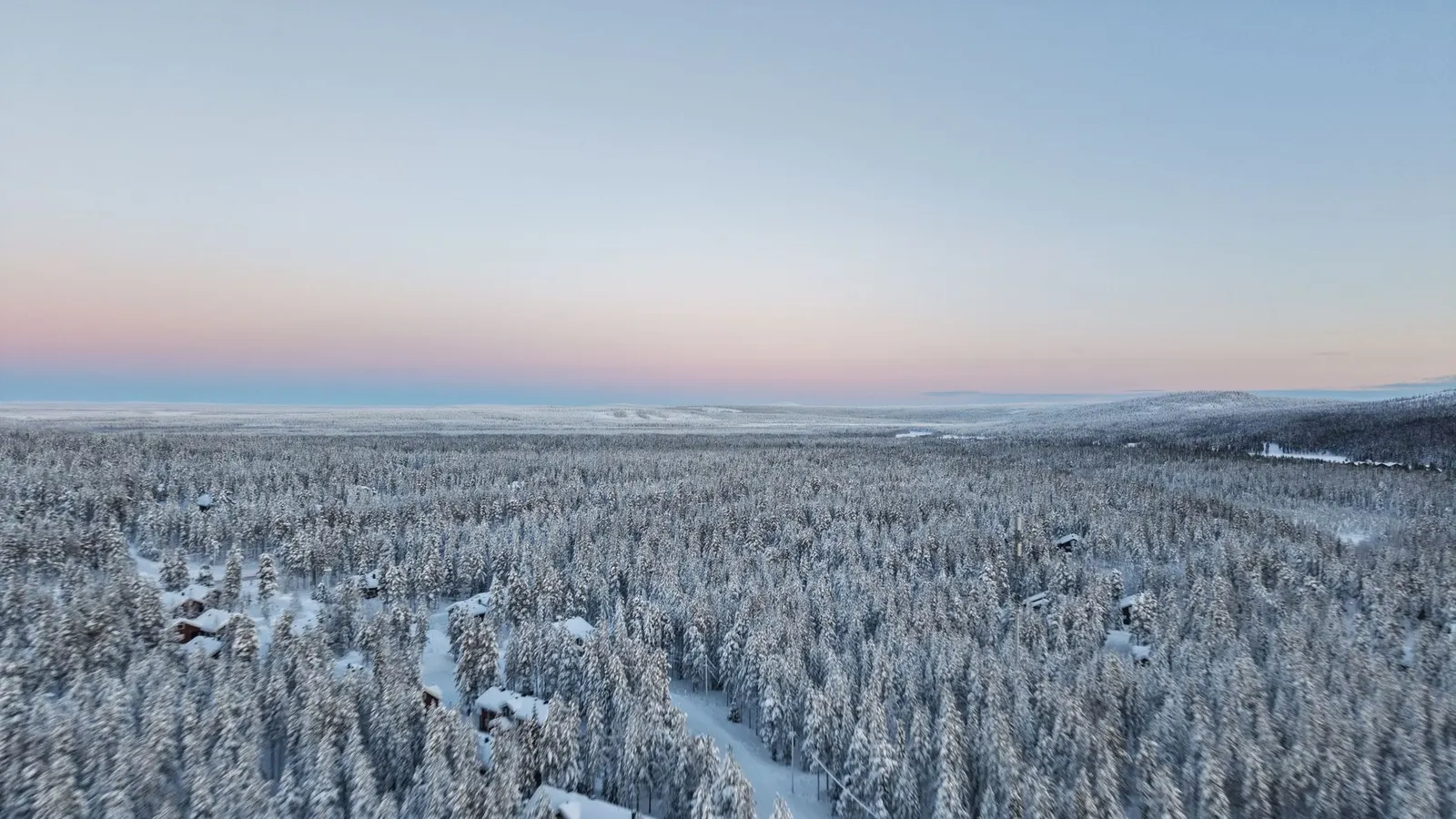
 Daniel Shipilov · Pexels License
Finland
“Forest, lakes and saunas — three million of the last, for five and a half million people.”
Finland has 188,000 lakes, 75 per cent forest cover and roughly three million saunas — more saunas than cars. That last statistic is not a curiosity: the sauna is where Finns socialise, negotiate and relax, it is UNESCO-listed as intangible heritage, and refusing an invitation to one is closer to declining dinner than declining a spa treatment.
The country splits into a summer and a winter proposition. Summer is the lake district, endless light, cottages and the Archipelago Sea's forty thousand islands. Winter is Lapland — aurora, husky sledding, reindeer herding and the Santa industry at Rovaniemi — with polar night in the far north and temperatures that regularly pass minus thirty. Helsinki is quietly one of the more interesting design capitals in Europe and works in either season.
Highlights
Lapland in winter
Aurora over Saariselkä and Inari, husky and reindeer sledding, glass igloos, and Rovaniemi on the Arctic Circle. Polar night runs from late November to mid-January in the far north.
The lake district
Saimaa, Europe's fourth-largest lake system, with rental cottages, a ringed seal found nowhere else, and a summer culture built entirely around water and sauna.
Helsinki design and the Archipelago Sea
The Design District, Oodi library and Suomenlinna sea fortress — then the archipelago ring road through forty thousand islands from Turku.
The sauna
Public saunas like Löyly and Kotiharju in Helsinki, smoke saunas in the countryside, and the ice-swimming that goes with them. Nudity is normal, gender-separated, and entirely unremarkable.
Entry requirements for Finland
Checking your passport…
We don't hold entry details for this passport group yet.
Before you fly
The detail
- Passport validity
- Most destinations want validity beyond your stay, and some want six months. Check yours against the return date.
- Onward travel
- Airlines may ask for a return or onward ticket at check-in.
- Health
- No vaccinations required. Healthcare is excellent; EHIC/GHIC covers EU and UK visitors. Tap water is among the best in the world. Tick-borne encephalitis is present on the southern coast and Åland. In winter the main risk is cold injury; in summer, mosquitoes in the north.
- Money
- Euro, and near-cashless — cards work everywhere. Tipping is not expected. Alcohol above 8 % is sold only in state Alko shops with limited hours; supermarkets sell beer and cider up to that strength. Finnish prices are high but below Norway and roughly level with Sweden.
When to go
BestJun–Aug. AvoidApril, November.
Midsummer and the white nights; lakes warming.
The band above each month is our editorial verdict - it weighs crowds, prices and access as well as weather. The line is average daily temperature, the bars are monthly rainfall. Select a month for the figures. Climate figures: ERA5 reanalysis via Open-Meteo, 2005–2024 normals.
What it costs
A day in Finland
Comfortable · sample day
≈ $135
Line items are real prices we track. The daily budget is an editorial estimate for this level, not their sum.
Where this sits among 244 countries we have costed
Lapland has the sharpest seasonal pricing in the Nordics — glass igloos and aurora accommodation from December to March cost several times their summer rate, and the Christmas fortnight at Rovaniemi is the single most expensive week in the country. The lake district peaks in July with domestic cottage demand. Helsinki is steadier and cheapest in July when the business market disappears.
Updated Aug 2026 · Editorial synthesis — VR published fares, Lapland operator tariffs, Statistics Finland price data (2025–2026) · confidence high
Excludes international flights - they depend on where you fly from.
Regions to know
5Helsinki & the south
The design capital, Suomenlinna sea fortress, Porvoo's wooden old town and the Gulf of Finland coast.
The Archipelago Sea & Åland
Turku and forty thousand islands, with the Swedish-speaking autonomous Åland archipelago beyond them.
The lake district
Saimaa and its ringed seals, Savonlinna's castle and opera festival, and cottage-and-sauna country.
Ostrobothnia & the west coast
Wooden towns, the rising Kvarken archipelago, and the flat farmland that produced much of Finnish design.
Lapland
Rovaniemi, Saariselkä and Inari, the Sámi homeland, the fells of Pallas-Yllästunturi and the aurora.
Practical guide
Getting there
Helsinki (HEL) is the main hub and a common Asia-Europe connection point; Rovaniemi, Ivalo and Kittilä take direct European charters in winter. Ferries run to Stockholm, Tallinn — a two-hour crossing used constantly — and Germany. Trains reach St Petersburg historically but that service is suspended.
Getting around
VR trains are comfortable and reach most of the country, with overnight car-carrying sleepers to Lapland that are the classic way north. Buses cover the rest. Domestic flights save a day to Lapland. Helsinki has trams, metro and ferries on one ticket. A car is genuinely useful in Lapland and the lake district, where distances between anything are long.
Money & costs
Euro, and near-cashless — cards work everywhere. Tipping is not expected. Alcohol above 8 % is sold only in state Alko shops with limited hours; supermarkets sell beer and cider up to that strength. Finnish prices are high but below Norway and roughly level with Sweden.
Safety
One of the safest countries in the world; crime against visitors is very rare. The hazards are cold and remoteness — winter temperatures in Lapland regularly reach minus thirty, and frostbite is a real risk without proper clothing, which most winter operators supply. Reindeer and elk on roads cause serious accidents. Ice safety on frozen lakes should be left to people who know the conditions.
Health
No vaccinations required. Healthcare is excellent; EHIC/GHIC covers EU and UK visitors. Tap water is among the best in the world. Tick-borne encephalitis is present on the southern coast and Åland. In winter the main risk is cold injury; in summer, mosquitoes in the north.
SIM & internet
EU roaming applies. Coverage is good across the populated country and along Lapland's main roads, with gaps in the wilderness. Finland has excellent connectivity generally. Free wifi is universal.
Driving
Winter tyres are legally required from November to March and studded tyres are standard. Elk and reindeer are the dominant hazard — reindeer in Lapland stand in the road and do not move, and hitting one must be reported to the police. Rural speed limits drop seasonally, so read the signs rather than assuming.
Rules change - verify with an official source before you rent.
ExplWorld VerifiedNo verified partners here yet - all 6 country seats are open.
Become ExplWorld Verified →Itineraries through this country
From the Journal
Before you go
FinlandFrequently asked questions
When can I see the northern lights?
From late August to early April in Lapland, with the best odds from September to March on clear nights. Above the Arctic Circle they appear on roughly every other clear night in winter. Give yourself four or five nights — cloud, not solar activity, is the limiting factor — and get away from town lights.
What are the sauna rules?
Wash before entering, go in naked (public saunas are gender-separated; mixed ones expect swimwear), sit on a towel, and throw water on the stones when the room agrees. Silence is fine. Cool off outside or in the lake and go back in. Do not treat it as a challenge — leave when you have had enough.
How bad are the mosquitoes?
In Lapland from late June through July, genuinely bad enough to plan around — dense enough to spoil an evening outdoors. Repellent with DEET, a head net for hiking, and timing a Lapland summer trip for August rather than July all help. The south is much less affected.