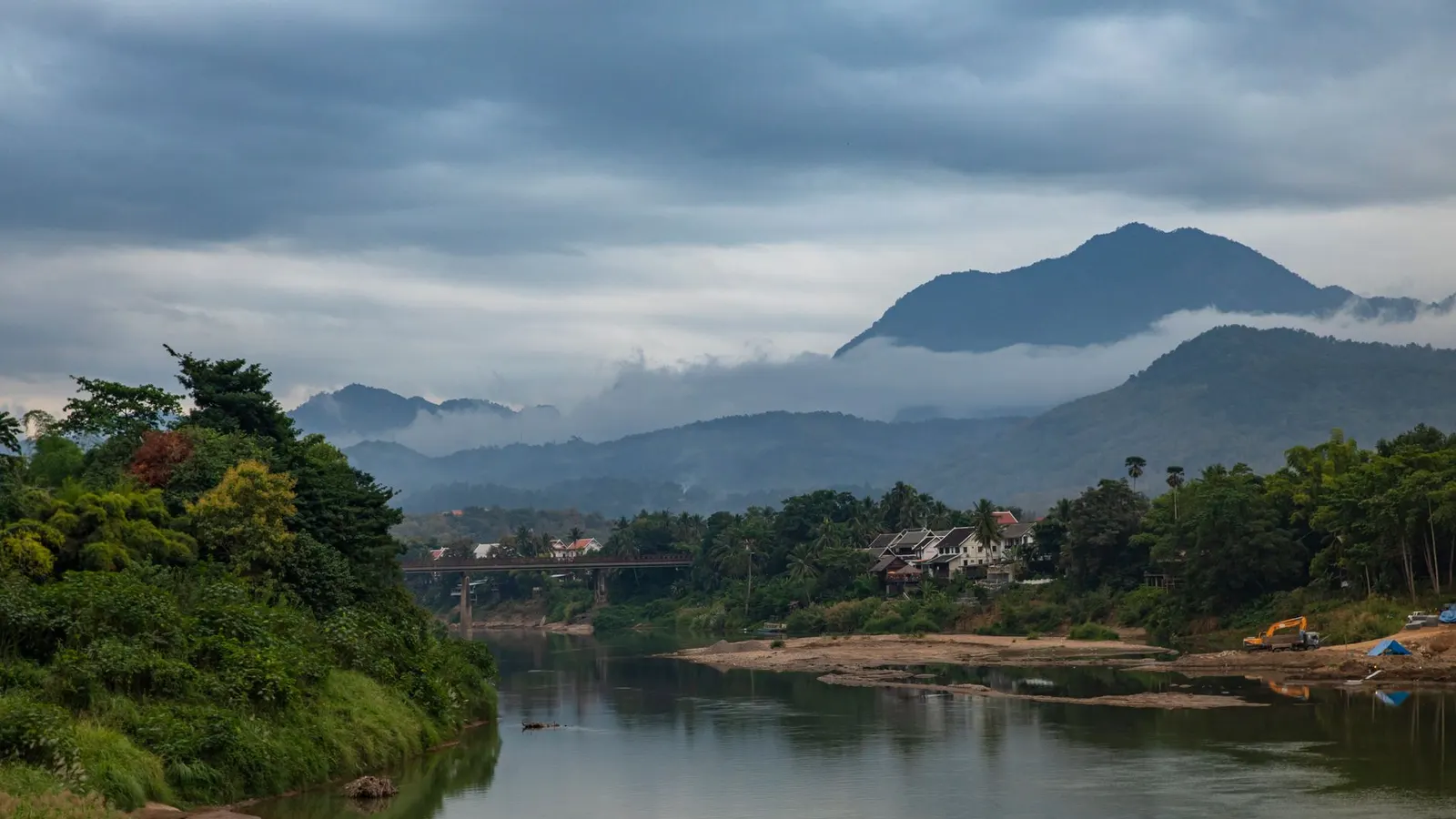
 Stephen Leonardi · Pexels License
“The slow country — and since 2021, the one with a high-speed railway through it.”
Laos has no coastline, seven million people and more forest than any of its neighbours. That combination has kept it quiet — the Mekong towns still shut early, the monks still collect alms at dawn in Luang Prabang, and a bus that says four hours means seven. Travellers who arrive with a Thailand-shaped itinerary end up frustrated; those who pick three places and stay in each end up extending.
The Chinese-built railway from the border to Vientiane, open since December 2021, has quietly changed the country. Luang Prabang to Vientiane went from an eleven-hour mountain road to under two hours. It makes the north far easier to reach — and makes the argument for spending the time you save somewhere off the line, like the Thakhek loop or the Bolaven Plateau.
Highlights
Luang Prabang
A UNESCO peninsula of gilded wats and French shophouses between two rivers. The dawn alms round is a religious observance, not a photo opportunity — watch from a distance or not at all.
The Thakhek loop
Four days by motorbike through karst country to the 7.5-kilometre Konglor Cave, which you pass through by longtail boat in total darkness. The best road trip in the country.
The Plain of Jars
Iron Age stone vessels scattered across the Xieng Khouang plateau, in a province that was the most heavily bombed place on earth. Cleared paths only — the UXO warning signs mean it.
Si Phan Don (Four Thousand Islands)
Where the Mekong braids into channels at the Cambodian border — hammocks, Irrawaddy dolphins if you are lucky, and the Khone Phapheng falls.
Entry requirements for Laos
Checking your passport…
We don't hold entry details for this passport group yet.
Before you fly
The detail
- Passport validity
- Most destinations want validity beyond your stay, and some want six months. Check yours against the return date.
- Onward travel
- Airlines may ask for a return or onward ticket at check-in.
- Arrival form
- Lao eVisa approval letter, if applied for online, must be printed and shown on arrival.
- Health
- No vaccinations required. Hepatitis A, typhoid, tetanus standard; rabies and Japanese encephalitis worth considering for rural stays. Dengue is present and peaks in the wet season; malaria risk exists in the far south and remote forest areas. Do not drink tap water. Serious medical care means crossing to Udon Thani in Thailand, which is a 90-minute drive from Vientiane — insurance with evacuation cover is essential.
- Money
- The kip has depreciated sharply in recent years, so quoted prices in guidebooks are unreliable. Cash dominates; cards work only in Vientiane and Luang Prabang hotels. ATMs are common in towns and charge €2–3, with low per-withdrawal caps. Thai baht and US dollars are accepted in border areas but at poor rates. Change kip back before you leave — it is hard to exchange outside the country.
When to go
BestOct–Feb. AvoidApril.
Cool and dry; chilly at night in the northern mountains.
The band above each month is our editorial verdict - it weighs crowds, prices and access as well as weather. The line is average daily temperature, the bars are monthly rainfall. Select a month for the figures. Climate figures: ERA5 reanalysis via Open-Meteo, 2005–2024 normals.
What it costs
A day in Laos
Comfortable · sample day
≈ $38
Line items are real prices we track. The daily budget is an editorial estimate for this level, not their sum.
Where this sits among 244 countries we have costed
Luang Prabang accommodation rises noticeably from November to February and over the New Year; everywhere else is close to flat. Railway fares are fixed. The kip has depreciated hard against the euro since 2022, which makes older published prices misleading in both directions — food and transport are cheaper in euro terms, imported goods are not.
Updated Aug 2026 · Editorial synthesis — Laos–China Railway published fares, Budget Your Trip, guesthouse rate sampling (2025–2026) · confidence medium
Excludes international flights - they depend on where you fly from.
Regions to know
5Luang Prabang & the north
The old royal capital plus Nong Khiaw and Muang Ngoi — limestone valleys, river villages and the country's best trekking.
Vientiane & the centre
A capital that still feels like a large town, with the Buddha Park downriver and Vang Vieng's karsts two hours north.
Xieng Khouang
The Plain of Jars plateau — Iron Age megaliths and the bomb-crater landscape of the Secret War.
Thakhek & the karst belt
The motorbike loop through limestone country to Konglor Cave, and the caves and swimming holes along the way.
The south
Pakse, the coffee farms and waterfalls of the Bolaven Plateau, Wat Phou's Khmer ruins and the Four Thousand Islands.
Practical guide
Getting there
Vientiane (VTE) and Luang Prabang (LPQ) take regional flights from Bangkok, Hanoi, Chiang Mai, Kuala Lumpur and Singapore; there are no direct flights from Europe. Many travellers arrive overland — the Friendship Bridge from Nong Khai in Thailand into Vientiane is easy and has its own shuttle train, and the slow boat down the Mekong from Huay Xai to Luang Prabang takes two days and is a classic.
Entry formalities
Lao eVisa approval letter, if applied for online, must be printed and shown on arrival.
Getting around
The Laos–China Railway now covers Vientiane–Vang Vieng–Luang Prabang–Boten and is by far the best way to move on that axis; book several days ahead. Elsewhere it is minivans and buses on winding roads — assume any quoted duration is optimistic. Domestic flights (Lao Airlines) link Vientiane with Luang Prabang, Pakse and Savannakhet. Motorbikes are the standard way to do the Thakhek and Bolaven loops; rent from established operators who will store your luggage.
Money & costs
The kip has depreciated sharply in recent years, so quoted prices in guidebooks are unreliable. Cash dominates; cards work only in Vientiane and Luang Prabang hotels. ATMs are common in towns and charge €2–3, with low per-withdrawal caps. Thai baht and US dollars are accepted in border areas but at poor rates. Change kip back before you leave — it is hard to exchange outside the country.
Safety
Crime against visitors is rare. The real risks are unexploded ordnance off marked paths, road accidents on mountain routes, and drowning or injury in the river-tubing and adventure scene around Vang Vieng, which has a long history of casualties. Methanol poisoning from adulterated spirits has caused deaths in backpacker areas — avoid free-pour spirits and unlabelled bottles. Rural medical facilities are minimal.
Health
No vaccinations required. Hepatitis A, typhoid, tetanus standard; rabies and Japanese encephalitis worth considering for rural stays. Dengue is present and peaks in the wet season; malaria risk exists in the far south and remote forest areas. Do not drink tap water. Serious medical care means crossing to Udon Thani in Thailand, which is a 90-minute drive from Vientiane — insurance with evacuation cover is essential.
SIM & internet
Unitel, Lao Telecom and ETL sell cheap tourist SIMs; coverage is good in towns and along the railway, patchy in the mountains and absent in the far north's trekking areas. Wifi is standard in guesthouses. WhatsApp and Facebook Messenger are both used; many businesses run on Facebook pages rather than websites.
Driving
Mountain roads are narrow, unlit and shared with livestock; do not ride after dark. Rental shops commonly hold your passport as deposit — leave a copy and a cash deposit instead if you can negotiate it.
Rules change - verify with an official source before you rent.
ExplWorld VerifiedNo verified partners here yet - all 6 country seats are open.
Become ExplWorld Verified →Itineraries through this country
Before you go
LaosFrequently asked questions
Is the new railway worth using?
Yes, and it reshapes an itinerary. Vientiane to Luang Prabang takes under two hours against eleven by road, for about €18 in second class. Tickets sell out — buy through an agent or the official app several days ahead, and note that stations sit well outside the towns they serve, so budget for the transfer.
How serious is the unexploded ordnance problem?
Serious, and specific. Laos is the most heavily bombed country per capita in history and roughly a third of the ordnance failed to detonate. Casualties still occur every year, overwhelmingly among Lao farmers and children. For visitors the rule is simple and sufficient: stay on marked paths and roads, never dig or touch metal debris, and treat COPE in Vientiane as required visiting.
How much should I plan to do in two weeks?
Three places, four at most. The distances are short on a map and long in practice, and the pleasure of Laos is in staying put. A common good shape: Luang Prabang, a northern stop like Nong Khiaw, then either the railway south to Vientiane or the loop from Thakhek.