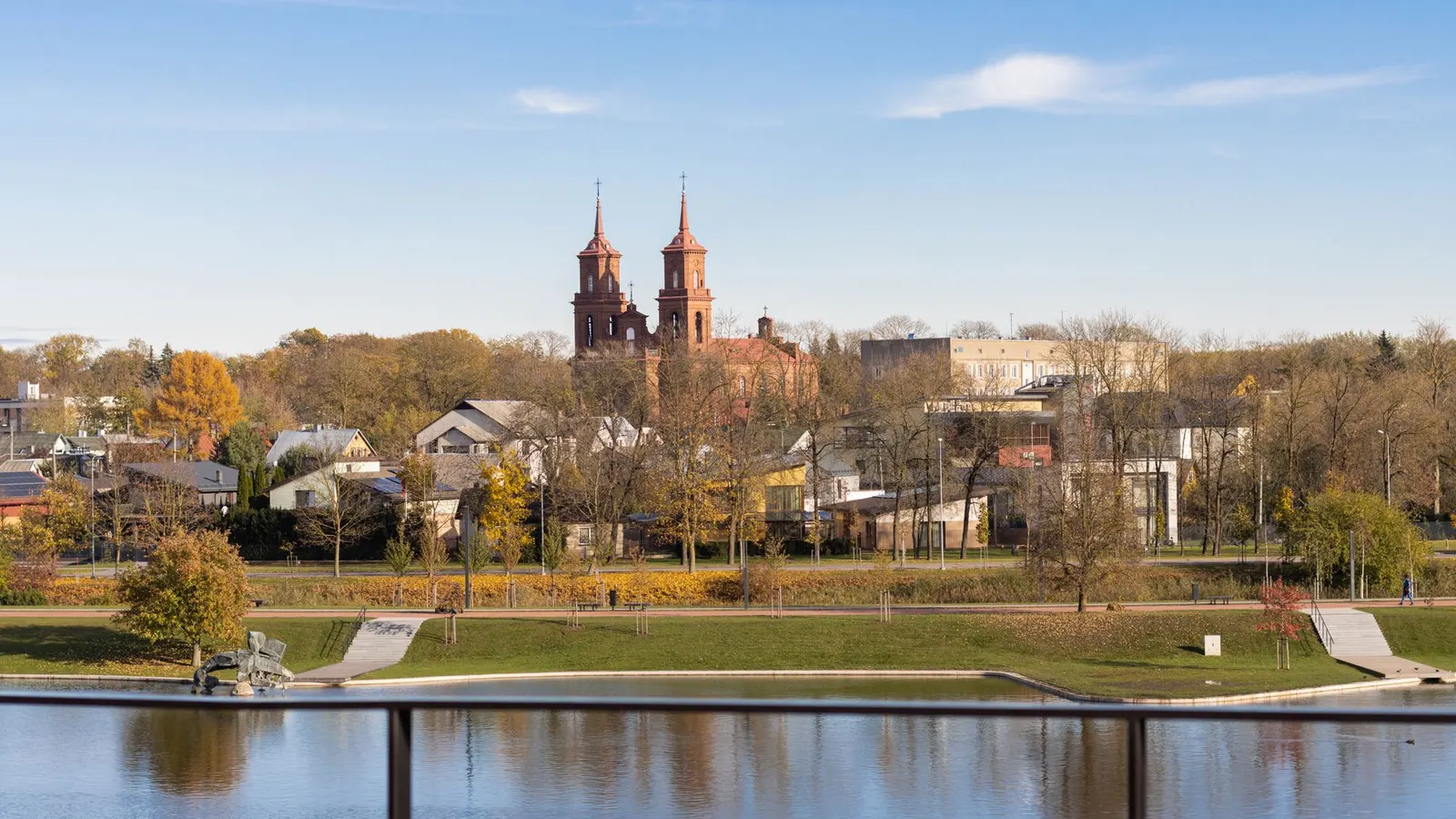
 Agnė Kazakevičienė · Pexels License
Lithuania
“A baroque capital, a sand spit shared with Russia, and a hill covered in crosses.”
Lithuania was the last pagan state in Europe, converting only in 1387, and at its height the Grand Duchy stretched from the Baltic to the Black Sea. That history sits under everything — Vilnius has one of the largest baroque old towns on the continent, the Catholic culture is deeper than in Latvia or Estonia, and the relationship with Poland runs through centuries of shared statehood.
The Curonian Spit is the country's other signature: a ninety-eight-kilometre sand bar of migrating dunes and pine forest, half Lithuanian and half Russian, reached by ferry from Klaipėda. Inland, the Hill of Crosses outside Šiauliai holds well over a hundred thousand crosses left by pilgrims, repeatedly bulldozed by Soviet authorities and repeatedly rebuilt overnight.
Highlights
Vilnius old town
One of the largest baroque old towns in Europe, UNESCO-listed, plus the self-declared artists' republic of Užupis across the river with its own constitution on a wall in thirty languages.
The Curonian Spit
Migrating sand dunes and pine forest on a ninety-eight-kilometre sand bar, with Nida's fishermen's houses and Thomas Mann's summer house. The Russian half is inaccessible.
The Hill of Crosses
A mound outside Šiauliai carrying well over a hundred thousand crosses left by pilgrims since the nineteenth century, bulldozed three times under Soviet rule and rebuilt each time.
Trakai
A red-brick island castle on a lake half an hour from Vilnius, and the Karaim community that has lived beside it since the fourteenth century, with its own language and food.
Entry requirements for Lithuania
Checking your passport…
We don't hold entry details for this passport group yet.
Before you fly
The detail
- Passport validity
- Most destinations want validity beyond your stay, and some want six months. Check yours against the return date.
- Onward travel
- Airlines may ask for a return or onward ticket at check-in.
- Health
- No vaccinations required. Healthcare is adequate; EHIC/GHIC covers EU and UK visitors. Tick-borne encephalitis is prevalent — Lithuania has one of the highest incidence rates in Europe and vaccination is routine locally. Tap water is safe in cities.
- Money
- Euro. Cards are widely accepted including for small amounts. ATMs are common. Tipping is around 10 %. Prices remain the lowest of the three Baltic states, particularly outside Vilnius.
When to go
BestMay–Aug. AvoidJan–Feb, November.
Green, mild and long-dayed — an excellent month.
The band above each month is our editorial verdict - it weighs crowds, prices and access as well as weather. The line is average daily temperature, the bars are monthly rainfall. Select a month for the figures. Climate figures: ERA5 reanalysis via Open-Meteo, 2005–2024 normals.
What it costs
A day in Lithuania
Comfortable · sample day
≈ $76
Line items are real prices we track. The daily budget is an editorial estimate for this level, not their sum.
Where this sits among 244 countries we have costed
The coast and the Curonian Spit fill in July and August and close down substantially in winter; Palanga in particular is a summer-only town. Vilnius rises modestly in summer and around the Christmas market. The country is otherwise flat-priced and the cheapest in the Baltics.
Updated Aug 2026 · Editorial synthesis — Lithuanian statistical office price data, operator fares, accommodation sampling (2025–2026) · confidence high
Excludes international flights - they depend on where you fly from.
Regions to know
5Vilnius & the southeast
The baroque capital, Užupis, Trakai's island castle and the Aukštaitija lakes further north.
Kaunas & the centre
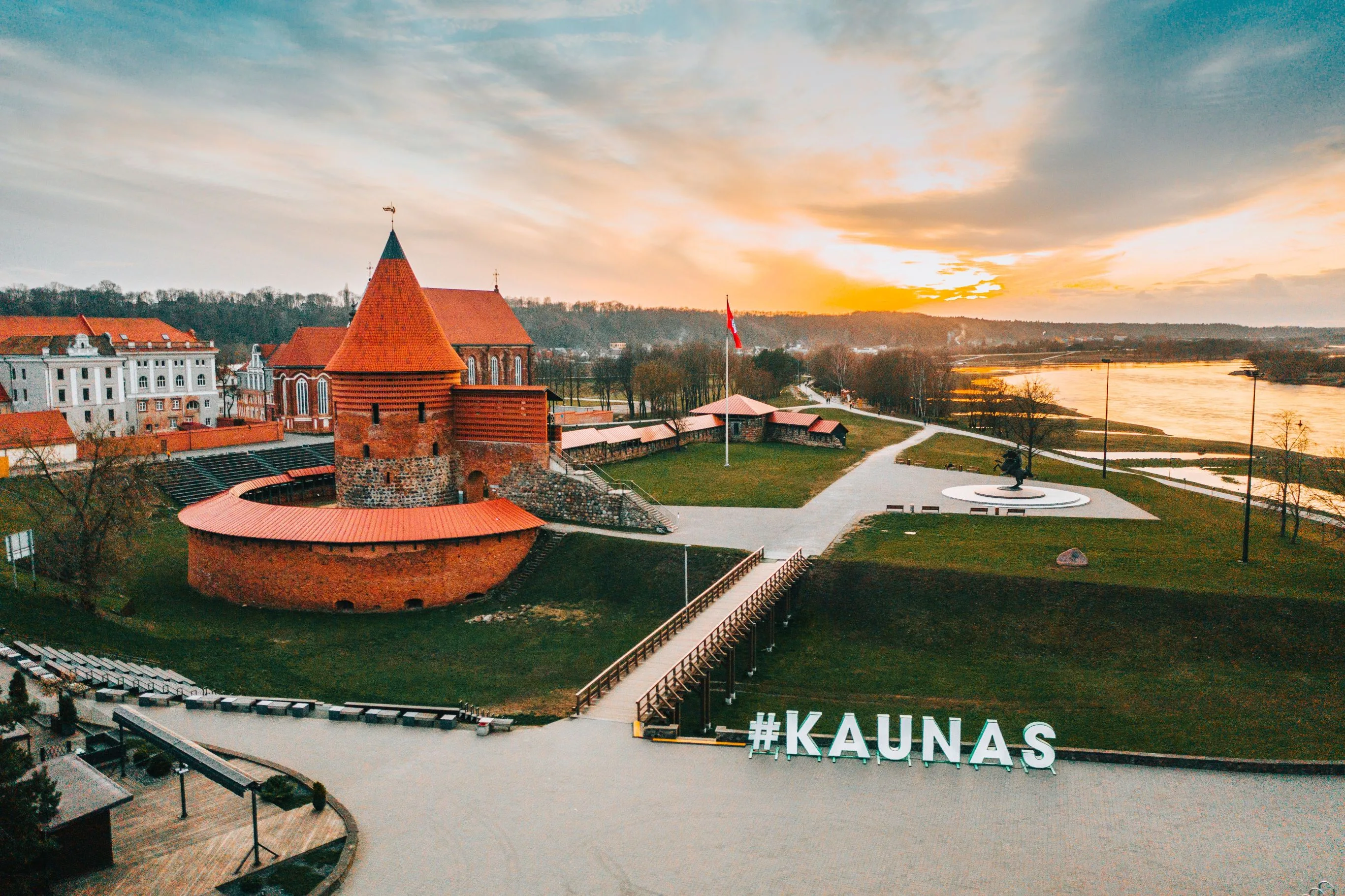
The interwar capital with its modernist architecture, the Ninth Fort, and the Nemunas river valley.
The Curonian Spit
Migrating dunes, pine forest and fishing villages on a sand bar, reached by ferry from Klaipėda.
The coast & Žemaitija
Klaipėda and Palanga's amber museum and beaches, plus the Samogitian hills and the Cold War missile base.
The north
Šiauliai and the Hill of Crosses, plus the Latvian border country and the Biržai karst sinkholes.
Practical guide
Getting there
Vilnius (VNO) and Kaunas (KUN) take European flights, with Ryanair and Wizz Air heavily represented. Buses link Riga, Tallinn, Warsaw and Kaliningrad. Trains reach Warsaw via the Suwałki gap and Riga on a new cross-border service, both slow but improving.
Getting around
Buses are the backbone and reach everywhere cheaply; trains connect Vilnius, Kaunas, Klaipėda and Šiauliai. Vilnius has buses and trolleybuses. A car is useful for the Hill of Crosses, the Aukštaitija lakes and the spit, though the spit itself is best cycled once you are on it.
Money & costs
Euro. Cards are widely accepted including for small amounts. ATMs are common. Tipping is around 10 %. Prices remain the lowest of the three Baltic states, particularly outside Vilnius.
Safety
Safe, with petty theft in Vilnius old town the main risk. Outside the capital crime is very low. The environmental risks are ticks in forests and winter cold. The Belarusian border and the Suwałki corridor are militarily sensitive and the border zone has restricted access.
Health
No vaccinations required. Healthcare is adequate; EHIC/GHIC covers EU and UK visitors. Tick-borne encephalitis is prevalent — Lithuania has one of the highest incidence rates in Europe and vaccination is routine locally. Tap water is safe in cities.
SIM & internet
EU roaming applies. Coverage is good and mobile data is very cheap. Free wifi is widespread including in city centres and on transport.
Driving
Winter tyres are required from November to April. The Curonian Spit charges a vehicle entry fee at the ferry, and cycling is the better way to see it. Forest wildlife on rural roads is the main hazard at dawn and dusk.
Rules change - verify with an official source before you rent.
ExplWorld VerifiedNo verified partners here yet - all 6 country seats are open.
Become ExplWorld Verified →Itineraries through this country
Before you go
LithuaniaFrequently asked questions
Which Baltic capital should I prioritise?
Vilnius for baroque architecture, atmosphere and value; Riga for art nouveau and scale; Tallinn for the medieval old town. Vilnius is the least polished and the most rewarding to walk around aimlessly. Buses between the three take four to five hours and cost under €20.
Can I visit the Russian half of the Curonian Spit?
Not practically. The southern half is Kaliningrad oblast, and Russian entry rules for EU citizens have tightened sharply since 2022. The Lithuanian half is fully accessible by ferry from Klaipėda and is what visitors mean when they refer to the spit.
How cheap is it?
The cheapest of the three Baltic states. A restaurant main runs €12–15, a beer €3.50, a mid-range hotel €65. Vilnius in summer is the expensive window and even then it undercuts most of the EU.