 Nimród Fekete · Pexels License
San Marino
“The oldest surviving republic in the world, on top of a limestone crag.”
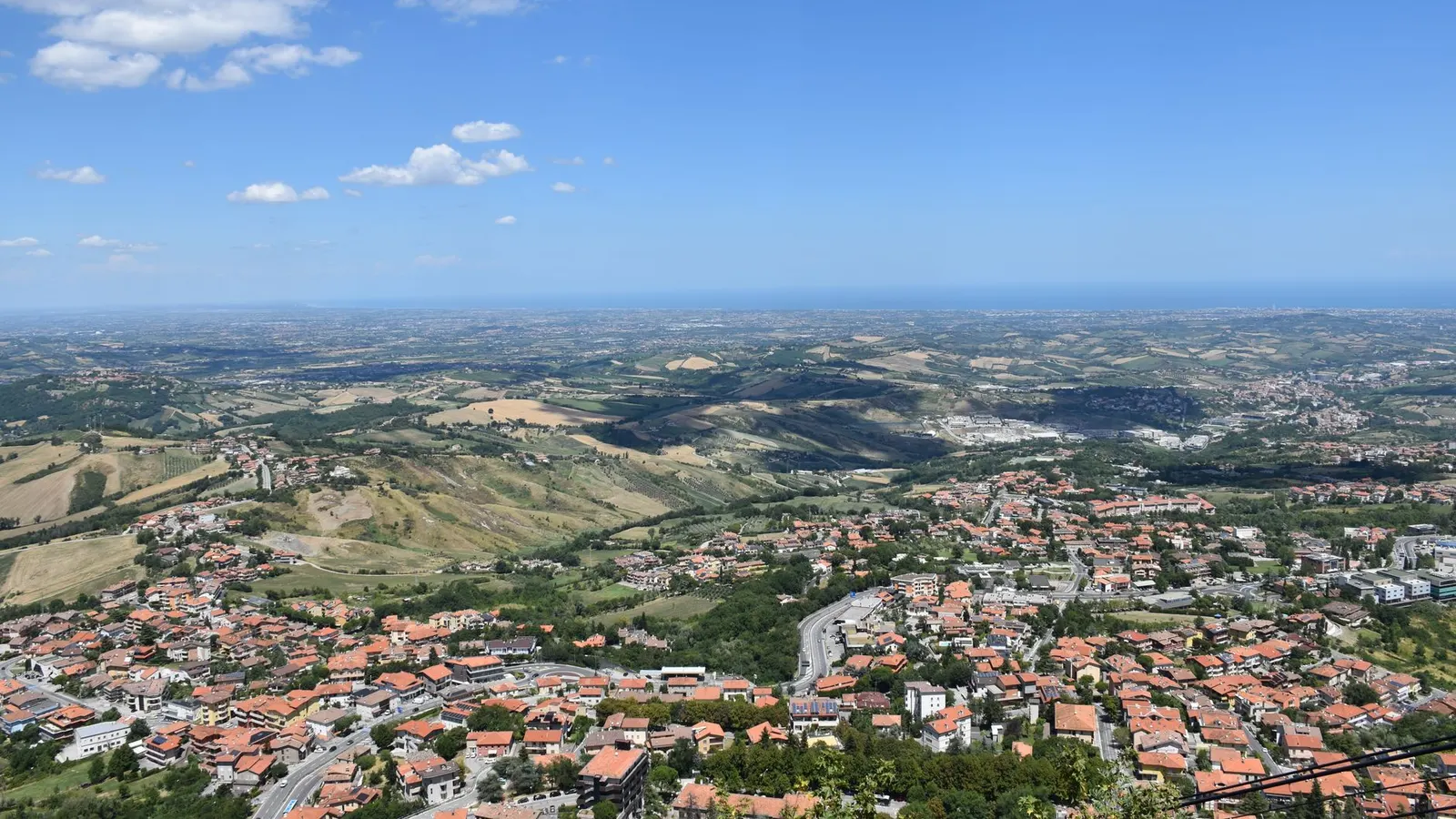
San Marino claims to be the oldest surviving sovereign republic in the world, founded by tradition in 301 and governed under statutes from 1600 that are still partly in force. It occupies 61 square kilometres of Italian Romagna, centred on Monte Titano — a limestone crag with three medieval towers along its ridge and a walled town below them, all UNESCO-listed.
It is a day trip from Rimini for most visitors and gets around two million of them a year, which is a great many for 34,000 residents. The historic centre is heavily given over to souvenir shops and, curiously, weapons retailers. The compensation is the setting — the view from the Guaita tower runs to the Adriatic — and the fact that after five in the afternoon the coaches leave and the town is largely yours.
Highlights
The three towers
Guaita, Cesta and Montale strung along the ridge of Monte Titano, linked by a cliff-edge path called the Passo delle Streghe. The first two are enterable; the walk between them is the point.
The historic centre after five
When the coaches leave, the walled town empties and the Piazza della Libertà with its neo-Gothic Palazzo Pubblico becomes a small Italian hill town again. Stay a night for this alone.
The view
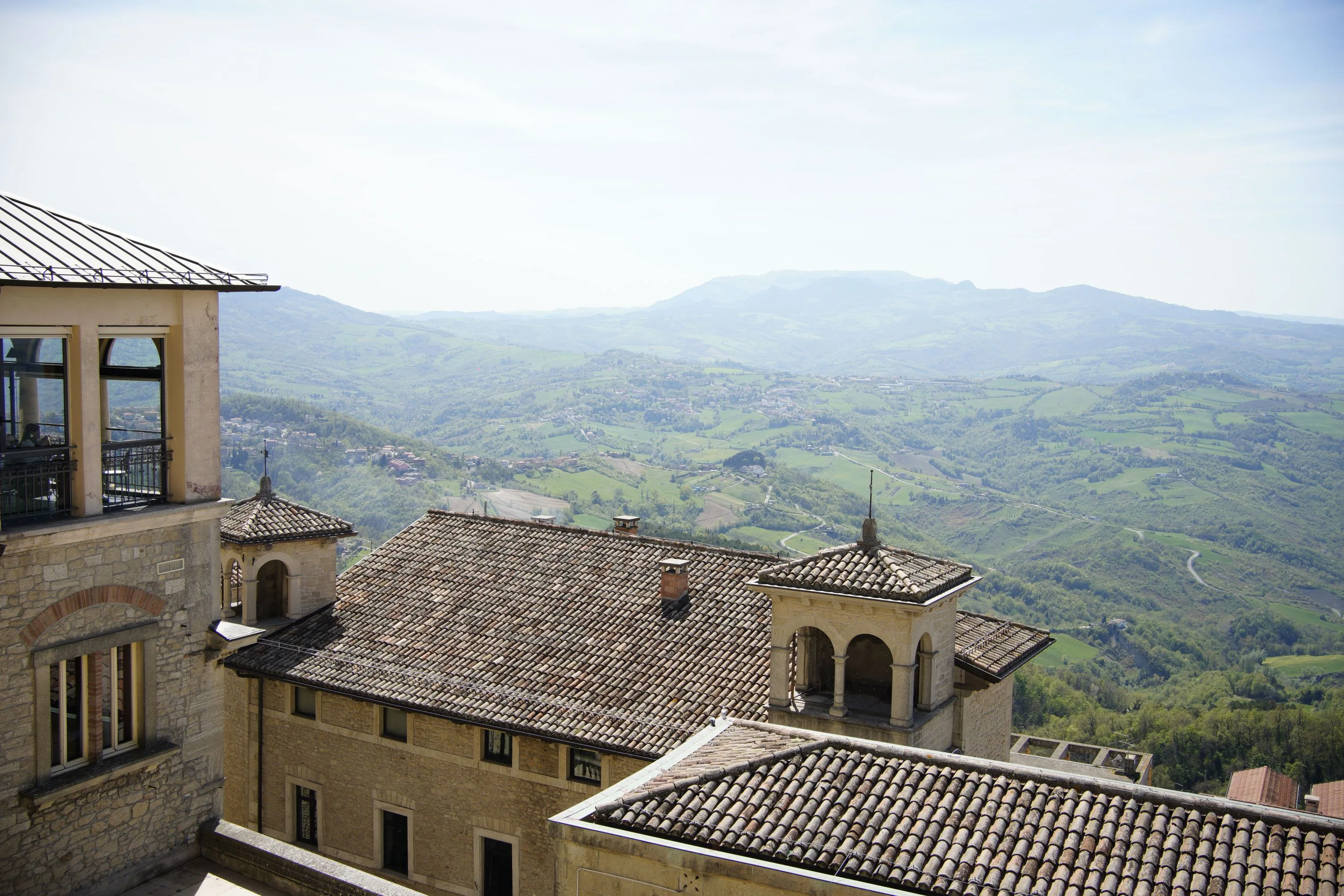
From 750 metres the ridge looks across Romagna to the Adriatic twenty kilometres away and inland to the Apennines. On a clear evening it is the reason the towers are where they are.
The passport stamp
There is no border control, so the tourist office sells a souvenir stamp for a few euros. Faintly absurd, entirely traditional, and the closest thing to an entry formality in the country.
Entry requirements for San Marino
Checking your passport…
We don't hold entry details for this passport group yet.
Before you fly
The detail
- Passport validity
- Most destinations want validity beyond your stay, and some want six months. Check yours against the return date.
- Onward travel
- Airlines may ask for a return or onward ticket at check-in.
- Health
- No vaccinations required. Healthcare is good and integrated with the Italian system in practice, but San Marino is not in the EU, so EHIC/GHIC does not apply and insurance is needed. Rimini has the nearest large hospital. Tap water is safe.
- Money
- Euro, minted locally in collectable editions. Cards are accepted everywhere. Tipping follows Italian practice — rounding up, with a cover charge often on the bill. Prices in the centre are tourist-town prices; the surrounding castelli are ordinary Italian-level.
When to go
BestApr–May, Sep–Oct. AvoidJan–Feb, Jul–Aug.
Warm and green with clear views — an excellent month.
The band above each month is our editorial verdict - it weighs crowds, prices and access as well as weather. The line is average daily temperature, the bars are monthly rainfall. Select a month for the figures. Climate figures: ERA5 reanalysis via Open-Meteo, 2005–2024 normals.
What it costs
A day in San Marino
Comfortable · sample day
≈ $97
Line items are real prices we track. The daily budget is an editorial estimate for this level, not their sum.
Where this sits among 244 countries we have costed
Accommodation inside the walls rises in July and August with the Adriatic resort season and again during the Christmas market weeks; spring and autumn are noticeably cheaper for better weather. Site entry and transport are fixed year-round.
Updated Aug 2026 · Editorial synthesis — San Marino state museum tariffs, transport fares, accommodation sampling (2025–2026) · confidence medium
Excludes international flights - they depend on where you fly from.
Regions to know
5The City of San Marino
The walled historic centre on the ridge — the three towers, Piazza della Libertà and the museums.
Borgo Maggiore
The lower town linked by cable car, with a Friday market and the state museum of coins and stamps.
Serravalle
The largest and most modern municipality, on the plain, with the football stadium and the commercial district.
Domagnano & the northern castelli
Ordinary Sammarinese villages away from the tourism, with the countryside and views back to Monte Titano.
Montegiardino & the south
The smallest castelli, with the Fiorentino and Faetano hills and quiet walking on the Italian border.
Practical guide
Getting there
Buses from Rimini station take around fifty minutes; Rimini and Bologna are the nearest airports and rail hubs. Driving from the Adriatic coast takes half an hour up a series of switchbacks. A cable car links the lower town of Borgo Maggiore to the historic centre in two minutes and saves the climb.
Getting around
The historic centre is small, steep and pedestrianised — everything is on foot once you are up there. The cable car connects to Borgo Maggiore and the car parks. Local buses link the nine castelli, the country's municipalities, though most visitors never leave the capital.
Money & costs
Euro, minted locally in collectable editions. Cards are accepted everywhere. Tipping follows Italian practice — rounding up, with a cover charge often on the bill. Prices in the centre are tourist-town prices; the surrounding castelli are ordinary Italian-level.
Safety
Extremely safe with almost no crime. The practical hazards are the steep cobbled streets, which are slippery in rain, and the cliff-edge path between the towers, which has railings but real exposure. Driving up in winter can mean ice on the switchbacks.
Health
No vaccinations required. Healthcare is good and integrated with the Italian system in practice, but San Marino is not in the EU, so EHIC/GHIC does not apply and insurance is needed. Rimini has the nearest large hospital. Tap water is safe.
SIM & internet
Not in the EU, so EU roaming does not automatically apply — though many operators include it and Italian networks cover the territory. Check your plan. Coverage is complete and free wifi is available in the historic centre.
Driving
The historic centre is closed to non-resident traffic — park in the terraced car parks below and take the lift or the cable car up. The approach road is a series of tight switchbacks that ice over in winter. There is no border check, so you may not notice you have left Italy.
Rules change - verify with an official source before you rent.
ExplWorld VerifiedNo verified partners here yet - all 6 country seats are open.
Become ExplWorld Verified →Itineraries through this country
Before you go
San MarinoFrequently asked questions
How do I get there?
By bus from Rimini, which takes about fifty minutes and runs several times a day, or by car. There is no airport and the railway that once climbed the mountain closed in 1944 — a short restored section runs as a museum piece. Rimini is the practical base if you are not staying up top.
Is it worth staying overnight?
Yes, if you want to see the place rather than the shops. The day-trip crowd arrives late morning and leaves by five, and the town is genuinely lovely in the evening and early morning. Hotels inside the walls are reasonably priced outside high summer.
Is it in the EU?
No. San Marino is not in the EU or Schengen, though it uses the euro by agreement and mints its own coins, which collectors chase. In practice there is no border and no control — you drive or ride in without stopping. It is in a customs union with the EU, so there is no duty-free advantage beyond lower excise on some goods.