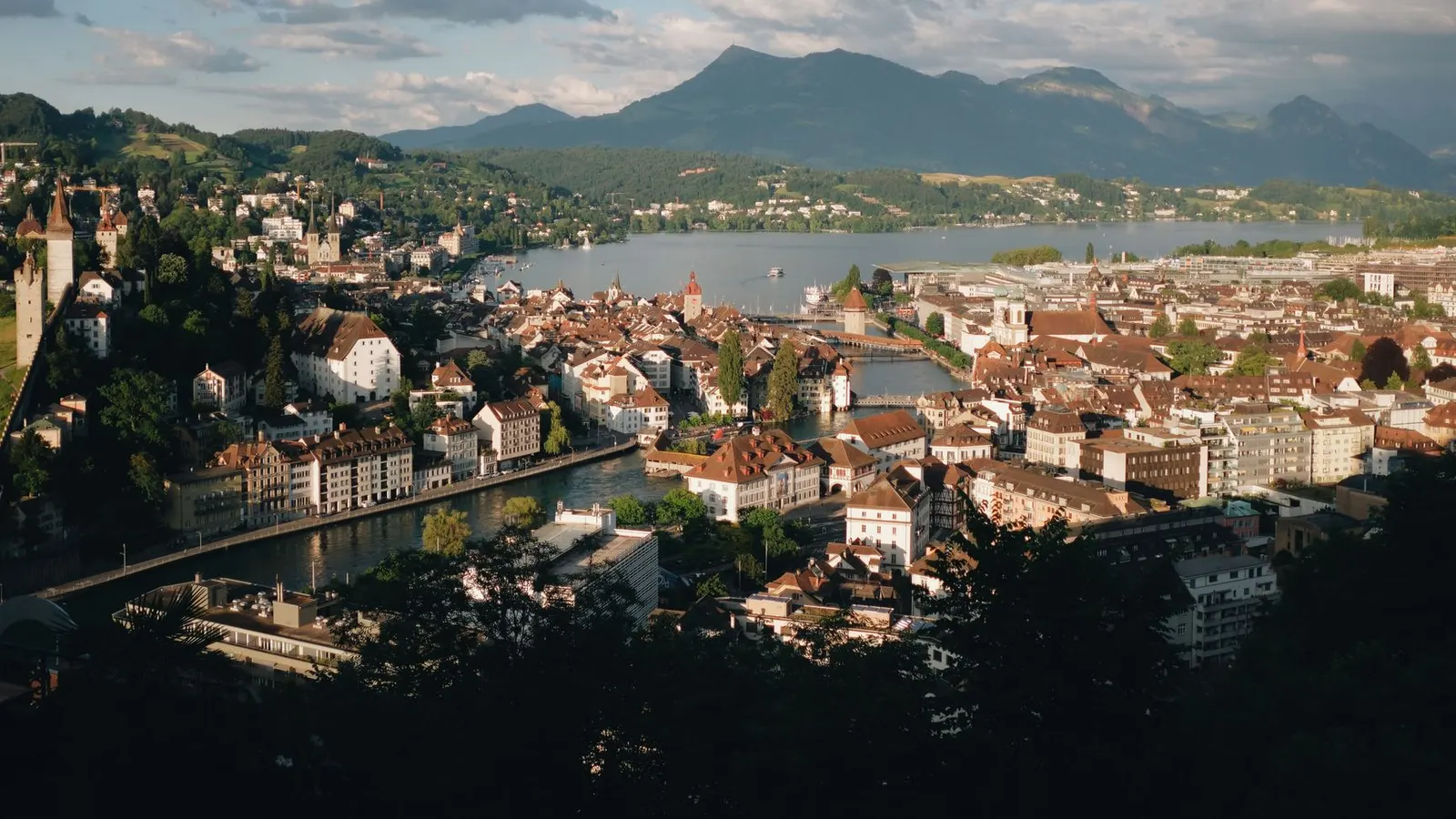
 Melike B · Pexels License
Switzerland
“The most expensive country in Europe, and the transport alone is worth it.”
Switzerland is small, vertical and organised to a degree that becomes funny once you notice it. A postbus leaves a mountain hamlet at 07:14 and arrives at 07:14; the connecting train waits. That system — trains, buses, funiculars, lake steamers, all on one timetable and one ticket — is the reason a country with almost no flat ground is one of the easiest in Europe to travel without a car.
The cost is the other defining fact. This is the most expensive country in Europe by a wide margin, and nothing about the tourist economy softens it. What you get is four language regions, 48 peaks above 4,000 metres, and mountain infrastructure — cable cars, huts, marked trails — that nowhere else matches. Budget accordingly and use the half-fare or travel passes, which genuinely pay for themselves.
Highlights
The Bernese Oberland
Lauterbrunnen's waterfall valley, Mürren and Wengen on the terraces above, and the Eiger, Mönch and Jungfrau behind. The Schynige Platte to First walk is the one to do.
The Glacier and Bernina Express
Panoramic rail from Zermatt to St Moritz over 291 bridges, and the UNESCO-listed Bernina line down to Italy. The ordinary scheduled trains cover the same track for a fraction of the price.
Zermatt and the Matterhorn
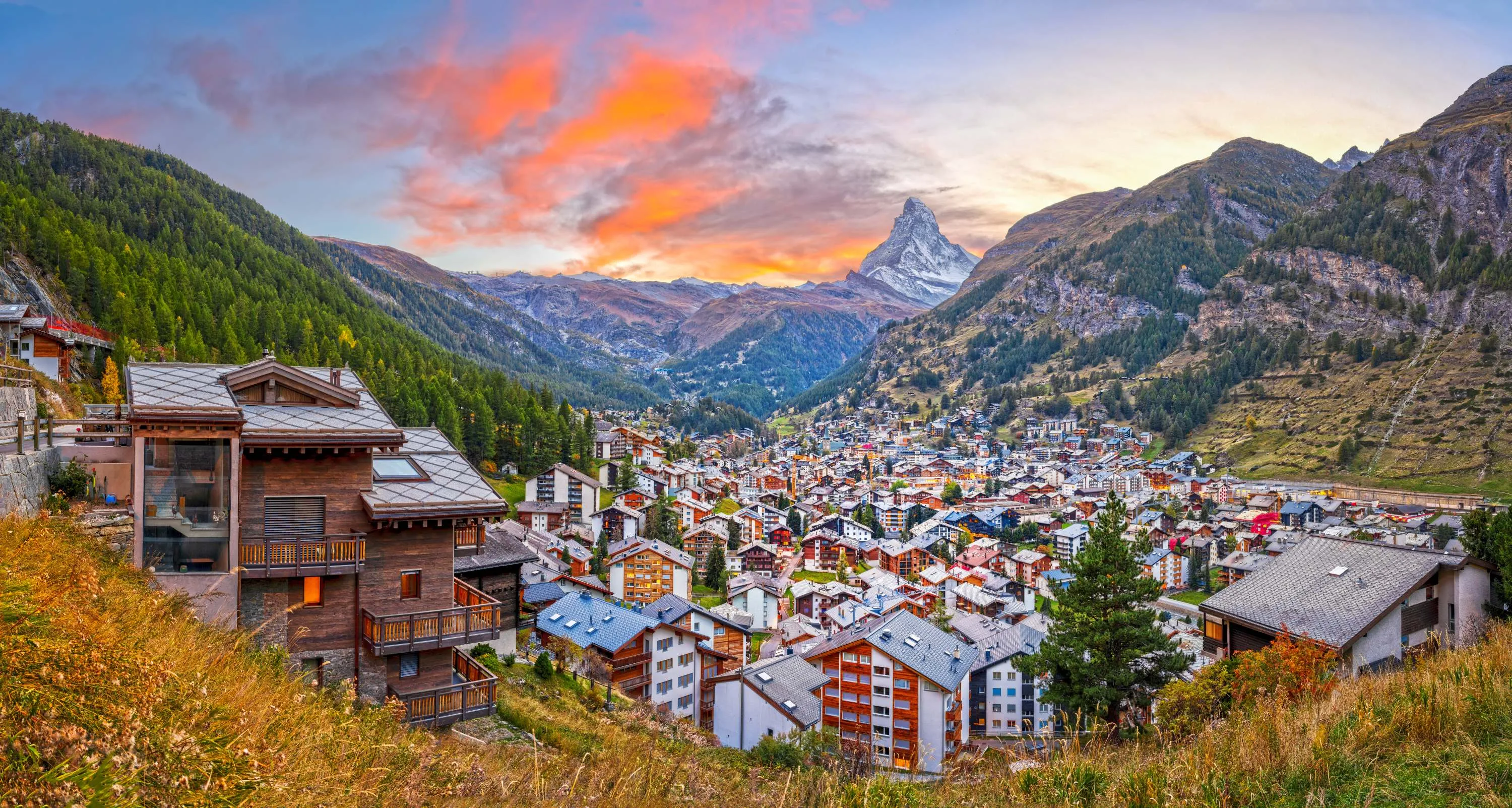
A car-free village under the most recognisable mountain in the Alps, with the Gornergrat railway and the Five Lakes walk that reflects it.
Ticino
The Italian-speaking south — Lake Lugano, the Verzasca valley's green water and stone bridges, and a completely different climate from the rest of the country.
Entry requirements for Switzerland
Checking your passport…
We don't hold entry details for this passport group yet.
Before you fly
The detail
- Passport validity
- Most destinations want validity beyond your stay, and some want six months. Check yours against the return date.
- Onward travel
- Airlines may ask for a return or onward ticket at check-in.
- Health
- No vaccinations required. Healthcare is excellent and among the most expensive in the world — EHIC/GHIC covers EU visitors for state care, everyone else needs solid insurance. Mountain rescue is charged and is not cheap; check your policy covers helicopter evacuation and the altitude you plan to reach. Tap water is excellent everywhere. Tick-borne encephalitis is present in forested areas below 1,500 metres.
- Money
- Swiss francs, not euros, though euros are accepted in some tourist places at a poor rate. Cards work everywhere including for small amounts. Tipping is not expected — service is included and rounding up is plenty. Supermarkets are dramatically cheaper than restaurants and picnicking is normal, not cheap-looking.
When to go
BestJun–Sep. AvoidApril, November.
Wildflowers, long days and the hut network opening.
The band above each month is our editorial verdict - it weighs crowds, prices and access as well as weather. The line is average daily temperature, the bars are monthly rainfall. Select a month for the figures. Climate figures: ERA5 reanalysis via Open-Meteo, 2005–2024 normals.
What it costs
A day in Switzerland
Comfortable · sample day
≈ $205
Line items are real prices we track. The daily budget is an editorial estimate for this level, not their sum.
Where this sits among 244 countries we have costed
Two peaks, not one: ski resorts are most expensive from Christmas through February, and mountain villages again in July and August. April, May and November are cheap because much of the infrastructure is closed, which is a poor trade for most visitors. Cities are steadier and driven by trade fairs and conferences.
Updated Aug 2026 · Editorial synthesis — SBB and Swiss Travel System published fares, SAC hut tariffs, hotel rate sampling (2025–2026) · confidence high
Excludes international flights - they depend on where you fly from.
Regions to know
5The Bernese Oberland
Interlaken, Lauterbrunnen and the Jungfrau region — the classic Swiss mountain landscape and the densest trail network.
Valais & Zermatt
The Matterhorn, the highest peaks in the country, the Aletsch glacier and the Rhône valley's vineyards.
Graubünden & the east
St Moritz, the Engadine valley, the Swiss National Park and the Bernina railway down into Italy.
Ticino
The Italian-speaking south — Lugano and Locarno on the lakes, and the green pools of the Verzasca valley.
The Mittelland & cities
Zurich, Bern's arcaded old town, Lucerne on its lake, and French-speaking Geneva and Lausanne.
Practical guide
Getting there
Zurich (ZRH), Geneva (GVA) and Basel (BSL) take flights from across Europe and beyond. Rail links are excellent: Paris to Geneva in three hours, Milan to Zurich in three and a half through the Gotthard base tunnel, plus direct services from Munich, Vienna and Frankfurt. Arriving by train is genuinely competitive with flying from most of Western Europe.
Getting around
One integrated timetable covers trains, postbuses, boats and most cable cars — plan on the SBB app, which is the single most useful thing you will install. Connections are designed to work and generally do. A car is unnecessary and often a liability given parking costs and car-free resorts like Zermatt and Wengen. Bicycles carry well on trains with a day pass.
Money & costs
Swiss francs, not euros, though euros are accepted in some tourist places at a poor rate. Cards work everywhere including for small amounts. Tipping is not expected — service is included and rounding up is plenty. Supermarkets are dramatically cheaper than restaurants and picnicking is normal, not cheap-looking.
Safety
Among the safest countries anywhere, with very low crime and comfortable solo travel at any hour. The risks are entirely mountain: weather changes fast, marked trails are graded by difficulty and the white-red-white ones require sure-footedness and a head for heights, and people die on them every year through overconfidence. Check the forecast, tell someone your route, and turn back when the cloud comes down.
Health
No vaccinations required. Healthcare is excellent and among the most expensive in the world — EHIC/GHIC covers EU visitors for state care, everyone else needs solid insurance. Mountain rescue is charged and is not cheap; check your policy covers helicopter evacuation and the altitude you plan to reach. Tap water is excellent everywhere. Tick-borne encephalitis is present in forested areas below 1,500 metres.
SIM & internet
Switzerland is not in the EU, so EU roaming does not apply and charges can be steep — check before arriving or buy a Swiss eSIM. Coverage is comprehensive, including in most Alpine valleys and on trains. Free wifi is common in stations and on many trains.
Driving
Speed enforcement is severe and fines are income-scaled at the top end — this is a country where a serious speeding offence can cost five figures. Several resort villages are car-free, reached only by train or cable car, which is worth knowing before you book a hire car.
Rules change - verify with an official source before you rent.
ExplWorld VerifiedNo verified partners here yet - all 6 country seats are open.
Become ExplWorld Verified →Itineraries through this country
Before you go
SwitzerlandFrequently asked questions
Which travel pass is worth it?
It depends on pace. The Swiss Travel Pass covers all trains, buses and boats plus most museums, and pays off if you are moving daily. The Half Fare Card cuts everything by half for a month and is better if you are based in one or two places. Mountain cable cars are often only discounted, not included, and they are expensive — check the specific lifts on your route before choosing.
How expensive is it really?
A restaurant main course runs €28–35, a beer €7, a mid-range hotel room €180. The workarounds Swiss people use: supermarket lunches from Coop or Migros, mountain huts instead of hotels, and tap water, which is excellent and free everywhere including from village fountains. Budget €190 a day comfortably; €110 is achievable with hostels and self-catering.
Summer or winter?
Different countries. Winter is skiing, and Swiss resorts are excellent and expensive. Summer is hiking, and the trail network with its huts and cable cars is arguably the best on earth. The shoulder months — May and November — see many mountain lifts and huts closed entirely, which surprises people.