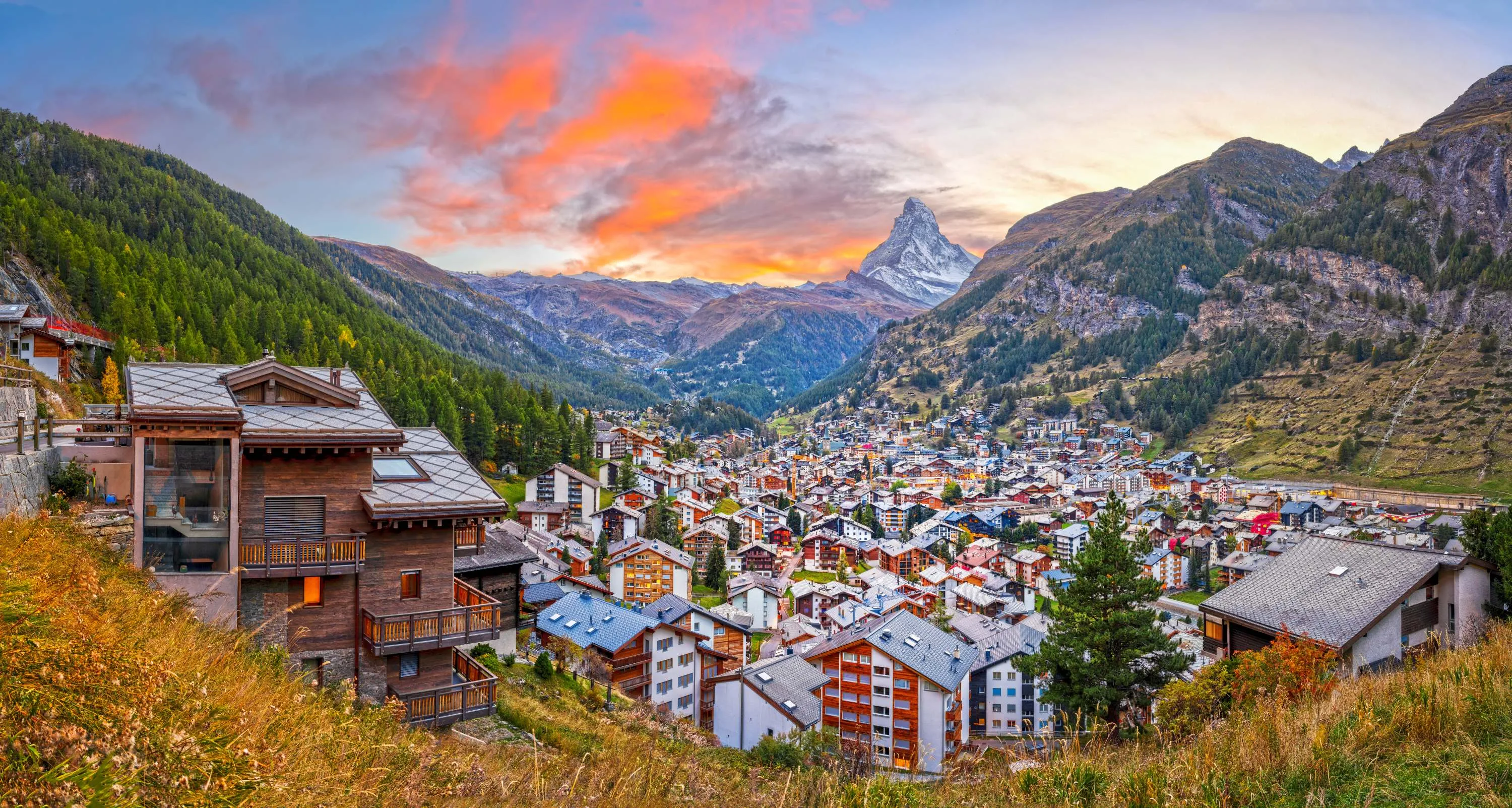
No car, no hire desk, no parking. Trains, postbuses, funiculars and cable cars from Zürich to Zermatt — a country that is genuinely easier without driving.
Zürich
Arrive, walk the Altstadt and the lake, swim at a badi if it is warm. Then out — Zürich is the gateway, not the trip.
Lucerne and Pilatus
The wooden bridge, the lake, and up Pilatus on the steepest cogwheel railway in the world — 48% at its worst — coming down by cable car the other side.
To Interlaken and Lauterbrunnen
Over the Brünig pass by train. Base in Lauterbrunnen rather than Interlaken: it is in the valley, under the waterfalls, and everything leaves from there.
Schilthorn or Jungfraujoch
One of the two, not both. Schilthorn is cheaper, less crowded and the better view; Jungfraujoch is the higher railway and the bigger name.
Walking the Lauterbrunnen valley
Mürren to Gimmelwald, or the valley floor past 72 waterfalls. The trails are signposted in hours rather than kilometres and the estimates are honest.
To the Engadine
A long, beautiful transfer east through Chur to Pontresina or St Moritz. The Rhaetian Railway takes over from here and the gauge narrows.
The Bernina line
Over the pass to Tirano in Italy and back — open cars in summer, glaciers at eye level, and the Brusio spiral viaduct which exists because the line refused to use a tunnel.
Swiss National Park
The strictest park in the Alps: stay on the path, take nothing, no fires, no camping. Ibex and bearded vultures, and no infrastructure at all inside it.
West to Zermatt
The Glacier Express route, though the ordinary trains cover the same track for a third of the price and stop where you want. Zermatt is car-free; you change to a shuttle at Täsch.
Gornergrat
The cog railway to 3,089 m for the Matterhorn from the front, then walk one or two stages back down. Last day; head out via Visp.
Good to know
Do the Swiss Travel Pass arithmetic before buying — on this route it usually wins, because it covers postbuses and boats and gives 50% off most mountain railways, which are the expensive part. Trains run to the minute and connections are built to be made with four minutes to spare; trust them. Mountain sections close in shoulder season for maintenance, so check the individual railway before planning a day around it. Half-board at mountain guesthouses is often cheaper than eating à la carte twice.
Shorter or longer?
Add three days south of the Alps — Lugano, Locarno and the Verzasca valley. Same country, Italian language, different weather.
Lauterbrunnen for a week and walk. Cheaper, slower, and you stop spending half the trip on trains.