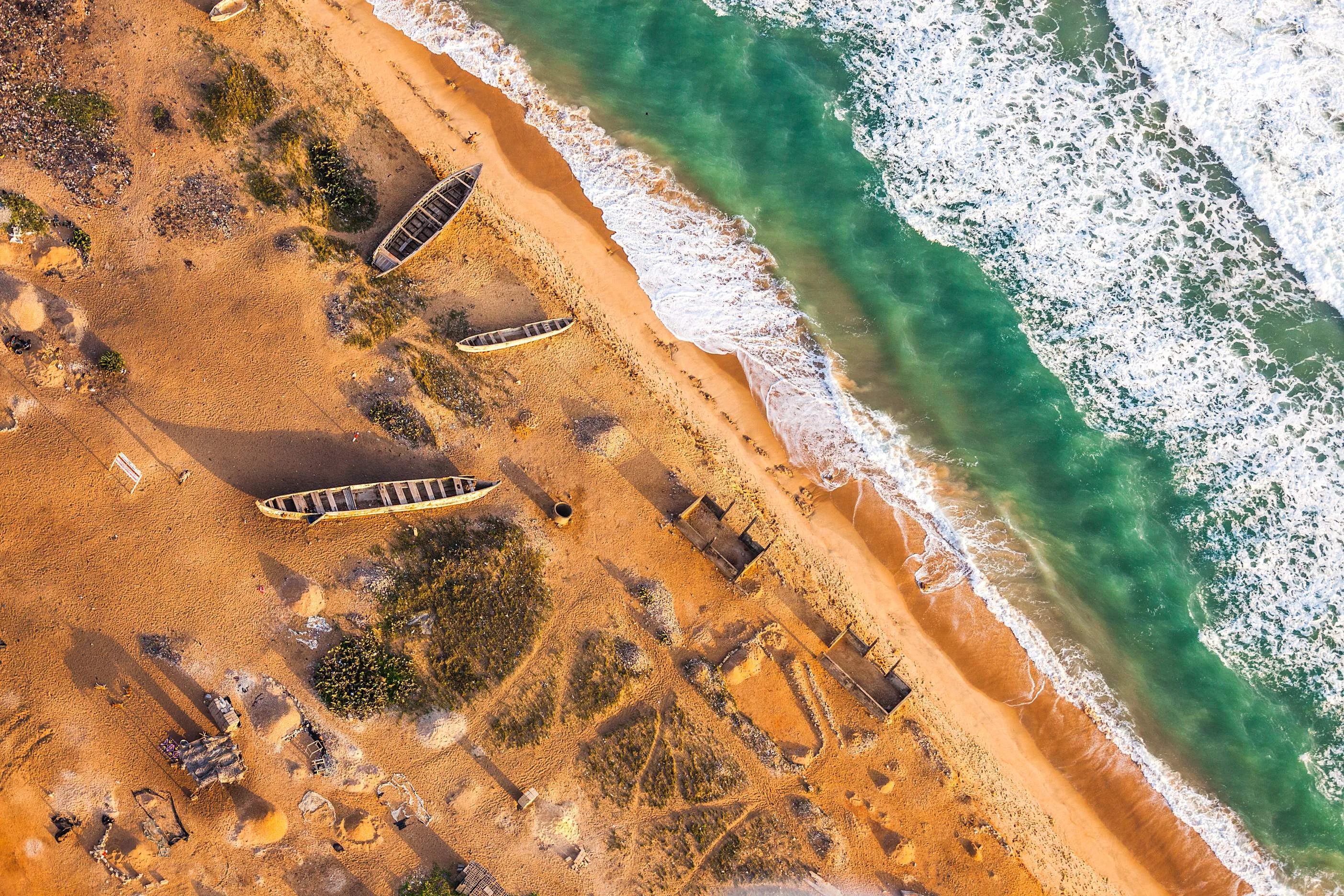
“A 50-kilometre-wide country with a fetish market, coffee hills and empty beaches.”
Togo is barely 100 kilometres wide and runs 550 kilometres north from the Atlantic, which means you can cross the whole country in a day and pass through coast, forested hills, savanna and Sahelian scrub. Lomé sits right on the Ghanaian border and has one of the most functional city beaches in West Africa alongside the Grand Marché and the Akodessewa fetish market, where the raw materials of Vodun practice are traded.
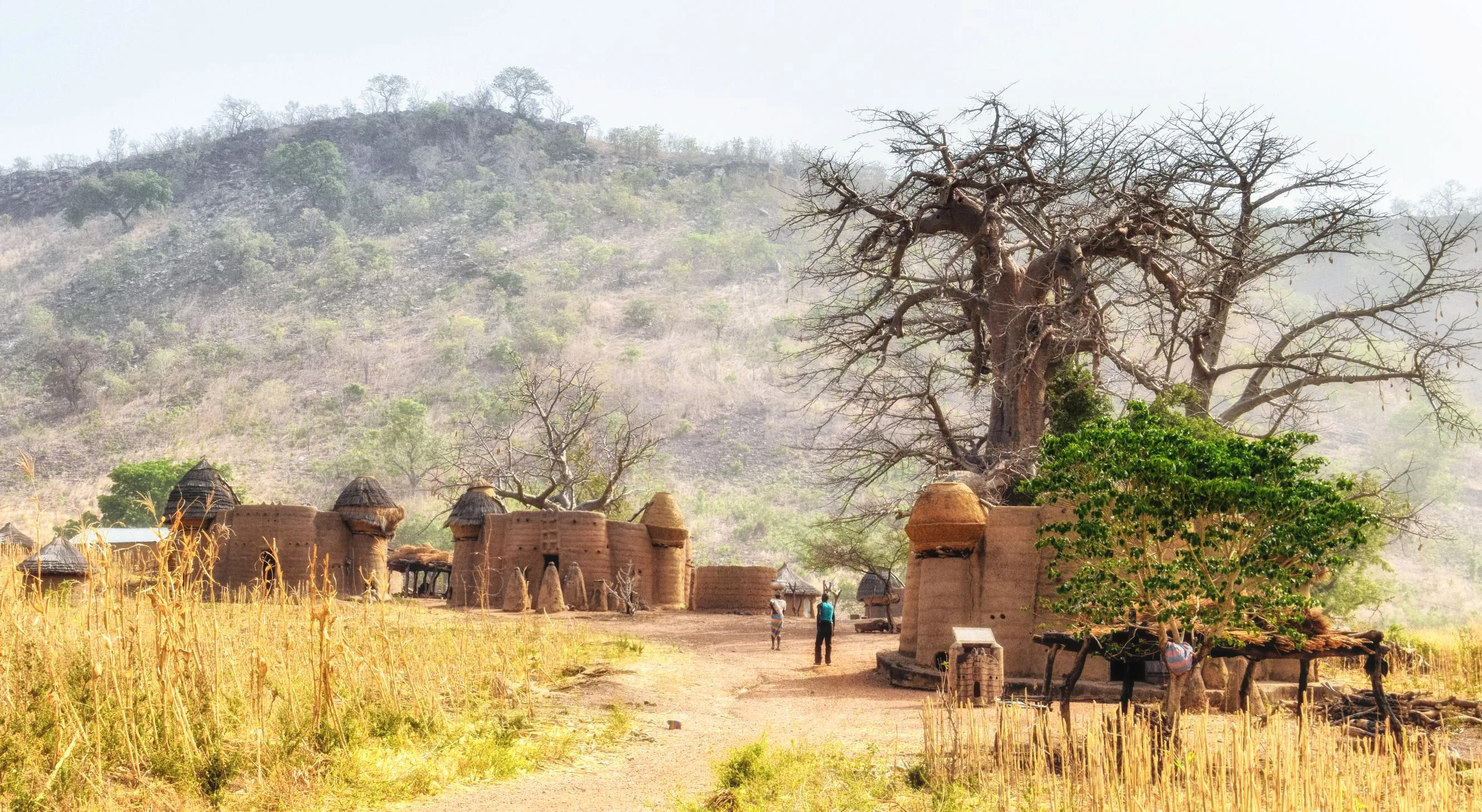
Ninety minutes inland, Kpalimé sits in coffee and cocoa hills with waterfalls, butterfly forests and the country's highest point. Far north, Koutammakou is a UNESCO-listed landscape of Batammariba tower-houses — fortified mud structures that are also the reason the region is called the land of the Tamberma. It is a small, cheap, easy country that pairs naturally with Benin or Ghana.
Highlights
Akodessewa fetish market
The largest Vodun supply market in West Africa on the eastern edge of Lomé — animal skulls, dried remains, herbs and the practitioners who prescribe them. Confronting, and entirely a working market rather than a display.
Kpalimé and Mount Agou
Coffee and cocoa hills ninety minutes from the capital, with the Womé and Kpimé waterfalls, butterfly-rich forest and the climb up Mount Agou, the country's highest point at 986 metres.
Koutammakou
UNESCO-listed Batammariba country in the far northeast, where families live in takienta — fortified two-storey mud tower-houses with granaries on the roof. Visits are arranged through the villages themselves.
Lomé's beaches and Grand Marché
A palm-lined coastal road east of the city, and the three-storey market where the "Nana Benz" wax-print traders built one of the region's most famous merchant class.
Entry requirements for Togo
Checking your passport…
We don't hold entry details for this passport group yet.
Before you fly
The detail
- Passport validity
- Most destinations want validity beyond your stay, and some want six months. Check yours against the return date.
- Onward travel
- Airlines may ask for a return or onward ticket at check-in.
- Health
- Yellow fever certificate compulsory for entry. Malaria year-round nationwide. Medical facilities are limited; Lomé has the best of them. Evacuation insurance advisable.
- Money
- CFA franc, pegged to the euro. ATMs in Lomé and larger towns; cards at better hotels only. Carry cash for the interior.
When to go
BestNov–Feb. AvoidMay–Jun, September.
Dry and clear; harmattan haze possible.
The band above each month is our editorial verdict - it weighs crowds, prices and access as well as weather. The line is average daily temperature, the bars are monthly rainfall. Select a month for the figures. Climate figures: ERA5 reanalysis via Open-Meteo, 2005–2024 normals.
What it costs
A day in Togo
Comfortable · sample day
≈ $60
Line items are real prices we track. The daily budget is an editorial estimate for this level, not their sum.
Where this sits among 244 countries we have costed
Prices barely move through the year; Lomé business hotels are the only thing with a weekday premium.
Updated Aug 2026 · Editorial synthesis — market sampling and published tariffs (2025–2026) · confidence medium
Excludes international flights - they depend on where you fly from.
Regions to know
5Lomé and the coast
The border capital, Grand Marché, the fetish market and the palm-lined beach road east towards Aného.
The Plateaux and Kpalimé
Coffee and cocoa hills, waterfalls, Mount Agou and the artisan workshops around Kpalimé.
The centre
Sokodé, Fazao-Malfakassa national park and the wooded hills along the Ghanaian border.
Kara and Koutammakou
The Batammariba tower-houses, Kabye iron-working villages and the Tamberma valley on the Benin border.
The Savanes
Dapaong, the far north and the Burkina Faso border — under a state of emergency and travel advisories since 2022.
Practical guide
Getting there
Lomé Gnassingbé Eyadéma is ASKY's hub and has good West African coverage plus Brussels Airlines, Air France, Ethiopian and Turkish. Walking across from Aflao in Ghana or driving from Cotonou are both routine.
Getting around
Minibuses and bush taxis run the north–south highway. Zemidjan motorbike taxis do everything local, including inter-village trips. A hired car with driver is the comfortable option for Kpalimé and the north.
Money & costs
CFA franc, pegged to the euro. ATMs in Lomé and larger towns; cards at better hotels only. Carry cash for the interior.
Safety
Lomé has petty theft, particularly on the beach and around the market. The Savanes region in the far north is under advisory. Political demonstrations occur in the capital and are best avoided. Motorbike-taxi accidents are the most common tourist injury.
Health
Yellow fever certificate compulsory for entry. Malaria year-round nationwide. Medical facilities are limited; Lomé has the best of them. Evacuation insurance advisable.
SIM & internet
Togocom and Moov; SIM registration requires a passport. 4G in Lomé and the main towns; sparse in the north.
Driving
The single national highway is decent for most of its length. Zemidjan motorbikes dominate urban traffic and ignore most conventions. Avoid driving at night.
Rules change - verify with an official source before you rent.
ExplWorld VerifiedNo verified partners here yet - all 6 country seats are open.
Become ExplWorld Verified →Itineraries through this country
From the Journal
Before you go
TogoFrequently asked questions
Is the visa easy?
Yes. Most nationalities get a seven-day visa on arrival at Lomé airport for around €15, extendable at the immigration office in the city for a longer stay. An e-visa portal also exists. ECOWAS nationals enter freely. A yellow fever certificate is compulsory and checked.
Can I combine it with Ghana and Benin?
It is the obvious way to do it. Lomé sits on the Ghanaian border — you can walk across at Aflao — and Cotonou is three hours east. A ten-day loop covering all three coastal capitals is straightforward, with Benin's e-visa and Ghana's advance visa the two things to organise ahead.
Is the north safe?
The Savanes region on the Burkina Faso border has seen attacks by Sahelian armed groups since 2021 and has been under a state of emergency, with governments advising against travel there. Koutammakou sits in the Kara region just south of that zone — check current advice before planning it. The coast and the Plateaux region are unaffected.