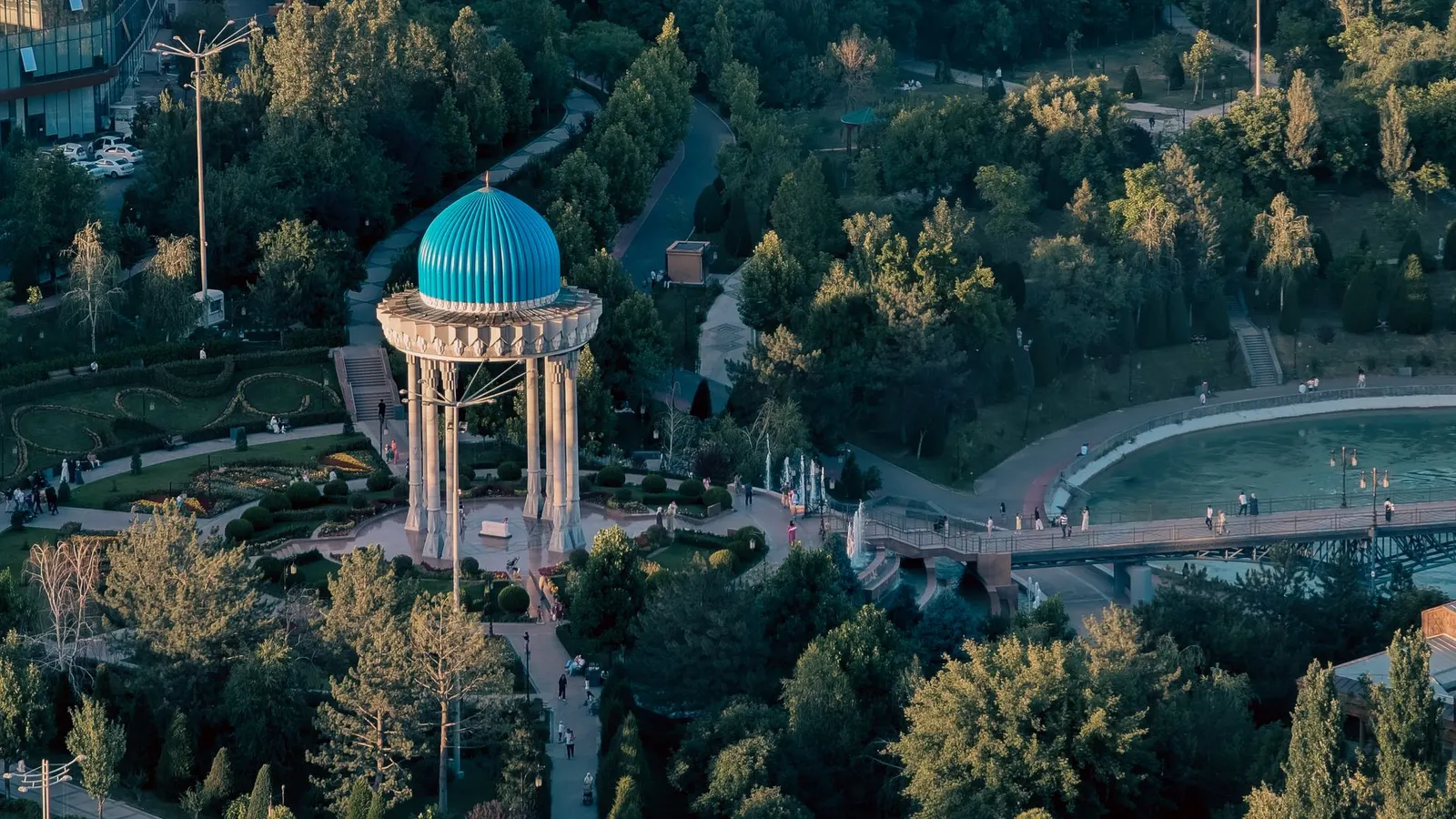
 Zokir · Pexels License
Uzbekistan
“Samarkand, Bukhara, Khiva — the Silk Road, still standing.”
Uzbekistan holds the cities the Silk Road was actually about. Samarkand's Registan is the single most spectacular square in Central Asia; Bukhara is a working old town of madrasas and trading domes; Khiva is a walled desert city so intact it verges on unreal. Together they are the reason this is the region's most-visited country by a wide margin.
It has also transformed as a destination since 2018. Visa requirements were dropped for most Western passports, registration rules relaxed, the currency floated and a high-speed train — the Afrosiyob — now links Tashkent, Samarkand and Bukhara at 200 km/h. What was a bureaucratic slog a decade ago is now one of the easiest and best-value trips in Asia.
Highlights
The Registan, Samarkand
Three madrasas facing one square, tiled in the blue that defines Timurid architecture. Go at opening, again at dusk, and pay for the night illumination once.
Bukhara old town
A living historic centre rather than a monument zone — the Kalyan minaret that Genghis Khan spared, the trading domes, and the Lyabi-Hauz pool where the town still gathers.
Khiva's Itchan Kala
A walled inner city of mud-brick and majolica in the Khorezm desert, small enough to walk in an afternoon and best stayed in overnight when the day groups have gone.
The Aral Sea
The ship graveyard at Moynaq, where fishing boats sit on sand a hundred kilometres from the water. A long detour from Nukus and the most sobering thing in the country.
Entry requirements for Uzbekistan
Checking your passport…
We don't hold entry details for this passport group yet.
Before you fly
The detail
- Passport validity
- Most destinations want validity beyond your stay, and some want six months. Check yours against the return date.
- Onward travel
- Airlines may ask for a return or onward ticket at check-in.
- Health
- No vaccinations required; hepatitis A and typhoid are standard advice. Tap water is not recommended for drinking. Air quality in Tashkent in winter can be poor. Medical facilities are adequate in Tashkent and basic elsewhere; insurance with evacuation cover is sensible. Heat illness is the most likely problem for summer visitors.
- Money
- The sum was floated in 2017 and the black market vanished with it — change money at banks or ATMs, not on the street. Cards are increasingly accepted in hotels, restaurants and shops in the main cities; bazaars and small towns are cash. ATMs dispense sum and sometimes dollars; carry some US cash as backup in smaller towns. Note that the largest banknote is still small relative to prices, so a modest withdrawal produces a brick of notes.
When to go
BestApr–May, Sep–Oct. AvoidJul–Aug, Dec–Feb.
Warm, green and comfortable — the best month.
The band above each month is our editorial verdict - it weighs crowds, prices and access as well as weather. The line is average daily temperature, the bars are monthly rainfall. Select a month for the figures. Climate figures: ERA5 reanalysis via Open-Meteo, 2005–2024 normals.
What it costs
A day in Uzbekistan
Comfortable · sample day
≈ $49
Line items are real prices we track. The daily budget is an editorial estimate for this level, not their sum.
Where this sits among 244 countries we have costed
Accommodation in Samarkand, Bukhara and Khiva rises 30–50 % in the April–May and September–October windows and empties in high summer, when the desert cities are over 40 °C and rooms are cheap. Train fares and monument entry are fixed. Navruz in late March fills hotels for several days.
Updated Aug 2026 · Editorial synthesis — O'zbekiston Temir Yo'llari published fares, monument tariffs, guesthouse rate sampling (2025–2026) · confidence high
Excludes international flights - they depend on where you fly from.
Regions to know
5Tashkent
The capital — the metro, the Chorsu bazaar, Soviet modernism and the country's best museums and restaurants.
Samarkand
The Registan, the Bibi-Khanym mosque, Shah-i-Zinda's tiled necropolis and Ulugh Beg's observatory.
Bukhara
A living old town of madrasas, trading domes and the Ark citadel — the most atmospheric city in the country.
Khiva & Khorezm
The walled inner city of Itchan Kala and the desert fortresses of ancient Khorezm north of it.
The Fergana valley & Nukus
Craft towns of silk and ceramics in the east, and in the far west the Savitsky collection of banned Soviet avant-garde art.
Practical guide
Getting there
Tashkent (TAS) takes flights from Istanbul, Frankfurt, Moscow, Dubai and Seoul, with Uzbekistan Airways and Turkish the main options; Samarkand and Bukhara have small international airports with growing regional service. Overland from Kazakhstan, Kyrgyzstan and Tajikistan is straightforward; the Afghan and Turkmen borders are a different proposition.
Getting around
The Afrosiyob high-speed train is the spine — Tashkent to Samarkand in two hours, on to Bukhara in another hour and a half. Slower overnight trains reach Khiva and Nukus. Shared taxis fill every gap and are cheap and fast. Tashkent has a genuinely beautiful Soviet-era metro, photography of which was banned until 2018 and is now encouraged. Yandex Go for taxis.
Money & costs
The sum was floated in 2017 and the black market vanished with it — change money at banks or ATMs, not on the street. Cards are increasingly accepted in hotels, restaurants and shops in the main cities; bazaars and small towns are cash. ATMs dispense sum and sometimes dollars; carry some US cash as backup in smaller towns. Note that the largest banknote is still small relative to prices, so a modest withdrawal produces a brick of notes.
Safety
Very safe by any measure — street crime is rare and the police presence is heavy. The main irritations are overcharging in bazaars and taxi negotiation, both mild. Photography of military sites, border areas and some government buildings is prohibited. Summer heat in the desert cities is genuinely dangerous, regularly over 40 °C in July. The Afghan border region requires care and permits.
Health
No vaccinations required; hepatitis A and typhoid are standard advice. Tap water is not recommended for drinking. Air quality in Tashkent in winter can be poor. Medical facilities are adequate in Tashkent and basic elsewhere; insurance with evacuation cover is sensible. Heat illness is the most likely problem for summer visitors.
SIM & internet
Ucell, Beeline and Uzmobile SIMs are cheap with passport registration. 4G covers the cities and the main corridors well. Hotel wifi is standard and reasonable. Telegram is the dominant messaging and business platform by a wide margin. Some services have been intermittently restricted.
Driving
The train network makes driving unnecessary on the main circuit. Traffic police checkpoints between provinces are frequent and routine — have your passport and registration slips to hand.
Rules change - verify with an official source before you rent.
ExplWorld VerifiedNo verified partners here yet - all 6 country seats are open.
Become ExplWorld Verified →Itineraries through this country
Before you go
UzbekistanFrequently asked questions
How many days do I need?
Ten to twelve covers the classic route: Tashkent, Samarkand, Bukhara, Khiva, with the high-speed train doing most of the work. Two weeks lets you add Nukus for the Savitsky collection and the Aral Sea, or the Fergana valley for the crafts towns. Fewer than eight days and you are rushing the three great cities.
Is the high-speed train worth booking ahead?
Yes — the Afrosiyob between Tashkent, Samarkand and Bukhara sells out days ahead in spring and autumn. Book online through the railway site or an agency as soon as your dates are fixed. Slower trains cover the same route more cheaply and are perfectly comfortable if the fast one is full.
Do I still have to register every night?
Hotels do it for you automatically and give you a slip; keep them. The rules have relaxed considerably and short gaps for homestays or overnight trains are no longer a problem in practice, but if you stay several nights in a private home, register through the e-mehmon system. Spot checks on departure are rarer than they were, but not extinct.