 Efrem Efre · Pexels License
Vatican City
“The smallest country in the world, and the most visited square kilometre in Europe.”
Vatican City is 44 hectares — about a fifth the size of Monaco — with a resident population in the hundreds, and it receives several million visitors a year. It became a sovereign state in 1929 under the Lateran Treaty, and it is the administrative centre of the Catholic Church as well as the custodian of one of the greatest art collections ever assembled.
For a visitor it is two things: St Peter's Basilica and square, which are free to enter, and the Vatican Museums, which are not and which end at the Sistine Chapel. Both are extraordinarily crowded and both reward getting there very early or booking the specific slots that avoid the worst. Everything can be seen in a long day; doing it well takes two.
Highlights
St Peter's Basilica
Free to enter, with Michelangelo's Pietà inside the door and the dome climbable for a fee — 551 steps, or fewer with the lift. Security queues are long from mid-morning; be there before eight.
The Vatican Museums and the Sistine Chapel
Seven kilometres of galleries ending at the Sistine ceiling, with the Raphael Rooms on the way. Book a timed slot online; the walk-up queue regularly runs to hours.
The Necropolis under St Peter's
The Scavi tour goes beneath the basilica to a Roman burial street and the tomb identified as St Peter's. Very limited numbers, booked months ahead by email through the Excavations Office.
The papal audience
General audiences are held most Wednesdays when the Pope is in Rome, in the square or the audience hall. Tickets are free and requested in advance through the Prefecture.
Entry requirements for Vatican City
Checking your passport…
We don't hold entry details for this passport group yet.
Before you fly
The detail
- Passport validity
- Most destinations want validity beyond your stay, and some want six months. Check yours against the return date.
- Onward travel
- Airlines may ask for a return or onward ticket at check-in.
- Health
- No vaccinations required. There is no public healthcare for visitors here; Rome's hospitals are minutes away. Summer heat in the square, which has no shade at all, is the most common problem — the queue for the basilica in July is genuinely punishing.
- Money
- Euro, issued in Vatican editions that are collector items. Cards are accepted at the museums and the shops. The Vatican Post is a working postal service with its own stamps and is genuinely faster than the Italian one, which is a long-standing local joke with a basis in fact.
When to go
BestMay, Sep–Nov. AvoidApril, Jul–Aug.
Warm and pleasant, though busy — book everything ahead.
The band above each month is our editorial verdict - it weighs crowds, prices and access as well as weather. The line is average daily temperature, the bars are monthly rainfall. Select a month for the figures. Climate figures: ERA5 reanalysis via Open-Meteo, 2005–2024 normals.
What it costs
A day in Vatican City
Comfortable · sample day
≈ $130
Line items are real prices we track. The daily budget is an editorial estimate for this level, not their sum.
Where this sits among 244 countries we have costed
The Vatican itself has fixed prices year-round — museum entry, the dome and the Scavi tour do not move. What changes is Rome around it: accommodation in Prati and the centre roughly doubles between January and the Easter and autumn peaks. The daily figure here is dominated by where you sleep, which is always in Italy.
Updated Aug 2026 · Editorial synthesis — Vatican Museums published tariffs, Fabbrica di San Pietro, ATAC fares (2025–2026) · confidence high
Excludes international flights - they depend on where you fly from.
Regions to know
5St Peter's Square and Basilica
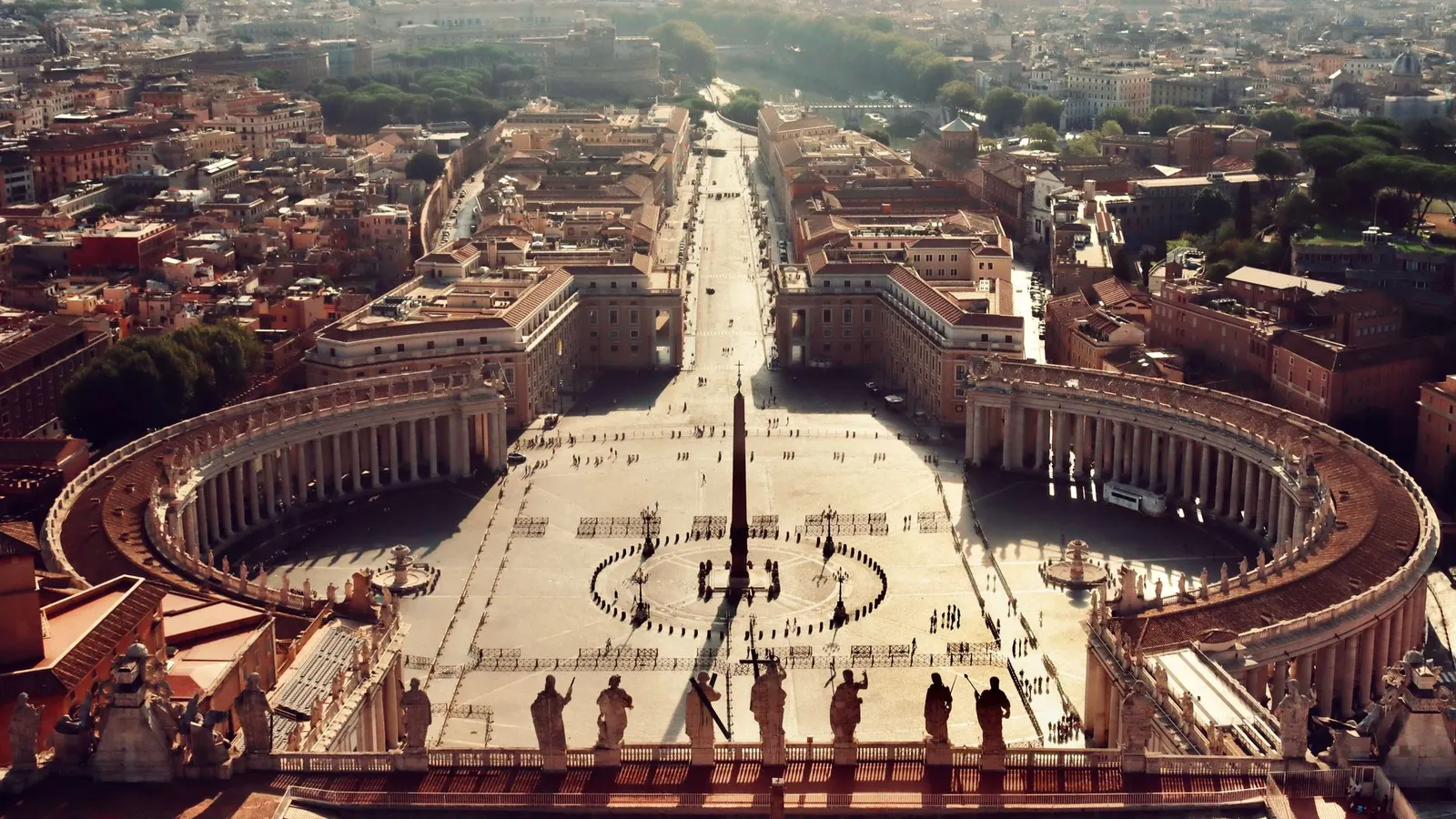
Bernini's colonnade, the basilica, the Pietà and the dome climb — all free apart from the dome.
The Vatican Museums
Seven kilometres of galleries, the Raphael Rooms, the map corridor and the Sistine Chapel at the end.
The Vatican Gardens
Half the state's area, accessible only on a booked guided tour or the open-bus circuit.
The Necropolis
The Roman burial street beneath the basilica, on the strictly limited Scavi tour booked months ahead.
Extraterritorial properties
Castel Gandolfo and the papal basilicas of St John Lateran, Santa Maria Maggiore and St Paul, all in or near Rome.
Practical guide
Getting there
You arrive from Rome. Ottaviano and Cipro on metro line A are the nearest stations, both around a ten-minute walk; buses and trams serve the area heavily. Rome's airports are Fiumicino and Ciampino, both under an hour away. There is no accommodation inside the Vatican for ordinary visitors.
Getting around
On foot — the entire state is walkable in fifteen minutes, though the museum route is seven kilometres of galleries. The basilica and the museums have separate entrances on opposite sides of the walls, about a fifteen-minute walk apart, which surprises people who assume they connect.
Money & costs
Euro, issued in Vatican editions that are collector items. Cards are accepted at the museums and the shops. The Vatican Post is a working postal service with its own stamps and is genuinely faster than the Italian one, which is a long-standing local joke with a basis in fact.
Safety
Very safe inside, with heavy security screening at both entrances. The risk is pickpocketing in the queues and on the approaches — St Peter's Square, the metro to Ottaviano and the bus routes serving it are worked systematically. Unofficial ticket sellers on the approach streets are best ignored entirely.
Health
No vaccinations required. There is no public healthcare for visitors here; Rome's hospitals are minutes away. Summer heat in the square, which has no shade at all, is the most common problem — the queue for the basilica in July is genuinely punishing.
SIM & internet
The Vatican has its own telecommunications but Italian networks cover it and EU roaming applies in practice. Free wifi is limited. Coverage inside the museums is patchy given the wall thicknesses.
Driving
There is nowhere for a visitor to drive. The state has a few hundred metres of internal road, all restricted, and the surrounding Roman streets are a limited traffic zone with camera enforcement. Arrive on foot or by metro.
Rules change - verify with an official source before you rent.
ExplWorld VerifiedNo verified partners here yet - all 6 country seats are open.
Become ExplWorld Verified →Itineraries through this country
From the Journal
Before you go
Vatican CityFrequently asked questions
How do I avoid the queues?
For the basilica, arrive before it opens at seven — the security line is short then and the church is nearly empty. For the museums, book a timed entry online weeks ahead and take the earliest slot, or the Friday evening opening in summer. Skip-the-line resellers charge a premium for what the official site sells directly.
What is the dress code?
Shoulders and knees covered, for everyone, in both the basilica and the museums. It is enforced at the door and people are turned away every day. A scarf or a light layer solves it. Hats off inside the church.
Is it really a separate country?
Yes — sovereign since 1929, with its own post office, currency issue, railway station, army in the form of the Swiss Guard, and a legal system. There is no border control and no passport stamp; you walk in from Rome across a line in the pavement of St Peter's Square.