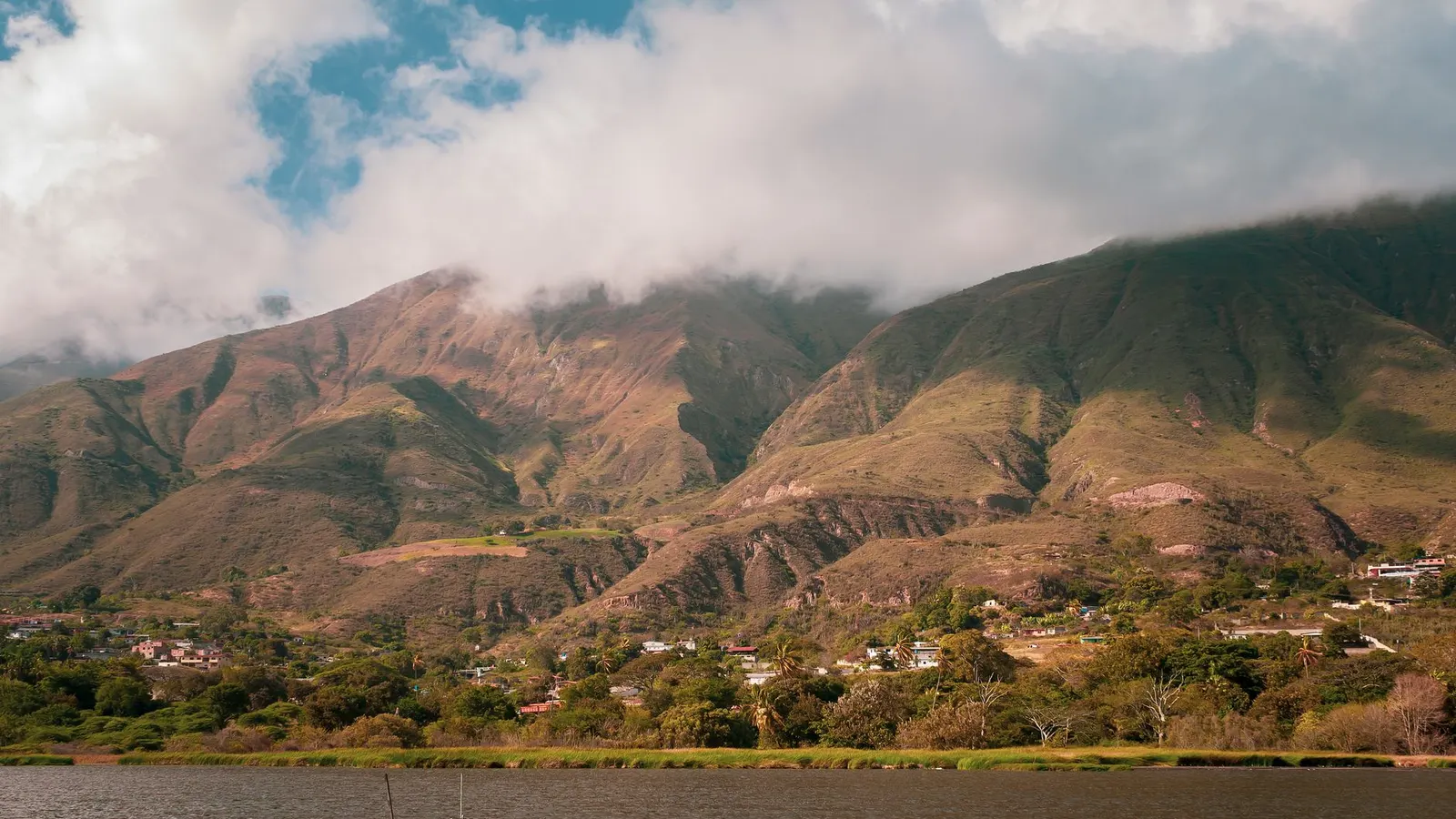
 Arturo Añez. · Pexels License
Venezuela
Advisory - travel not recommended · checked 5 Aug 2026
Several foreign ministries advise against non-essential travel to Venezuela (supply constraints, security risks, limited consular assistance). Verify current advisories before planning.
Official advisory →“Angel Falls, tepui worlds and Caribbean atolls — extraordinary nature behind real barriers.”
Few countries hold this much natural drama: Angel Falls dropping nearly a kilometre off Auyán-tepui, the sandstone table mountains of the Gran Sabana, the coral atolls of Los Roques, Andean peaks above Mérida. In a stable decade, Venezuela would be one of the great destinations of the hemisphere.
This is not a stable decade. Most EU foreign ministries — Slovakia’s included — advise against non-essential travel to Venezuela, citing violent crime, detention risk and fragile services; several EU states have no resident embassy in Caracas. The travellers who do come fly in, move on internal flights between a handful of destinations with established operators, pay in US dollar cash, and treat the trip as an expedition rather than a backpacking route. This guide describes that reality without embellishment.
Highlights
Angel Falls & Canaima
A 979-metre ribbon of water off Auyán-tepui, reached by light aircraft to Canaima lagoon and then dugout upriver — best June–November when the rivers are high enough to navigate.
Roraima and the Gran Sabana
The trek up Mount Roraima’s natural ramp reaches a summit plateau of black rock, endemic plants and permanent mist — the landscape that inspired The Lost World.
Los Roques archipelago
A protected atoll of 300-plus cays an hour’s flight from Caracas: bonefish flats, empty white sand and small posadas — the Caribbean with the volume turned to zero.
Mérida & the Andes
A university mountain town beneath Pico Bolívar (4,978 m), traditionally Venezuela’s adventure-sports base; check the current status of the world’s highest cable car before building plans around it.
Entry requirements for Venezuela
Advisory - travel not recommended · checked 5 Aug 2026
Several foreign ministries advise against non-essential travel to Venezuela (supply constraints, security risks, limited consular assistance). Verify current advisories before planning.
Official advisory →Checking your passport…
We don't hold entry details for this passport group yet.
Before you fly
The detail
- Passport validity
- Most destinations want validity beyond your stay, and some want six months. Check yours against the return date.
- Onward travel
- Airlines may ask for a return or onward ticket at check-in.
- Health
- Come self-sufficient: bring every medication you might need, as pharmacy stock is unreliable, and insurance that explicitly covers Venezuela (many policies exclude it — read the territory clause) with evacuation cover. Yellow fever vaccination is recommended, malaria prophylaxis for the southern jungle regions, and dengue precautions everywhere lowland. Private clinics in Caracas are competent but demand cash or proof of cover upfront. Drink bottled water.
- Money
- Bring US dollars in cash, in good-condition small bills — the bolívar exists but nearly everything from taxis to tour balances is quoted and settled in dollars, with euros exchangeable at worse rates. Foreign cards are unreliable and ATMs effectively useless to visitors. Carry your funds split and discreet; there is no realistic way to top up mid-trip.
When to go
BestDec–Apr.
Dry season — coast, Roraima and Los Roques at their best; Angel Falls thinning.
The band above each month is our editorial verdict - it weighs crowds, prices and access as well as weather. The line is average daily temperature, the bars are monthly rainfall. Select a month for the figures. Climate figures: ERA5 reanalysis via Open-Meteo, 2005–2024 normals.
What it costs
A day in Venezuela
Comfortable · sample day
≈ $86
Line items are real prices we track. The daily budget is an editorial estimate for this level, not their sum.
Where this sits among 244 countries we have costed
Prices are set in US dollars and move with scarcity, not season — fuel shortages, flight availability and operator minimum group sizes matter more than the calendar. Los Roques posadas peak at Christmas–New Year and Easter when Venezuelan holidaymakers arrive; Canaima packages cost the same year-round but only run reliably in the June–November water window.
Updated Aug 2026 · Editorial synthesis — operator tariffs, traveller price reporting, dollarised-economy coverage (2025–2026) · confidence low
Excludes international flights - they depend on where you fly from.
Regions to know
5Canaima & the Gran Sabana
Angel Falls, the Canaima lagoon and the tepui-studded savanna toward Roraima — the reason travellers still come, run entirely by fly-in operators.
Los Roques
A protected Caribbean atoll of empty cays and small posadas, one flight from Caracas — the country’s safest, simplest escape.
Mérida & the Andes
Venezuela’s adventure capital under Pico Bolívar — trekking, paragliding and cloud-forest coffee farms, reached by air via El Vigía.
Caracas
The gateway you transit rather than tour: a dramatic valley setting under El Ávila, serious museums — and the highest-risk environment in the country.
The Caribbean coast
Mochima’s islands and Choroní’s cacao villages behind the coastal cordillera — beautiful, faded, and dependent on local security conditions.
Practical guide
Getting there
Direct links from Europe are limited — Madrid (Air Europa, Plus Ultra) and Istanbul (Turkish Airlines) are the workhorses, plus Caribbean and Bogotá connections; from Central Europe expect one to two stops and 15–20 hours. Book the airport-to-Caracas transfer through your hotel or operator in advance: the Maiquetía airport road at night is not a place to improvise. Overland entry from Colombia or Brazil is advised against.
Getting around
Internal flights are the default between Caracas, Canaima, Los Roques, Mérida and Ciudad Bolívar — small carriers, cash payments, schedules that flex. Intercity buses exist but night roads carry robbery risk and fuel shortages ripple through timetables; most visitors let operators handle every leg. Within cities use hotel-arranged drivers rather than street taxis.
Money & costs
Bring US dollars in cash, in good-condition small bills — the bolívar exists but nearly everything from taxis to tour balances is quoted and settled in dollars, with euros exchangeable at worse rates. Foreign cards are unreliable and ATMs effectively useless to visitors. Carry your funds split and discreet; there is no realistic way to top up mid-trip.
Safety
Plainly: most EU foreign ministries advise against non-essential travel here, and the risks — armed robbery, express kidnapping, arbitrary detention, minimal consular reach — are real, concentrated in cities and on roads after dark. Tourist enclaves (Los Roques, Canaima camp circuits) are markedly calmer. Keep phones invisible in Caracas, use arranged transport exclusively, avoid all protests and photography of anything official, and register your trip with your foreign ministry if a service exists.
Health
Come self-sufficient: bring every medication you might need, as pharmacy stock is unreliable, and insurance that explicitly covers Venezuela (many policies exclude it — read the territory clause) with evacuation cover. Yellow fever vaccination is recommended, malaria prophylaxis for the southern jungle regions, and dengue precautions everywhere lowland. Private clinics in Caracas are competent but demand cash or proof of cover upfront. Drink bottled water.
SIM & internet
Mobile data (Movistar, Digitel) works in cities but 4G is patchy and blackouts happen; buy a local SIM with passport at an official store or arrive with an eSIM. Canaima, Roraima and Los Roques are effectively offline — some camps sell satellite wifi by the hour. Download offline maps, keep documents saved locally, and give family your operator’s contact, not just your own.
Driving
Self-driving is not recommended for visitors at all: checkpoint shakedowns, fuel queues outside Caracas, poor road repair and robbery risk after dark. Practically all tourism here moves by internal flight and operator transfer — treat this section as reference, not encouragement.
Rules change - verify with an official source before you rent.
ExplWorld VerifiedNo verified partners here yet - all 6 country seats are open.
Become ExplWorld Verified →Itineraries through this country
From the Journal
Before you go
VenezuelaFrequently asked questions
Is it safe to travel to Venezuela?
Most EU foreign ministries, including Slovakia’s, currently advise against non-essential travel — that is the honest starting point. Caracas has among the world’s highest violent-crime rates, arbitrary detention of foreigners has occurred, and consular help is thin. The travellers who go mitigate rather than eliminate risk: arranged airport transfers, internal flights instead of intercity roads, established operators for Canaima and Roraima, and no land borders.
When is the best time to visit?
December to April is the dry season — best for the coast, Los Roques and trekking. Angel Falls runs opposite: June to November’s rains fill the rivers that make the boat approach possible and the falls themselves thunder; in deep dry season the curtain can thin to mist and boats may not run. Many itineraries split the difference in November–early December.
How much does a day in Venezuela cost?
Around €80 per person mid-range, paid almost entirely in US dollar cash — the dollarised economy makes Venezuela no longer cheap. Street food and beer cost little (€2 arepas, €1.50 beers), but decent hotels, internal flights and the obligatory tour packages (Canaima from ~€380 for two nights, flights included) push real daily spend up fast. Budget travel in the backpacker sense barely exists here now.