The Ocean Agency / stock.adobe.com
Starving, Not Dead
A bleached reef is a starving animal, not a dead one, and whether it recovers is decided by the next hot season. What that means for where diving is still worth the airfare — current, depth and enforcement, in that order.
Coral bleaching has moved from an occasional event to a recurring one across most of the world’s reef systems, and the intervals between severe events have shortened faster than reefs recover from them. That is the background. The foreground question for a traveller — is it still worth diving, and where — has a more nuanced answer than the headlines suggest.
What bleaching is, and what it is not
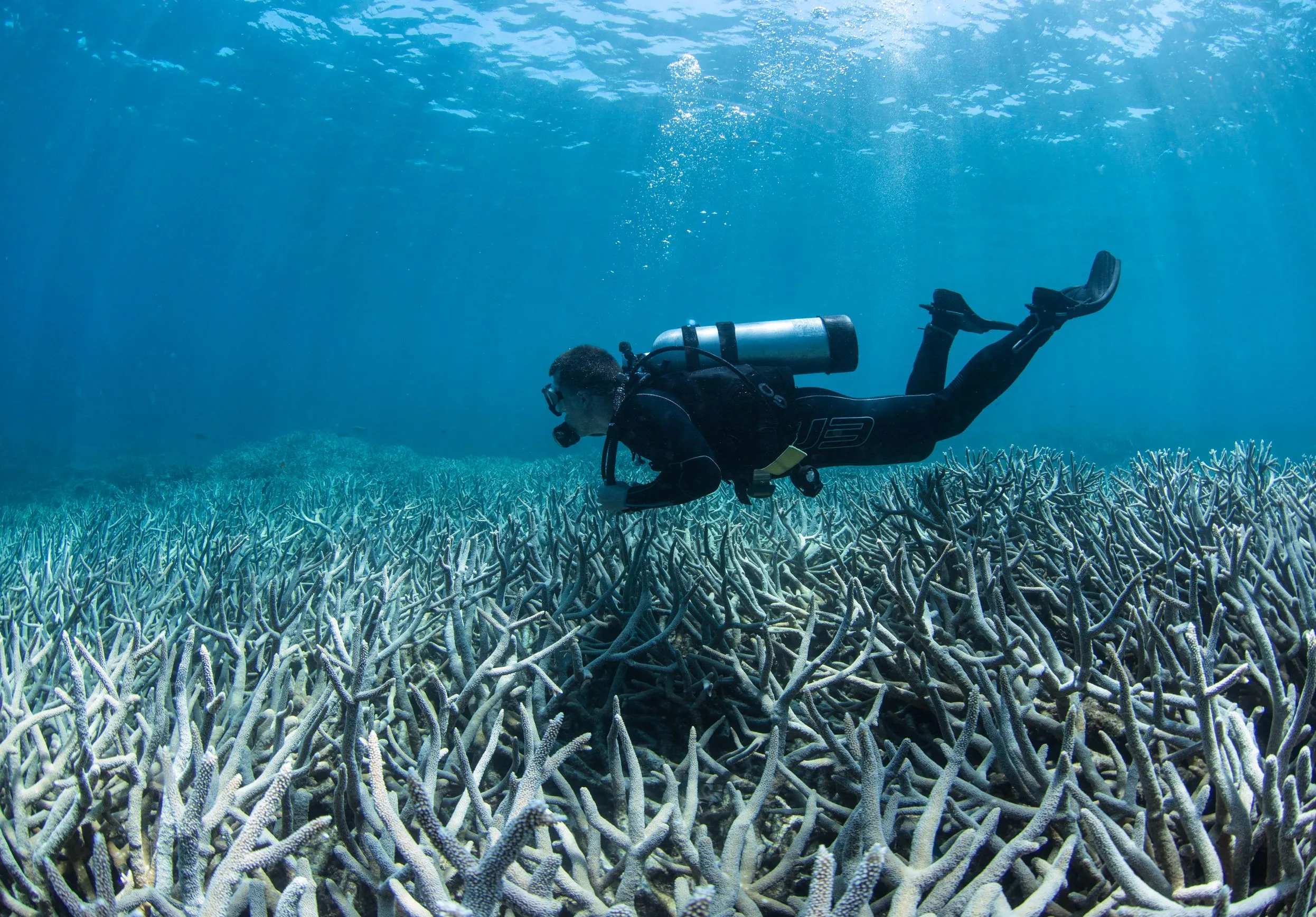
Coral holds symbiotic algae in its tissue that supply most of its energy and most of its colour. Sustained heat stress — a small temperature anomaly maintained for weeks, not a heatwave for a day — causes the coral to expel them; the tissue turns white and the animal is left starving but alive. If the temperature falls back soon enough, it can recolonise and recover. If not, it dies, and the structure is colonised by algae and eventually eroded by wave action and boring organisms.
So a bleached reef is not a dead reef, and a reef that bleached in a given year may be substantially recovered a few years later if it was not hit again. The lethal pattern is repetition — events arriving faster than the decade or so that a badly damaged reef needs to rebuild structure. It is the frequency rather than any single event that has changed.
The second thing bleaching is not: uniform. Within a single reef system, some sites bleach severely and others barely at all, and the difference is often a matter of a few hundred metres and a current line. Reporting that describes a whole region as bleached is describing an average that no individual dive site experiences.
A bleached reef is starving, not dead. Whether it recovers is decided by the next hot season, not this one.
Where reefs are doing better
Three factors correlate with resilience. Water movement: reefs on channels, passes and exposed outer walls with strong currents experience lower peak temperatures and recover faster, because the water does not sit still and heat. Depth: deeper reefs and mesophotic communities are buffered from surface heat, and a site whose interest starts at eighteen metres has fared better than one whose interest is at four.
And local pressure, which is the factor humans control. Reefs without agricultural runoff, sedimentation from coastal development, destructive fishing or anchor damage recover from a thermal event far better than reefs already under stress. This is the strongest argument for local management even though the heat is global: local action does not stop the bleaching, but it substantially changes what happens afterwards.
That combination means the reefs worth travelling for are increasingly remote, current-swept and inside enforced protection — and correspondingly more expensive and harder to reach, frequently by liveaboard rather than from a beach. It also means some heavily visited shallow reefs adjacent to development are in the worst condition, which is the reverse of where the dive industry is concentrated and where most people’s expectations were formed.
What "enforced" means
The distinction that predicts reef condition better than any other is between a marine protected area on paper and one with patrol boats. A great deal of the world’s reef is inside nominal protection and a small fraction is inside protection with a budget, a boat and a prosecution record. The visible tells are a ranger presence, mooring buoys rather than anchoring, a fee that is actually collected, and fish that do not flee at a distance — a reef with large fish on it is a reef where fishing has actually stopped.
Diving without being part of the problem
Buoyancy is the whole of dive etiquette: contact with coral is the damage a diver personally does, and it is entirely a matter of trim, weighting and control. A diver who has not been in the water for two years should do a check dive on sand rather than a reef. Fins do more damage than hands, and the damage is done by people who did not know they were touching anything.
Choose operators that use mooring buoys rather than anchors, brief properly, limit group size and correct people in the water rather than after. "Reef-safe" sunscreen is at worst harmless and the label is unregulated; a rash vest is the version that definitely works. Do not touch, stand on, collect or feed anything.
And consider going to the reefs that are managed well rather than only to the ones that are famous, because visitor revenue is the main political argument for enforcement in most reef countries. A marine park that pays for itself gets rangers; one that does not gets a signboard. That is not a comfortable framing, but it is how most of the reefs still in good condition got that way.
Sources
- NOAA Coral Reef Watch
Sea-surface temperature and bleaching-alert products for every reef region, updated continuously — the standard reference for current thermal stress.