Journal
Reports, analyses and features from all 195 countries - the journalism behind the journeys.
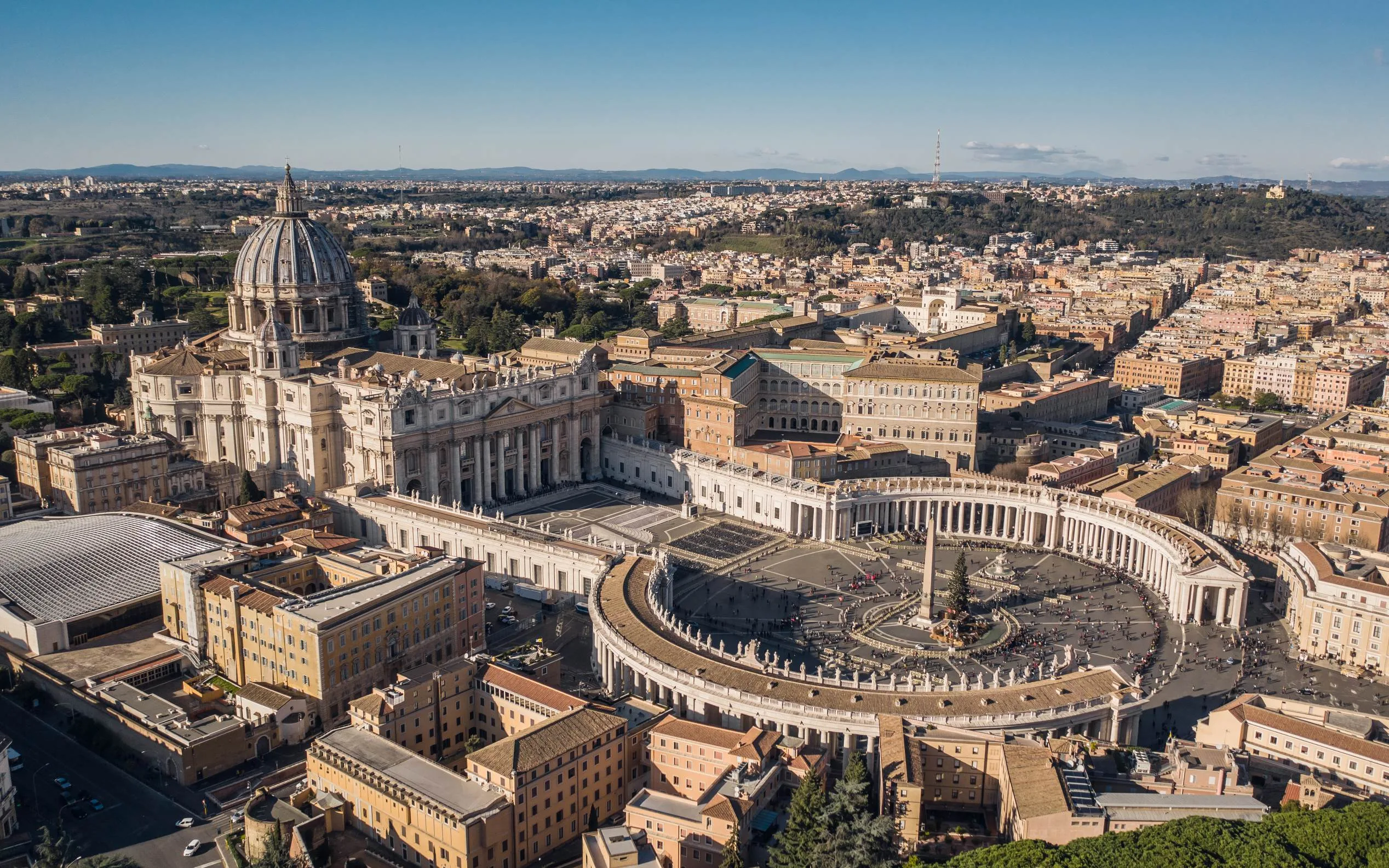
Six Million Tickets
Vatican City levies no income tax, exports almost nothing and houses fewer than a thousand people, and its public revenue rests on a museum turnstile and the rent from Roman property. The one time it tried to make money a different way it put something in the region of €350 million into a building in Chelsea and ended up trying a cardinal in its own criminal court.
The Patent on the Pan
On 10 April 2001 the United States Patent Office granted patent 6,212,772 — "Production of a Caribbean steel pan" — to two men from the University of Delaware. Trinidad has spent the quarter-century since working out what a country can and cannot own about an instrument that nobody in particular invented.
Who Owned the Pattern
For three decades a woman in Lomé could hold the sole right to sell a particular printed cloth across a large part of West Africa, and the fortunes that built are why Togo's wax traders were called the Nana Benz. That right was never written into any law — it was a commercial convention, and it was withdrawn by a company in the Netherlands.
Bricks of Shillings
Somaliland has issued its own currency since 1994, through a central bank that belongs to no international institution because no state recognises the government behind it. Then its own citizens dollarised the retail economy from below, using a mobile-money system run by a phone company, and left that central bank presiding over small change.
Seventeen Years for Eighty Thousand Pounds
San Marino declared itself neutral, opened its border to more than 100,000 refugees against a population of about 15,000, and was bombed by the RAF anyway on 26 June 1944 — 63 dead and its only railway destroyed. It presented Britain with the bill in October 1945 and was paid on 7 July 1961, in wording that admitted nothing.
A Hundred Metres Under Pyongyang
For decades visitors to Pyongyang were shown two stations of its metro and nothing else, which was enough for a theory to take hold that the rest of the system did not exist. It does, it has run since 1973, and what is genuinely known about it is a good measure of how much anyone outside knows about the country above it.
The Marketer Was the Studio
Nigeria built one of the highest-volume film industries in the world with no cinemas, no bank credit and no state funding — the money came from electronics traders in two Lagos markets, and so did the decisions about what got made. Streaming money arrived thirty years later, paid properly, asked for better, and then went away again.
The Committee That Closed the Mills
Between the mid-1970s and the early 1990s Luxembourg shut down most of an industry that had employed close to 25,000 people in a country of about 360,000, and it did so without compulsory redundancies. The mechanism was a standing committee of ministers, employers and unions, and the country has never stopped using it.
A Veto and an Exit Clause
In March 2003 Liechtenstein voted to hand its head of state powers no other monarch in Europe holds, and 64.3 per cent said yes on an 87.7 per cent turnout. In the same document the Prince wrote in a clause letting the voters abolish him.
The Note Worth a Dollar
For twenty-two years the Lebanese lira was fixed at 1,507.5 to the United States dollar, and the fix held because the central bank kept paying more for dollars than anyone else would. When the inflow stopped in 2019 the banks shut their doors, and the money inside them has still not been given back.
The Mother Well
Iran watered its desert cities for something like two and a half thousand years with qanats — tunnels driven for miles into an alluvial fan to bring groundwater out by gravity — and the water inside them was privately owned, measured in units of time and traded like land. Two laws, in 1968 and 1982, made all of it public property, and the electric pump that replaced the tunnel is now draining an aquifer the tunnel was physically incapable of over-drawing.
The Gates Open at Low Tide
Georgetown stands below the Atlantic that lies a few hundred metres from its main street, and has done since the Dutch drained this coast in the eighteenth century. The city's canals, its street grid and the word Guyanese still use for a sluice gate are all consequences of that, and so is the flood that cost the country most of a year's economic output in 2005.
The Bridge and the Port
Kinshasa and Brazzaville face each other across about four kilometres of the Congo — the closest pair of capital cities anywhere except Rome and the Vatican — and there is no bridge between them. The reason has never been the river.
What the Oxen Were For
When Soviet trade collapsed in 1991 Cuba lost most of its fuel, nearly all of its fertiliser and about a third of its economy, and the food system that replaced it was written up abroad as the world's largest experiment in organic farming. It was not an experiment and nobody chose it.
The Kingdom That Wrote Itself Down
Between 1896 and about 1910 the ruler of a kingdom in western Cameroon designed six successive writing systems for his own language, narrowing a pictographic set of five or six hundred signs down to a syllabary of around eighty. Then he opened schools to teach it, cast metal type to print it, and had his territory surveyed and mapped with every place name written in it.
A Licence to Beat a Drum
In October 2017 Burundi issued a decree setting out who may beat a drum, on whose authorisation and at what kind of event. Very few countries have written a musical instrument into administrative law, and the reasons here are less strange than they first sound.
The Metro Curitiba Never Built
Curitiba has been about to build a metro for most of half a century and has never built one. What it built instead, beginning with two bus lanes in 1974, is the system that something over 180 cities have since copied — usually without the zoning law that was holding it up.
The Tenth of January
Benin's revolutionary government spent the 1970s treating Vodun as obscurantism to be cleared out of the way, and could not do it. In 1996 the state that replaced it made 10 January a paid national holiday for the same religion, and in 2024 the tourism agency turned the date into a ticketed two-day festival with a concert stage on the beach at Ouidah.
The Flame That Runs on a Gas Main
Azerbaijan calls itself Odlar Yurdu, the Land of Fire, and the temple that gave the phrase its best-known image stopped burning in 1969. The gas that had fed it for centuries had been drawn out from underneath by the industry the country was built on.
One Year and a Notice Period
In March 2021 Saudi Arabia let private-sector migrant workers change employer without their employer's permission, which was the central thing the sponsorship system had always prevented. The reform did not cover domestic workers, and domestic work is a larger share of employment in Saudi Arabia than anywhere else on earth.
The Certificate You No Longer Need
On 30 August 2020 Qatar removed the requirement that a migrant worker obtain a signed no-objection certificate from their employer before taking a different job, and became the first state in the Gulf to do it. The paperwork went; the residence permit is still issued in the employer's name.
The Market in the Car Park
For about eighteen months Kuwait ran a second, unofficial stock market out of an air-conditioned car park in Jibla, where shares were bought with cheques post-dated up to a year ahead and nobody checked whether the money behind them existed. When it stopped in August 1982 the paper handed in came to roughly 94 billion dollars, and every commercial bank in the country but one was insolvent.
The Rate Was Already Fixed
Bulgaria became the twenty-first member of the euro area on 1 January 2026, converting at 1.95583 lev to the euro — the same number the currency had been pinned to since 1999. The exchange rate did not move, because a banking collapse in the winter of 1996 had already taken away the country's power to move it.
Renewed Every Two Years
Brunei has been under a state of emergency since 12 December 1962, proclaimed four days after an armed rising and renewed on a two-year cycle ever since. It is not a curfew or a crackdown — it is the country's ordinary legislative procedure, and it is why the laws here are called Orders.
The Tower That Changed Its Name
For the six years it was under construction, the tallest building in the world was called Burj Dubai. It opened on 4 January 2010 as the Burj Khalifa, three weeks after Abu Dhabi wired Dubai ten billion dollars.
The Hills Went Into the Sea
Singapore has grown by roughly a quarter since independence, first by cutting down its own hills and tipping them into the sea, then by buying sand from its neighbours until Indonesia, Vietnam, Cambodia and Malaysia each stopped selling. What it builds now — a Dutch-style polder, a caisson wall at Tuas, an 800-hectare sea defence off the east coast — is shaped by that refusal and by a rising sea.
Sixteen Years on the Danger List
Bahla Fort was the first Omani site UNESCO listed, in 1987, and it went onto the List of World Heritage in Danger the following year, where it stayed until 2004. The problem was not neglect. It was the repair — a generation of restoration work done in cement on a building made of unbaked mud.
Three Kilometres East
Kiruna is being demolished and rebuilt three kilometres east of itself, because the iron ore the town exists to mine leans in underneath the streets and the mine is following it down. The company doing the digging is owned by the state and is paying for the move, which is the only reason anybody agreed to it.
The Burning Stone
For most of a century Estonia ran its electricity on a rock that barely burns, which gave it the dirtiest power in the European Union and the least dependence on anybody else's fuel. Both halves of that sentence are now being unwound in one county in the north-east, and you can go and stand in it.
Nobody Is Allowed to Profit From Your Radiator
Roughly two thirds of Danish homes are heated by hot water piped in from a plant on the edge of town, and by law the company sending it is forbidden to make a profit. The rule was written into a statute passed in 1979, in the middle of an oil panic, and it explains both why Danish towns have almost no chimneys and why the same flat can cost several times more to heat in one town than in the next.
A Programme That Began as a Room Shortage
Korea opened its Buddhist temples to overnight visitors in 2002 because the World Cup had left the country short of hotel beds. Two million stays later it is the best cultural programme the country runs.
The City Italy Was Ashamed Of
In 1952 Italy emptied the cave districts of Matera by law, calling them a national disgrace. In 1993 UNESCO listed them. Today a night in one costs more than a night in Rome — and people are alive who saw both.
The Water Under Marrakech
Marrakech was built on 700 kilometres of khettara — hand-dug tunnels carrying Atlas groundwater to the city by gravity, incapable of over-extracting because they had no pumps. The motor well replaced them in a generation, and the aquifer has been falling ever since.
Small Island, Long Reach
Ska, rocksteady, reggae, dub, dancehall — and, through the sound systems Jamaicans carried to the Bronx and London, a substantial share of the DNA of hip hop and everything electronic that followed. An island of under three million invented the remix because it could not afford to hire a band.