JinnaritT / stock.adobe.com
The Counters That Still Want Notes
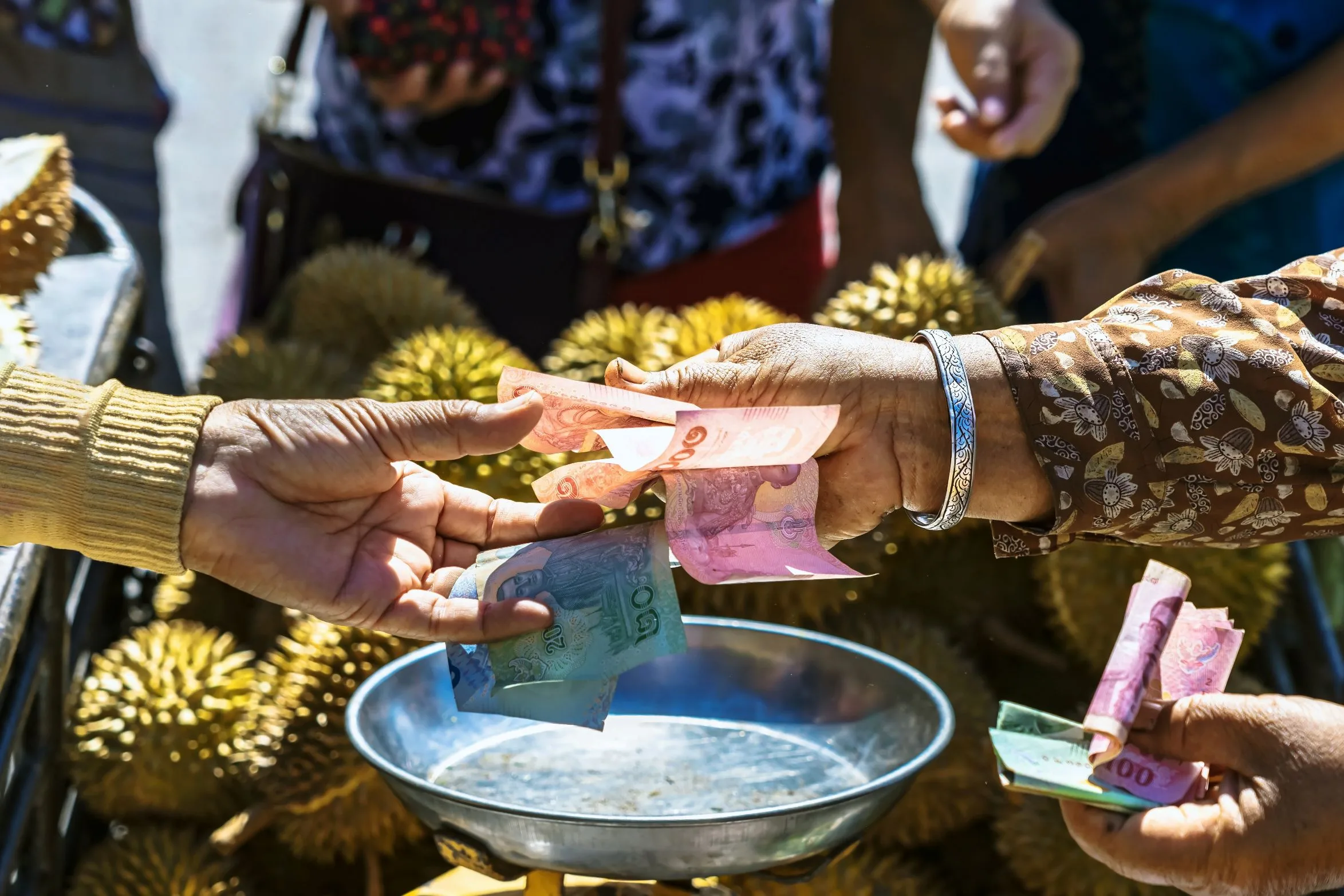
The map of where cards fail does not follow income and does not follow the obvious geography. Border posts, park gates and ferry tickets are cash transactions in a great many countries whose restaurants take contactless without blinking.
Contactless payment has spread so completely through some countries that their residents have stopped carrying notes at all. It has spread so incompletely through others that arriving without cash is a genuine problem on the first afternoon. The map does not follow income, and it does not follow the obvious geography — which is why the assumption a traveller brings from home is usually wrong in one direction or the other.
Where cards fail
Four patterns account for most of it. Countries under sanctions, where the international card schemes do not operate at all and a foreign card is simply a piece of plastic — bring the entire trip’s budget in clean foreign notes and expect to change it locally, because there is usually no fallback and often no way to have money sent. Economies with very high inflation, where card acceptance exists but the official exchange rate applied to a foreign card is materially worse than the rate cash gets. Rural and small-trader economies across much of Africa, South and Central Asia, where the terminal exists in the city and nowhere else. And a scattering of wealthy holdouts — parts of Germany, Japan and Switzerland — where small businesses simply prefer cash and are under no pressure to change.
The wealthy holdouts surprise people most, because the assumption is that payment technology tracks development. It tracks banking structure and regulation instead. A country with a dense network of small independent retailers, high card-processing fees and a cultural preference for privacy in spending will stay a cash economy at any income level.
There is a fifth category that catches people out: places where cards work everywhere except the things travellers actually need. National park entry fees, ferry tickets, border crossings, visas on arrival and inter-city buses are cash transactions in a great many countries whose restaurants take contactless without blinking. These are also, invariably, the transactions you cannot walk away from.
The question is never whether a country takes cards. It is whether the specific counter you will be standing at takes them, and border posts are the ones that never do.
The mobile-money exception
A large part of East and West Africa skipped cards entirely. Payment runs through mobile money — a balance attached to a phone number, operated from the phone itself through USSD menus or an app, with an SMS confirming each transfer — and it is accepted by market traders, minibus conductors, utility offices and shops that would never install a card terminal. It is the dominant payment rail in several countries, moving a share of national economic activity that would be remarkable anywhere.
It is generally hard for a visitor to access without a local SIM and, increasingly, local identity documents. The practical consequence is one of the odder inversions in travel: a traveller in a highly digitised payment economy may be the only person in the queue paying cash, because the digital system is not open to them. Where a short-term visitor account is available — some operators offer one against a passport — it is worth the paperwork on a longer stay.
The working method
Arrive with a modest amount of a widely accepted foreign currency in clean, unmarked, recent notes. The condition genuinely matters: older series and marked bills are refused across much of Africa, Asia and Latin America, and the refusal is not negotiable. Withdraw local currency from a bank-owned ATM rather than an independent one, in larger amounts to dilute the fixed fee, and always in local currency rather than accepting the machine’s conversion. Keep the cash split between two places on your person and one in the room.
Break large notes whenever a bank, a hotel or a supermarket gives you the chance, because change is the actual constraint in a cash economy — a taxi driver at midnight with no change is a negotiation you will lose. And keep a small reserve untouched for the situations that have no alternative: the exit fee, the park gate, the fare out.
Then check the specific things before you need them: whether the border you are crossing takes cards for the visa fee, whether the park gate does, whether the ferry does. Those three questions cover most of the situations where a card economy turns out to have a cash-only hole in exactly the place you cannot walk away from.
Sources
- The central bank of the destination
Legal-tender rules, which note series remain valid and cash-acceptance regulation are the issuing authority’s to state.
- Your bank’s partner-ATM list
Fee-free withdrawal networks abroad are listed by the card issuer and change without notice.