Romar66 / stock.adobe.com
Which Passport to Show
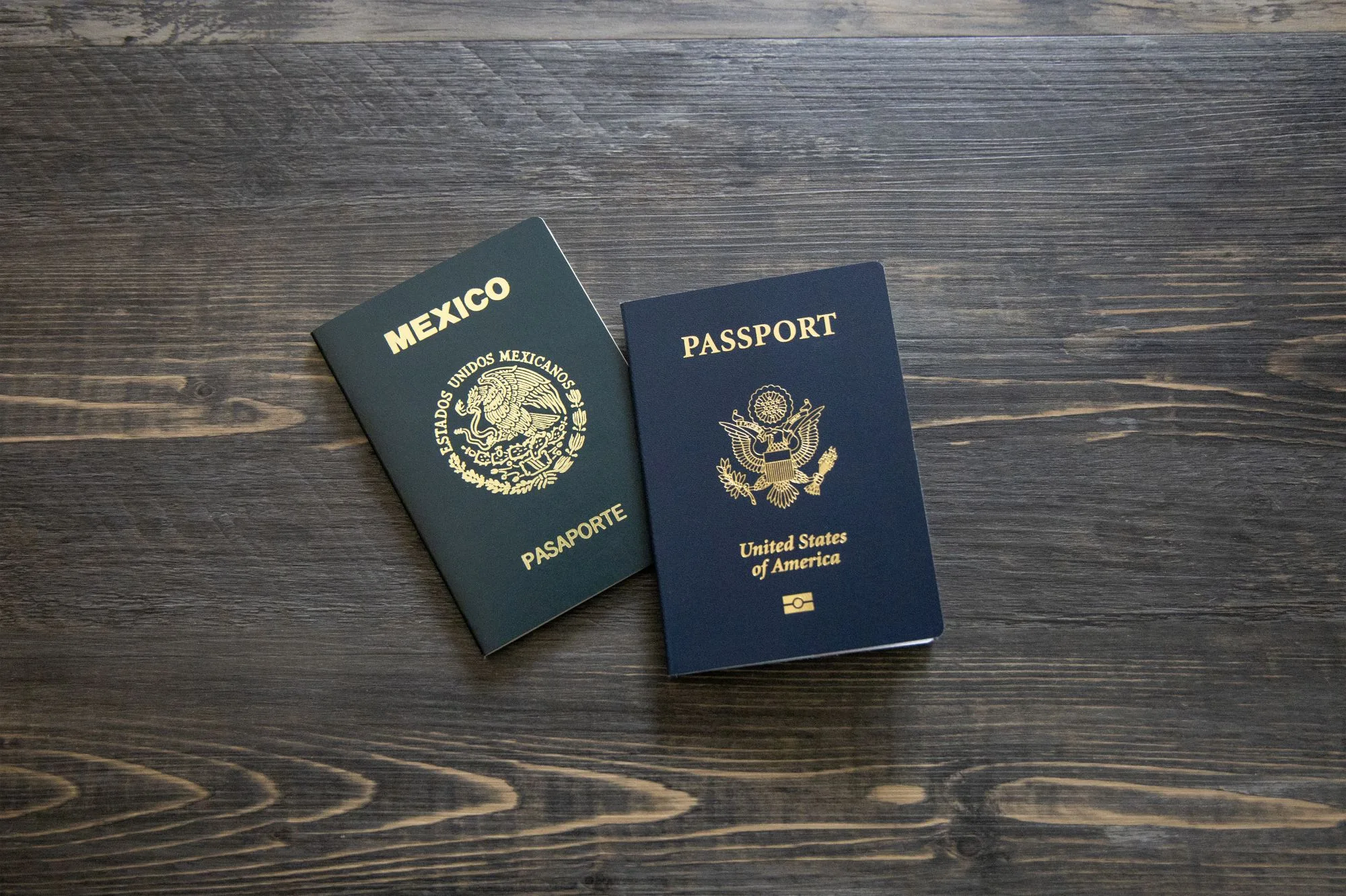
Two passports is not a free choice at every desk. Enter and leave a country on its own document; use whichever you like for third countries; and check very carefully before travelling to a country that does not recognise dual nationality at all.
Holding two passports is not the same as having a choice at every desk. Which document you present is partly a matter of convenience and partly a matter of law, and the two conflict often enough that the convenient choice is sometimes the illegal one.
The one rule that is nearly universal
Enter and leave a country on that country’s own passport if you hold one. Many states require this explicitly in legislation, and where they do not require it they generally expect it. Attempting to enter your own country of nationality on a foreign passport can create problems ranging from a delay to a refusal of the visa you did not need — because a citizen cannot hold a visa for their own country, and the electronic system may simply not accept the combination.
The corollary catches people on the way out. If you entered on passport A, you should leave on passport A, because the exit record has to match the entry record. Mismatched documents at exit produce exactly the kind of unexplained gap that a modern entry-exit database is designed to flag, and the flag surfaces at your next entry rather than at the moment you created it.
The passport you show is not a preference. In your own country it is a legal requirement, and the system is built assuming you complied.
Where the choice is genuinely free
For third countries — places where you hold neither nationality — you may generally present whichever document you like, and the sensible criterion is which one produces the easier entry: fewer requirements, longer permitted stay, cheaper or absent authorisation, better treatment in a queue. This is where a second passport earns its keep, and where checking the pairwise requirement for both documents before booking is worth the ten minutes.
The airline complicates this. The carrier checks your right to enter the destination and your right to return or continue, and it records the document you travelled on. If you check in with one passport and present another at the border, expect questions. The clean approach is to decide before check-in, use one document consistently for that journey, and carry the other where it can be produced if asked.
The exception is the journey with a leg into a country of which you are a citizen. There the sequence is genuinely mixed — one document for the third country, the other on arrival home — and it is worth telling the check-in agent so that the record they create matches what you will present.
The harder cases
Some countries do not recognise dual nationality at all and will treat you exclusively as their own citizen while you are on their territory. That can carry obligations, including military service and exit permission, and it can mean that consular assistance from your other country is not accepted — the embassy may be denied access to you entirely, because from the host state’s perspective you are not a foreign national. This is not theoretical, it applies to a substantial list of states, and it is the single most important thing to check before travelling to a country of which you are a citizen but not a resident.
Descent-based nationality is the version that surprises people. A person who has never held a passport of a country may nonetheless be its citizen under its own law, through a parent or a place of birth, and may be treated as such on arrival — including for conscription. Where there is any possibility of this, the question is for that country’s consulate, and it is much better asked from home.
Practical hygiene
Keep both documents valid and carry both, since a return leg may require the one you did not use outbound and an expired second passport is worse than useless in an emergency. Check the visa requirement for each nationality separately for every leg rather than assuming the stronger passport governs. Be aware that acquiring or renouncing a nationality changes entry rules for both, sometimes in non-obvious directions. And where the position is complicated — conscription, an unresolved status, a country left under difficulty — get the answer from the consulate before the airport rather than from an officer at it.
Sources
- The consulate of each country of nationality
Own-passport entry rules, non-recognition of dual nationality and conscription exposure can only be answered by the state concerned — in writing, before travel.